
Tear Trough Fillers Explained: What They Are, How They Work, and What They Can Treat

Clinical guidance from Dr Nyla Raja MBChB (Hons), MRCGP (Dist), DFFP, DPDermatology - GMC No. 6057913
Tear Trough Fillers Explained: At a Glance
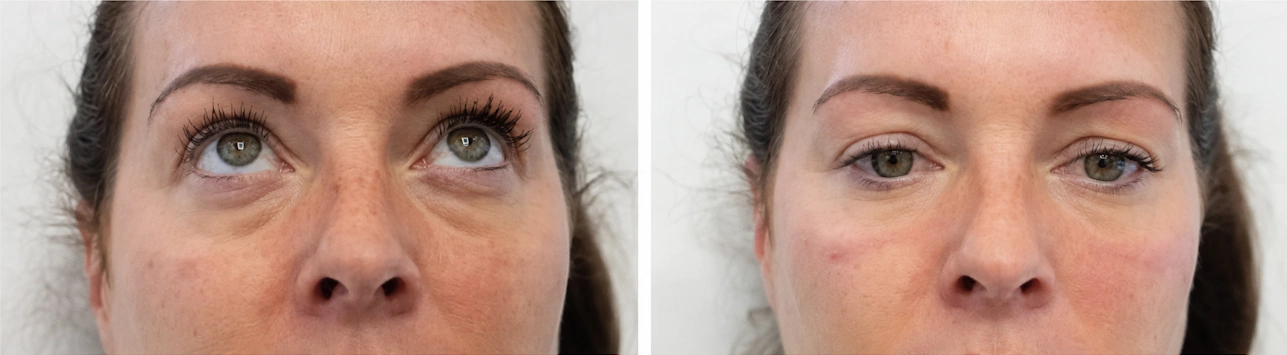
Tear trough fillers are hyaluronic acid-based injectable gels used in selected patients to reduce the appearance of hollowing between the lower eyelid and upper cheek. By restoring a small amount of volume in this transition, treatment can soften shadowing and create a smoother contour beneath the eyes.
Under-eye appearance is complex. A dark or tired-looking eye area can be caused by hollowing, pigmentation, thin skin, visible blood vessels, puffiness, fluid retention, prominent fat pads, or skin laxity. Tear trough filler primarily addresses volume-related hollowing. It cannot correct every type of dark circle or eye bag.
- What tear trough filler is: usually a carefully selected hyaluronic acid filler placed beneath the eye in suitable patients
- Main indication: a true hollow or depression between the lower eyelid and upper cheek
- How it works: restores selected volume and softens the transition between the eyelid and midface
- What it may improve: hollowing, shadowing caused by a depression, and selected contour irregularities
- What it does not directly treat: pigmentation, prominent fat bags, significant puffiness, fluid retention, or loose skin
- Results: can be visible immediately, although swelling means the early appearance is not the final result
- Suitability: particularly important because the under-eye area is anatomically delicate and not every patient is an appropriate candidate
Tear trough filler should only be recommended after assessment of the lower eyelid, cheek support, skin quality, fat pads, fluid tendency, pigmentation, and overall facial anatomy. In some patients, not using filler is the safer and more appropriate decision.
What Are Tear Trough Fillers?
Tear trough filler is an injectable treatment used to restore selected volume beneath the eyes where a true hollow is creating an unwanted shadow or abrupt transition between the lower eyelid and cheek.
The products most commonly used for this purpose are hyaluronic acid fillers. Hyaluronic acid is a naturally occurring substance found within skin and connective tissues, while injectable fillers contain manufactured hyaluronic acid formulated into gels with specific physical properties.
The treatment does not “fill an eye bag” in the literal sense. The objective is usually to improve the contour around a hollow so that light reflects more evenly across the lower eyelid and upper cheek.
This distinction is important because adding filler to the wrong type of under-eye concern can make the area look heavier or more swollen rather than improving it.
What Is the Tear Trough?
The tear trough is the depression that can run from the inner corner of the eye along the junction between the lower eyelid and upper cheek.
It forms within a complex anatomical region containing very thin skin, the orbicularis oculi muscle, retaining ligaments, fat compartments, blood vessels, and the bony orbital rim.
The appearance of the trough is influenced by several structures rather than one simple “gap” beneath the skin.
In some people, the hollow is visible from a young age because of inherited facial structure. In others, it becomes more noticeable with age as the relationship between the lower eyelid, cheek volume, bone, fat compartments, and skin changes.
Because the skin is particularly thin in this area, relatively small changes in contour, swelling, pigmentation, or underlying blood vessels can have a noticeable visual effect.
Clinical Note from Dr Nyla Raja
The most important part of under-eye treatment is diagnosing what is creating the shadow. A dark area beneath the eye is not automatically a tear trough. Volume loss, pigmentation, visible vessels, fluid, fat pads, and skin quality can all produce a similar complaint but require very different treatment plans.
Why Do Under-Eyes Become Hollow?
Under-eye hollowing can result from a combination of natural anatomy and age-related change.
Contributing factors may include:
- Natural depth of the eye socket
- Prominence of the orbital rim
- Reduced volume within selected facial fat compartments
- Changes in midface and cheek support
- Age-related skeletal change
- Thinning of the skin
- Changes in retaining ligaments and soft tissues
The under-eye area should therefore be assessed as part of the wider midface rather than in isolation.
A patient may appear to have a prominent tear trough partly because cheek support below it has reduced. Conversely, a patient with good midface volume may have a genetically deep tear trough despite otherwise youthful facial structure.
How Does Tear Trough Filler Work?
Hyaluronic acid filler works through its physical presence within the tissue.
When an appropriate product is placed at the correct depth and in an appropriate amount, it can restore volume beneath a hollow and create a smoother transition between the lower eyelid and cheek.
This can reduce the shadow produced by the depression, making the eye area appear less hollow or tired.
The effect is therefore largely structural and optical. Filler changes contour, which can change the way light falls across the area.
It does not remove pigment from the skin or directly eliminate prominent fat beneath the eye.
Under-eye filler products are generally selected carefully because this is a thin-skinned, mobile area where excessive volume or a product with unsuitable properties can become visible or contribute to puffiness.
Under-Eye Hollowing vs Pigmentation, Puffiness, and True Eye Bags
Several different concerns are commonly described as “dark circles” or “eye bags”. Distinguishing between them is central to deciding whether tear trough filler is appropriate.
Under-Eye Hollowing
A true hollow is a depression in the contour beneath the eye.
It often creates a shadow that changes depending on lighting. If the skin itself is relatively normal in colour but the area looks dark because it sits deeper than the surrounding tissues, volume restoration may help.
Under-Eye Pigmentation
Pigmentation refers to actual colour within the skin.
This may appear brown, grey, or darker than the surrounding complexion and can reflect genetics, sun exposure, inflammation, or other causes.
Tear trough filler does not remove pigment. Improving a hollow may reduce some shadow, but true pigmentation can remain unchanged.
Thin Skin and Visible Blood Vessels
The lower eyelid has some of the thinnest skin on the face. In some patients, underlying vessels or muscle can contribute to a bluish, purple, or red appearance.
Adding volume does not necessarily correct this and, in some cases, filler itself can become visible through very thin skin.
Under-Eye Puffiness
Puffiness may reflect fluid retention, lymphatic factors, inflammation, allergies, or prominent soft tissue.
Patients who already experience recurrent swelling beneath the eyes need particularly careful assessment because hyaluronic acid filler can attract water and may worsen a tendency towards oedema in unsuitable candidates.
True Eye Bags
True eye bags are often associated with protrusion or prominence of the lower-eyelid fat pads.
Filler does not remove this fat. In carefully selected patients, improving an adjacent hollow can make the transition around a mild bag less obvious, but adding filler beneath significant fat prominence can also make the lower eyelid look heavier.
Our guide to under-eye bags and treatment options explores these different presentations in more detail.
What Can Tear Trough Filler Realistically Improve?
In an appropriately selected patient, tear trough filler may:
- Reduce the appearance of a true under-eye hollow
- Soften the transition between the lower eyelid and cheek
- Reduce shadowing caused specifically by a depression
- Improve selected asymmetry
- Create a smoother midface contour
- Make the eye area appear less tired where hollowing is the principal cause
The goal is usually subtle. The under-eye area does not need to become completely flat to look improved, and trying to eliminate every visible contour can increase the risk of an unnatural or puffy result.
The best results generally come from conservative volume correction rather than attempting to make the lower eyelid completely featureless.

What Tear Trough Filler Cannot Improve
Tear trough filler cannot appropriately correct every concern beneath the eyes.
It does not directly:
- Remove brown or grey pigmentation
- Remove prominent lower-eyelid fat pads
- Eliminate significant fluid retention or puffiness
- Tighten substantial loose skin
- Correct fine crepey texture by itself
- Remove dynamic wrinkles caused by muscle movement
- Change the underlying eye socket or bone structure
- Guarantee complete removal of dark circles
This is why the phrase “tear trough filler for dark circles” needs qualification. It may improve darkness caused by shadow from hollowing, but it is not a pigment treatment.
The Role of Cheek Support in Under-Eye Treatment
The lower eyelid and cheek are anatomically connected, so under-eye assessment should include the midface.
In some patients, reduced cheek support contributes to a more pronounced lid-cheek junction. Treating the tear trough alone may therefore be less appropriate than considering the wider midface.
Cheek filler can sometimes provide structural support below the under-eye area where midface volume loss is contributing to the concern.
This does not mean every tear trough patient needs cheek filler. Equally, cheek treatment should not be added simply to increase the amount of filler used. The decision depends on anatomy.
Clinical Note from Dr Nyla Raja
The under-eye should not automatically be treated where the shadow is darkest. Sometimes the issue is primarily the tear trough itself; sometimes the cheek beneath it has lost support; and sometimes filler is not the correct treatment at all. The plan should follow the anatomy.
Who Is Suitable for Tear Trough Filler?
Good candidates generally have a clearly defined hollow with suitable skin and soft-tissue characteristics and without significant pre-existing puffiness.
Suitability may be reduced where there is:
- Marked lower-eyelid puffiness
- Significant fat-pad prominence
- Frequent fluid retention or oedema
- Very thin or lax lower-eyelid skin
- Predominantly pigmented dark circles without meaningful hollowing
- Previous filler that remains present or has migrated
- Significant anatomical asymmetry requiring a different approach
- A medical contraindication to treatment
Previous filler is particularly important because hyaluronic acid products can sometimes remain within tissue longer than patients expect. Adding more product without assessing what is already present can contribute to persistent swelling or over-correction.
When Are Tear Trough Filler Results Visible?
A change in contour is often visible immediately after injection, but the first appearance should not be treated as the final result.
Temporary swelling, tenderness, bruising, or minor asymmetry can occur during the early post-treatment period.
The area should be allowed to settle before the final result is assessed.
Longevity varies according to product, anatomy, tissue characteristics, treatment history, and individual response. Under-eye filler can sometimes persist for a relatively long period because the area is less mechanically active than regions such as the lips.
Our guide to tear trough filler longevity explains these factors in greater detail.
Tear Trough Filler Risks and Safety
The under-eye area requires particular anatomical knowledge because of its thin skin, tendency towards swelling, and proximity to important blood vessels.
Expected temporary effects can include:
- Swelling
- Bruising
- Tenderness
- Redness
- Temporary asymmetry
Other recognised problems can include persistent puffiness, visible or palpable filler, contour irregularity, nodules, delayed inflammatory reactions, or a bluish-grey appearance where hyaluronic acid filler is too superficial, sometimes referred to as the Tyndall effect.
As with other dermal filler procedures, vascular occlusion is an uncommon but serious complication. Very rare visual complications have also been reported following filler injections in facial areas connected to the ophthalmic circulation.
For this reason, under-eye treatment should not be chosen on price alone. Practitioner anatomy knowledge, patient selection, conservative product use, and the ability to recognise and manage complications are particularly important.
The NHS guidance on choosing a cosmetic practitioner recommends checking qualifications, training, experience, insurance, and aftercare arrangements before undergoing an injectable procedure.
At Dr Nyla Medispa, dermal filler treatments are performed exclusively by GMC-registered doctors within a medically regulated clinic. Our guide to tear trough and under-eye filler safety covers the risks in greater detail.
Alternatives to Tear Trough Filler
The correct alternative depends on what is causing the concern.
If skin quality is the principal issue rather than volume loss, treatment may focus more on the skin itself. Depending on assessment, options such as polynucleotides, skin boosters, microneedling, or appropriate skincare may be considered for selected concerns.
If excessive muscle activity is contributing to fine dynamic lines around the eyes, Botox for crow’s feet works through a different mechanism by temporarily reducing selected muscle activity.
Patients with substantial lower-eyelid fat bags or loose skin may require assessment for treatments beyond filler, including surgical options where appropriate.
Our guide to non-surgical eye treatments compares several approaches to common eye-area concerns.
What Happens at a Tear Trough Filler Consultation?
A tear trough consultation should establish the cause of the under-eye concern before discussing filler volume.
Assessment may consider:
- The depth and position of the tear trough
- Lower-eyelid fat-pad prominence
- Cheek and midface support
- Skin thickness and laxity
- Pigmentation
- Visible blood vessels
- Fluid retention and puffiness
- Previous filler treatment
- Facial asymmetry
- Medical history and medicines
- Your expectations of treatment
This allows the practitioner to distinguish a genuine volume deficit from a concern that is unlikely to improve with filler.
After treatment, follow the instructions given by your clinic. Our dermal filler aftercare guide explains general considerations following injectable treatment.

Book in a Free Consultation With Our Expert Team
- Award-winning, doctor-led aesthetic clinics
- Locations in London, Cheshire, and Liverpool
- Over 50 non-surgical treatments available
- Free consultation with a personalised plan
Tear Trough Fillers Explained: FAQs
Are tear trough fillers the same as under-eye fillers?
The terms are often used interchangeably, although “under-eye filler” can describe treatment beyond the anatomical tear trough itself. A precise treatment plan should identify which part of the lower eyelid or lid-cheek junction is actually being addressed.
Can tear trough filler remove dark circles?
Only where darkness is substantially caused by shadow from a hollow. If the dark colour is due to pigmentation, visible blood vessels, or very thin skin, filler will not directly remove the cause.
Can tear trough filler get rid of eye bags?
Not reliably. Filler does not remove lower-eyelid fat. In selected patients with mild fat prominence and an adjacent hollow, improving the contour may reduce the visual contrast, but significant eye bags can become heavier if unnecessary volume is added.
Can filler make under-eye puffiness worse?
Yes. Hyaluronic acid filler attracts water, and patients with pre-existing fluid retention or lymphatic puffiness may experience persistent swelling. This is one reason careful patient selection is essential.
Why does under-eye filler sometimes look blue?
Hyaluronic acid placed too superficially beneath thin skin can sometimes produce a blue-grey appearance known as the Tyndall effect. Product selection, treatment depth, and conservative placement are particularly important beneath the eyes.
Do I need cheek filler before tear trough filler?
Not necessarily. Some patients have adequate cheek support and an isolated tear trough. In others, midface volume loss contributes significantly to the hollow, so supporting the cheek may be more appropriate. Assessment determines which approach makes anatomical sense.
Can tear trough filler improve crepey skin?
Not directly. Filler changes volume and contour. Fine crepiness, texture, and skin quality may require a skin-focused treatment instead.
Can tear trough filler be dissolved?
Hyaluronic acid filler can be treated with hyaluronidase where clinically appropriate. However, dissolving filler is a medical procedure with its own risks and should not be regarded as a simple or risk-free reversal.
How much tear trough filler is normally needed?
The appropriate amount varies significantly. The under-eye area generally benefits from conservative treatment, and the objective should be anatomical correction rather than reaching a predetermined syringe volume.
How do I know whether my dark circles are caused by hollowing?
Shadow-related darkness often changes noticeably with lighting and corresponds to a visible depression beneath the eye. True pigmentation remains within the skin itself. Many patients have more than one contributing factor, so clinical assessment is the most reliable way to distinguish them.
Tear Trough Fillers: Treating Hollowing, Not Every Under-Eye Concern
Tear trough filler is most useful when a genuine volume deficit is creating a visible depression beneath the eye. Carefully placed hyaluronic acid filler can soften this hollow and improve the transition between the lower eyelid and cheek.
The key to appropriate treatment is recognising what filler cannot correct. Pigmentation, fluid retention, prominent fat bags, significant skin laxity, and crepey skin are different problems, even though patients may describe all of them as dark circles or eye bags.
Under-eye treatment should therefore begin with diagnosis rather than simply adding volume. Conservative treatment, careful product selection, detailed anatomical assessment, and knowing when not to inject are central to a natural-looking result.
If you are considering tear trough filler, you can book a free consultation to discuss your under-eye concerns, suitability, anatomy, and the most appropriate treatment plan.
Need Guidance in Selecting the Most Appropriate Treatment?
Related Treatments

Tear Trough Fillers

Dermal Fillers

Jawline Fillers

Lip Fillers

Dermal Fillers for Men

About the Author
Considering treatment? Book a free consultation at our clinics in Mayfair London, Alderley Edge Cheshire, or Crosby Liverpool, or call 0800 009 6661.