
Dermal Filler Aftercare: What to Do After Treatment
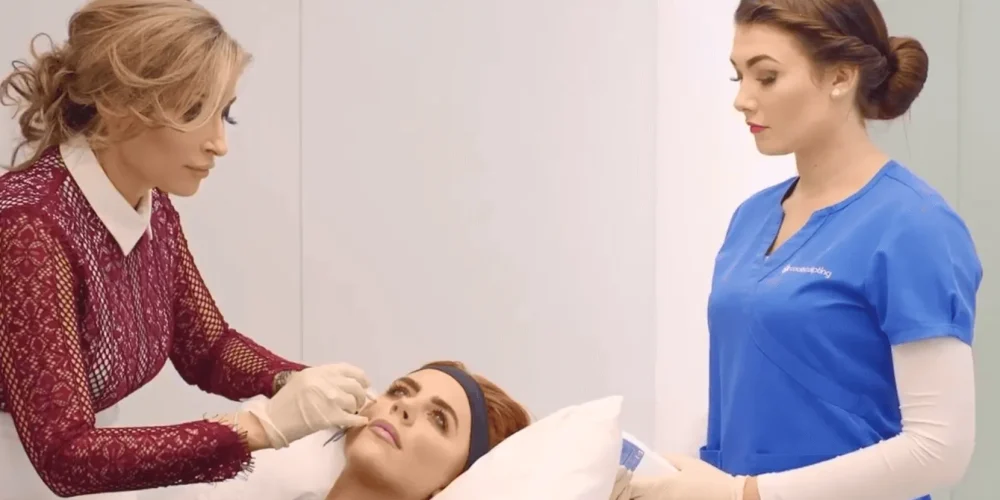
Clinical guidance from Dr Nyla Raja MBChB (Hons), MRCGP (Dist), DFFP, DPDermatology - GMC No. 6057913
Dermal Filler Aftercare: At a Glance
Dermal filler aftercare is an important part of treatment. Although most patients can return to everyday activities relatively quickly, the first 24–72 hours are important for allowing the injection sites and surrounding tissues to settle. Mild swelling, redness, tenderness, bruising, and temporary firmness can all occur during the first few days.
This guide explains what to do after dermal fillers, what to avoid, how long common side effects may last, and the difference between an expected post-treatment response and symptoms that require prompt clinical advice.
- First 24 hours: keep the area clean, avoid unnecessary touching or pressure, do not apply make-up, and avoid strenuous exercise, swimming, alcohol, excessive heat, and significant sun exposure.
- First 24–72 hours: cleanse gently, avoid rubbing or massaging the area unless specifically advised, keep skincare simple, and allow swelling and tenderness to settle.
- Contact the clinic promptly: if pain is increasing, swelling is rapidly worsening, or you develop unusual changes in skin colour or temperature. Sudden visual or neurological symptoms require emergency medical attention.
Your individual aftercare instructions should always take priority, as recommendations can vary according to the area treated, injection technique, product used, and your medical history.
Dermal Filler Aftercare: The First 24–72 Hours
The first few days after dermal filler treatment are primarily about allowing the injection sites and surrounding tissues to settle without unnecessary irritation.
During the first 24 hours, keep the area clean, avoid unnecessary touching or pressure, do not apply make-up, and avoid strenuous exercise, swimming, alcohol, excessive heat, and significant sun exposure.
During the first 24–72 hours, continue to cleanse gently, avoid rubbing or massaging the treated area unless specifically instructed to do so, and keep your skincare routine simple.
After 72 hours, most routine activities can generally be resumed if the area feels comfortable. Residual swelling or bruising may still be present, however, and more intensive facial or skin treatments should only be restarted when advised by your practitioner.
Our dermal filler aftercare protocol recommends cleansing with tepid water for 72 hours, avoiding make-up for 24 hours, avoiding swimming and gym environments for at least 24 hours, avoiding alcohol for 24 hours, and not lying face down immediately following treatment.
What Should You Do Immediately After Dermal Fillers?
For the first day, less is generally more. Keep the treatment area clean and avoid repeatedly checking, pressing, or manipulating it. Fresh injection sites can be more vulnerable to irritation, while temporary swelling can make the result appear different from how it will look once the tissues have settled.
For the first 72 hours, we advise cleansing with tepid water and gently patting the skin dry. Avoid vigorous rubbing, exfoliating cleansers, cleansing brushes, or other devices that create friction across the treated area.
Wash your hands before touching your face or applying skincare.
Clinical Note from Dr Nyla Raja
We do not encourage patients to judge their dermal filler result immediately after treatment. Early swelling can temporarily change the shape, definition, and apparent symmetry of the treated area. The most meaningful assessment is made once that initial tissue response has had time to settle.
Can You Touch or Massage Dermal Fillers?
Avoid unnecessary touching, rubbing, pressing, or massaging after treatment unless your doctor has specifically advised you to massage a particular area.
Repeated or aggressive manipulation can irritate recently treated tissues and place unnecessary pressure on the area during the early settling period.
It is not unusual for filler to feel slightly firm or for the area to look temporarily uneven. Swelling does not always develop symmetrically, which can make one side appear fuller than the other during the first few days.
If you notice a lump, firmness, or asymmetry that concerns you, do not repeatedly massage it in an attempt to correct it yourself. Contact our clinical team so that it can be assessed appropriately.
Can You Exercise After Dermal Fillers?
We recommend avoiding strenuous exercise for at least 24 hours after dermal filler treatment.
Exercise increases circulation, body temperature, and sweating, which can make temporary swelling, redness, and bruising more noticeable.
Gentle walking and normal day-to-day movement are usually suitable if you feel well. Swimming and gym environments should also be avoided for at least 24 hours while the injection sites are fresh.
If the treated area remains particularly swollen or tender after 24 hours, allow additional recovery time before returning to intensive exercise.
Can You Drink Alcohol After Dermal Fillers?
Avoid alcohol for 24 hours after treatment.
Alcohol can increase blood flow and may make temporary bruising, redness, or swelling more noticeable. We also recommend avoiding excessive alcohol on the day of treatment.
If you are having dermal fillers before an event, allow sufficient time for both the initial aftercare period and any visible swelling or bruising to settle.
Heat, Saunas, Steam Rooms, and Sun Exposure
Excessive heat should be avoided during the early recovery period.
Saunas, steam rooms, very hot baths or showers, and other situations that significantly raise body temperature can increase blood flow to the treated area and may temporarily worsen swelling or redness.
We also advise avoiding significant direct or indirect sun exposure for the first 24 hours and avoiding tanning beds.
Lukewarm showers are generally more appropriate while the initial swelling and tenderness are settling.
When Can You Wear Make-Up After Dermal Fillers?
We recommend waiting 24 hours before applying make-up after dermal filler treatment.
The injection points temporarily disrupt the normal skin barrier, so keeping the skin clean during this initial period helps minimise unnecessary contamination and irritation.
When you restart make-up, make sure your hands, brushes, and applicators are clean. Apply products gently rather than pressing or rubbing firmly over recently treated areas.

What Skincare Should You Avoid After Dermal Fillers?
Keep skincare simple while the skin is settling.
We recommend temporarily avoiding potentially irritating active ingredients, including:
- Alpha hydroxy acids (AHAs)
- Beta hydroxy acids (BHAs)
- Retinol and other vitamin A derivatives
- Strong vitamin C formulations
- Exfoliating acids
- Scrubs and abrasive exfoliants
Your practitioner will advise when these products can be safely reintroduced according to your treatment and skin condition.
A gentle cleanser and appropriate hydration are usually preferable during the immediate recovery period. This is also not the ideal time to introduce several unfamiliar skincare products at once.
If you use medical-grade skincare, your practitioner can advise when individual products should be restarted.
Facial treatments involving pressure, exfoliation, needles, or energy delivery, including facial massage, medical facials, chemical peels, microneedling, and some laser or energy-based treatments, generally require a longer interval. Speak to your practitioner before arranging another facial treatment soon after dermal fillers.
How Should You Sleep After Dermal Fillers?
Avoid lying face down immediately after treatment.
Where practical, sleeping on your back during the first night can minimise prolonged pressure on recently treated areas. Some patients also find keeping the head slightly elevated more comfortable while swelling is present.
There is no need to become concerned if you naturally change position during sleep. The aim is simply to avoid deliberately placing sustained pressure on the treated area while it remains tender or swollen.
Is Swelling Normal After Dermal Fillers?
Yes. Swelling is one of the most common temporary responses following dermal filler injections.
You may also notice:
- Bruising
- Redness around the injection sites
- Tenderness or sensitivity
- Small injection marks
- Mild firmness
- Small areas of petechiae
- Temporary asymmetry caused by uneven swelling
Results may be visible immediately, but swelling needs time to subside and the filler takes several days to settle within the treated tissues. Dermal filler safety and efficacy data also recognise swelling, bruising, redness, pain, and tenderness as common short-term effects following injectable filler treatment.
The amount of swelling varies according to the individual and the area treated. Lip filler, for example, may produce more noticeable early swelling than some deeper facial treatments.
Clinical Note from Dr Nyla Raja
The appearance immediately after injection is not the final result. We advise patients to allow swelling to settle before focusing on small differences in shape or symmetry. Our approach is to assess filler within the context of the whole face, with the aim of preserving proportion and natural facial harmony.
How Long Does Swelling Last After Dermal Fillers?
Early swelling commonly begins to improve over the first few days, although some residual swelling can remain for longer.
The exact recovery period depends on several factors, including the treatment area, amount of filler used, injection technique, and individual tissue response. Bruising can also take longer to disappear than swelling.
What matters is the direction of recovery. Normal swelling should generally begin to stabilise and improve rather than becoming progressively more painful, discoloured, or pronounced.
Normal Dermal Filler Side Effects vs Warning Signs
Understanding the difference between an expected post-treatment reaction and a potential complication is one of the most important aspects of dermal filler aftercare. Our dermal filler safety guide explains these risks and the clinical measures used to reduce them in more detail.
What Is Usually Normal?
Mild to moderate swelling, bruising, redness, tenderness, temporary firmness, small injection marks, and slight unevenness caused by swelling can all occur following treatment.
A bruise may change colour as it resolves, and mild tenderness should progressively become more comfortable. The overall pattern should generally be one of improvement.
When Should You Contact the Clinic?
Contact our clinical team promptly if you develop:
- Pain that is increasing rather than settling
- Severe or disproportionate pain
- Rapidly increasing swelling
- Spreading redness or increasing heat around the treated area
- Discharge from an injection site
- Blistering or pustules
- Skin becoming unusually pale, white, grey, blue, dusky, or mottled
- Skin that feels significantly cooler than the surrounding area
- A persistent or worsening lump
- Any reaction that feels substantially different from the recovery discussed with you
Blistering or pustules should be reported to the clinical team so that the area can be assessed rather than simply monitored at home. If symptoms are worsening or you are concerned about a possible complication, call us directly on 0800 009 6661.
Clinical Note from Dr Nyla Raja
Mild tenderness following injections is different from pain that is becoming increasingly pronounced. When discomfort is worsening, particularly if it is accompanied by an unusual change in skin colour or temperature, we would want the patient to contact us promptly rather than waiting to see whether it resolves.

Vascular Occlusion After Dermal Fillers: Symptoms to Know
Vascular occlusion is a rare but potentially serious complication of dermal filler treatment. It occurs when blood flow through a vessel becomes obstructed.
Potential warning signs can include:
- Increasing or disproportionate pain
- Blanching or unusually pale skin
- Dusky, blue-grey, or mottled skin
- Changes in skin temperature
- Progressive changes around the treated area
Clinical research on dermal filler complications shows that compromised blood flow can cause tissue injury if it is not recognised and managed promptly. Although vascular occlusion is uncommon, patients should know which changes are not part of routine swelling or bruising.
If you notice these symptoms, contact us immediately on 0800 009 6661. Do not repeatedly massage the area or wait until the following day to see whether it improves.
When Symptoms Require Emergency Medical Attention
Visual disturbance following facial filler is rare, but it must be treated as a medical emergency.
In rare cases, accidental injection of filler into a blood vessel can be associated with serious complications including tissue necrosis, visual impairment, blindness, and stroke.
Seek immediate emergency medical attention if you develop:
- Sudden blurred vision
- Loss of vision
- Double vision
- Severe or unusual eye symptoms
- Facial weakness
- Difficulty speaking
- Confusion
- Weakness or numbness on one side of the body
- Other sudden neurological symptoms
For symptoms suggestive of a medical emergency, call 999 rather than waiting for a routine clinic review or submitting an online enquiry.
When Can You Return to Normal Activities?
Most patients can return to normal work and everyday activities relatively quickly, provided they are comfortable with any visible swelling or bruising.
After the first 24 hours, make-up and normal gentle daily activities can usually be resumed if your practitioner has not advised otherwise.
Strenuous exercise and significant heat exposure should generally be postponed for at least the first 24 hours, and longer if swelling or tenderness remains.
By around 72 hours, the injection sites are often considerably calmer, although residual swelling or bruising may still be present.
Facials, facial massage, chemical peels, microneedling, and energy-based treatments should not automatically be restarted after 72 hours. The appropriate timing depends on the treatment area and the procedure you are considering next.
Can You Take Ibuprofen After Dermal Fillers?
Our standard aftercare protocol advises avoiding ibuprofen for a minimum of 24 hours following treatment.
However, you should never stop or alter prescribed medication without appropriate medical advice.
If you regularly take aspirin, anticoagulants, anti-inflammatory medication, or medication for an existing medical condition, discuss this with your treating doctor. Medically necessary treatment should not be changed simply to reduce the possibility of bruising.
Why Medical Aftercare Matters
Dermal fillers are non-surgical, but they remain injectable medical procedures with recognised risks. Appropriate practitioner training, detailed anatomical knowledge, careful patient selection, and access to clinical support are therefore important parts of treatment.
At Dr Nyla Medispa, dermal filler treatments are performed exclusively by GMC-registered doctors using hyaluronic acid dermal fillers from established manufacturers. Treatment is planned according to individual facial anatomy, with a focus on balance, proportion, and natural-looking outcomes.
Aftercare is part of that medical approach. It is not simply about reducing bruising or swelling. Patients should understand what is expected, what is not expected, and how to access appropriate clinical advice if their recovery does not follow the anticipated pattern.

Book in a Free Consultation With Our Expert Team
- Award-winning, doctor-led aesthetic clinics
- Locations in London, Cheshire, and Liverpool
- Over 50 non-surgical treatments available
- Free consultation with a personalised plan
Dermal Filler Aftercare FAQs
Can I wash my face after dermal fillers?
Yes. Cleanse gently with tepid water and pat rather than rub the skin dry. We recommend maintaining this gentle approach for the first 72 hours and avoiding aggressive exfoliation or cleansing devices.
Can I exercise the day after dermal fillers?
Allow at least 24 hours before returning to strenuous exercise. If significant swelling or tenderness remains, it may be appropriate to wait longer.
Can I massage a lump after filler?
Do not massage a lump unless your practitioner has specifically advised you to. Temporary firmness and unevenness can occur while swelling settles. If a lump persists or concerns you, contact our clinical team for assessment.
Can I wear make-up after filler?
We recommend avoiding make-up for the first 24 hours. When you restart, use clean hands and applicators and avoid excessive pressure over the injection sites.
Can I sleep on my side after dermal filler?
Where practical, avoid prolonged pressure on the treated area during the first night. Sleeping on your back may be preferable, particularly when areas such as the cheeks, jawline, chin, or lips have been treated.
How long does bruising last after dermal fillers?
Bruising varies considerably between patients. Minor bruising may disappear relatively quickly, while more visible bruises can take several days or longer to resolve.
How long do dermal fillers take to settle?
The treatment result may be visible immediately, but swelling and temporary tissue changes can initially affect the appearance. It generally takes several days for the area to settle, and the result is better assessed once early swelling has reduced.
Settling time is different from how long the treatment result may remain visible. Longevity varies according to the product used, treatment area, facial movement, individual metabolism, and other biological factors. Our guide to how long dermal fillers last explains the typical differences between areas including the lips, cheeks, jawline, chin, and tear troughs.
When should I worry after dermal fillers?
Increasing or disproportionate pain, rapidly worsening swelling, spreading redness, unusual pale or mottled skin, blistering, pustules, or significant changes in skin temperature require prompt clinical advice. Sudden visual or neurological symptoms require emergency medical attention.
Dermal Filler Aftercare at Dr Nyla Medispa
Good dermal filler aftercare is deliberately straightforward: keep the skin clean, minimise unnecessary pressure, allow swelling to settle, and temporarily avoid strenuous exercise, swimming, alcohol, significant heat, make-up, and irritating skincare.
Equally important is recognising when recovery is not following the expected pattern. Mild swelling, tenderness, and bruising are common. Increasing pain, progressive skin colour changes, rapidly worsening swelling, or visual symptoms are not routine post-treatment effects and should never be ignored.
At Dr Nyla Medispa, your care continues after you leave the treatment room. Our medical team provides individual aftercare advice based on the treatment performed, the area treated, and your own clinical circumstances.
If you have a non-emergency concern following treatment, you can contact Dr Nyla Medispa or call our team on 0800 009 6661.
If you are considering dermal fillers, you can book a free consultation at our London, Cheshire, or Liverpool clinic. Your consultation allows our medical team to assess your facial anatomy, suitability for treatment, expected outcome, potential risks, and individual aftercare requirements before deciding whether treatment is appropriate.
Need Guidance in Selecting the Most Appropriate Treatment?
Related Treatments

Dermal Fillers

Jawline Fillers

Tear Trough Fillers

8 Point Facelift

Non-Surgical Transformation Facelift

About the Author
Considering treatment? Book a free consultation at our clinics in Mayfair London, Alderley Edge Cheshire, or Crosby Liverpool, or call 0800 009 6661.