
Who Is Suitable for Sofwave, and When Might Another Treatment Be Better?

Clinical guidance from Dr Nyla Raja MBChB (Hons), MRCGP (Dist), DFFP, DPDermatology - GMC No. 6057913
Who Is Suitable for Sofwave? At a Glance
Sofwave is a non-invasive ultrasound treatment designed to deliver controlled energy within the mid-dermis, stimulating a gradual collagen-remodelling response. It is principally considered where mild-to-moderate skin laxity, reduced firmness, facial lines, or laxity beneath the chin and around the neck are contributing to the concern.
Good patient selection matters because not every change described as “sagging” is caused by loose skin. Facial volume loss, localised fat, muscle activity, skeletal anatomy, and significant tissue descent can produce a similar appearance but require a different treatment approach.
The manufacturer’s published indications include improvement of facial lines and wrinkles, eyebrow lifting, and lifting of lax submental and neck tissue. Sofwave is also indicated for selected concerns including upper-arm skin laxity and acne scars. Sofwave’s official safety information also lists specific contraindications and precautions that should be reviewed before treatment.
- Often most suitable for: mild-to-moderate laxity, reduced firmness, facial lines, brow concerns, and selected neck or under-chin laxity
- Skin tone: can be considered across a broad range of skin types following assessment
- Less suitable when the main issue is: significant volume loss, substantial excess skin, pronounced fat, or deeper structural tissue descent
- Not a fat-reduction treatment: Sofwave does not dissolve or remove localised fat
- Not a volume-restoration treatment: it does not replace lost cheek, temple, or facial volume
- Consultation is important: medical history, medication, skin condition, previous filler, implants, and treatment expectations should be reviewed
Suitability cannot be established from age or photographs alone. The visible concern needs to be assessed in the context of skin quality, facial anatomy, previous treatment, medical history, and the degree of improvement being sought.
Who Is a Good Candidate for Sofwave?
Sofwave is generally most useful when the visible concern is substantially related to skin quality and mild-to-moderate laxity.
A suitable patient may have:
- Early loss of facial firmness
- Fine lines and wrinkles
- Mild laxity around the lower face
- Reduced jawline definition where skin laxity is contributing
- Mild laxity beneath the chin
- Loose or crepey skin on the neck
- Selected brow laxity
- Realistic expectations of gradual, non-surgical improvement
Published clinical research on parallel-beam ultrasound for facial lines and wrinkles has reported improvement following treatment, while a later clinical study of Sofwave ultrasound for facial laxity reported improvements across the eyebrow, submental, and neck regions.
These studies support a role for the technology in selected patients, but they do not mean that every form of facial ageing will respond to Sofwave or that a non-surgical treatment can reproduce a surgical lift.

Clinical Note from Dr Nyla Raja
A good Sofwave candidate is not defined simply by age. We assess which tissue is creating the concern. If mild skin laxity is genuinely contributing to the appearance, Sofwave may be appropriate. If the problem is principally volume loss, fat, or substantial tissue descent, another treatment may provide a more logical approach.
Why Is Sofwave Best Suited to Mild-to-Moderate Skin Laxity?
Sofwave delivers ultrasound energy into the mid-dermis, creating controlled thermal stimulation that initiates tissue remodelling. Our guide to how Sofwave works explains this mid-dermal targeting and collagen-remodelling process in more detail. The intended improvement develops gradually as collagen and elastin change over the following weeks and months.
This mechanism is well suited to patients seeking a subtle improvement in firmness and skin support without surgery. Because the response develops gradually, our guide to Sofwave results explains when changes may appear, how long they can last, and why outcomes vary between patients.
It has limitations. Where skin and deeper facial tissues have descended substantially, stimulating dermal collagen alone may not produce the degree of lift the patient expects.
This distinction is particularly important when assessing established jowls. Jowling may involve skin laxity, facial fat redistribution, volume loss, ligamentous changes, and underlying bone structure. Sofwave may improve the skin component without correcting every anatomical factor involved.
Is Sofwave Suitable for Facial Lines and Wrinkles?
Yes, selected facial lines and wrinkles fall within the manufacturer’s published indications for Sofwave.
It is most relevant where lines are associated with changes in dermal collagen and skin quality. The effect is different from anti-wrinkle injections, which temporarily reduce activity in selected facial muscles.
Where a line is predominantly dynamic and repeatedly created by muscle contraction, botulinum toxin may address the underlying mechanism more directly. Where the issue is skin quality, reduced firmness, or static lines, a collagen-remodelling treatment may be more relevant.
Some patients have both components, which is why treatments should not be regarded as interchangeable.
Is Sofwave Suitable for the Neck and Under the Chin?
The neck and submental region are important established treatment areas for Sofwave.
It may be considered where mild-to-moderate laxity beneath the chin or across the neck is reducing definition or creating a slightly looser appearance.
However, the appearance beneath the chin can result from several different tissues:
- Loose skin
- Submental fat
- Platysmal muscle activity
- Jaw and chin structure
- Volume distribution
- A combination of these factors
Sofwave does not remove submental fat. The manufacturer specifically describes its role as collagen remodelling rather than fat reduction. Where fat is the main contributor to fullness beneath the chin, reducing fat may be more relevant than repeatedly tightening the overlying skin.

Is Sofwave Suitable for Different Skin Types and Skin Tones?
Sofwave can be considered across a broad range of skin tones. Unlike laser treatments that depend on absorption of specific wavelengths of light, Sofwave uses ultrasound energy.
A multicentre clinical study of parallel-beam ultrasound for facial lines and wrinkles included participants across Fitzpatrick skin types I to VI, providing clinical evidence across a broad range of skin phototypes.
This does not mean treatment is automatically appropriate for every skin condition. Active inflammation, infection, wounds, severe acne, impaired healing, and relevant medical factors still need to be considered.
Changes in pigmentation are also included among the manufacturer’s potential adverse events, so skin tone should not be interpreted as removing the need for clinical assessment.
What Are the Contraindications for Sofwave?
According to Sofwave’s official safety information, treatment is contraindicated where a patient has:
- Open wounds or lesions within the intended treatment area
- Severe or cystic acne within the intended treatment area
- A pacemaker or electronic device implant within the treatment area
These are manufacturer-listed contraindications and should be distinguished from broader precautions, which require further clinical judgement. For a fuller discussion of contraindications, potential adverse effects, and recovery, see our guide to Sofwave safety, side effects, and aftercare.
What Other Precautions Should Be Considered Before Sofwave?
The manufacturer’s safety guidance also identifies circumstances requiring particular caution or clinical review.
These include:
- Pregnancy, planned pregnancy, recent childbirth, or breastfeeding
- Active systemic or local infection
- Active skin disease that may interfere with healing
- Significant scarring within the proposed treatment area
- Metal stents or implants within the facial area
- Previous dermal filler in the proposed treatment area
- Recent isotretinoin or other retinoid treatment
- Recent antiplatelet or anticoagulant medication
- Certain other medical, physical, or mental-health circumstances that may make treatment unsafe
The manufacturer states that Sofwave is not recommended directly over areas containing dermal filler. Previous filler therefore needs to be mapped and discussed before treatment rather than assuming an energy-based procedure can simply be performed over the same area.
Medication should also be reviewed during consultation. Patients should not stop anticoagulants, antiplatelet medicines, psychiatric medication, retinoids, or any other prescribed treatment without advice from the clinician responsible for prescribing it.
When Might Dermal Fillers Be More Appropriate Than Sofwave?
Skin tightening and volume restoration solve different problems.
Age-related facial change commonly includes loss or redistribution of soft-tissue volume. This can contribute to:
- Flattening of the cheeks
- Temple hollowing
- Reduced structural support
- Changes around the mouth
- A less defined facial contour
Sofwave cannot replace that lost volume.
Where structural volume loss is the dominant issue, carefully planned dermal fillers may address the anatomy more directly. Some patients have both laxity and volume loss, in which case the treatment plan may need to consider both without unnecessarily adding volume or tightening tissue that is not responsible for the concern.
When Might Another Skin-Tightening Treatment Be Better?
Sofwave primarily delivers energy within the mid-dermis. Where the clinical objective involves treatment at different or deeper tissue levels, another technology may sometimes be considered.
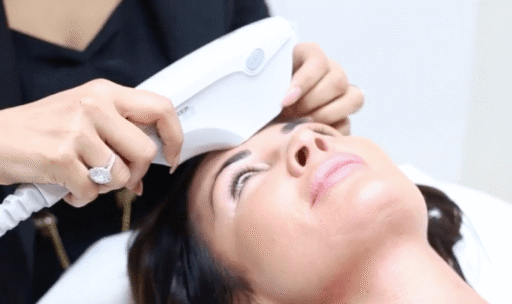
Ultherapy, for example, is a different ultrasound technology that uses microfocused ultrasound with real-time visualisation and can target deeper tissue planes.
This does not make Ultherapy universally “stronger” or better than Sofwave. The technologies work differently, and the appropriate choice depends on anatomy, treatment depth, degree of laxity, comfort, previous procedures, and the outcome being sought.
Patients comparing technologies can read our guide to Morpheus8 vs Ultherapy vs Sofwave for a more detailed explanation of how RF microneedling and ultrasound treatments differ.
When Is Sofwave Unlikely to Be Enough for Significant Excess Skin?
Sofwave does not remove skin.
Where there is substantial loose or redundant tissue, particularly after marked weight loss or where facial and neck laxity is advanced, non-surgical collagen stimulation may provide only limited improvement relative to the degree of change being sought.
Repeated non-surgical treatments cannot recreate the physical removal and repositioning of tissue achieved through surgery.
Where significant excess skin is the primary problem and the patient is seeking substantial correction, a surgical consultation may therefore provide a more realistic discussion of what is achievable.

When Is Fat Reduction More Appropriate Than Sofwave?
Sofwave should not be selected simply because an area looks fuller or less defined.
If a contour concern is predominantly caused by a discrete pocket of subcutaneous fat, a dedicated fat-reduction treatment may be more appropriate.
This is particularly relevant for:
- Fullness beneath the chin
- Upper-arm contour concerns
- Abdominal fullness
- Selected body areas where fat and laxity coexist
Skin quality still matters. Removing volume beneath lax skin does not necessarily improve the overall contour, which is why both fat and overlying skin should be assessed before choosing treatment.
When Might Morpheus8, Microneedling, or Another Skin Treatment Be Better?
Sofwave can improve selected facial lines and has a manufacturer indication for acne scars, but it is not primarily a resurfacing treatment.
Where the principal concern is:
- Uneven skin texture
- Selected depressed acne scars
- Enlarged pores
- More pronounced textural damage
- A concern requiring treatment at several adjustable depths
Morpheus8 RF microneedling, conventional microneedling, laser treatment, or another skin-focused approach may sometimes offer a more directly relevant mechanism.
The same principle applies to pigmentation. Skin tightening is not a pigment-specific treatment, so pigmentation may require a different diagnostic and treatment pathway.
What Should Be Assessed Before Sofwave Treatment?
A Sofwave consultation should establish whether the concern is genuinely one that mid-dermal collagen remodelling can reasonably improve.
Assessment may include:
- Degree and distribution of skin laxity
- Facial lines and skin quality
- Jawline and submental anatomy
- Facial volume loss
- Localised fat
- Muscle activity
- Skin type and active skin conditions
- Previous dermal filler
- Previous energy-based procedures
- Implants or medical devices
- Medication
- Medical history
- Pregnancy or breastfeeding status where relevant
- Desired degree of improvement
At Dr Nyla Medispa, Sofwave is provided within a doctor-led, medically regulated clinic, with treatment planning based on individual assessment rather than using the same technology for every patient with loose or ageing skin.
Clinical Note from Dr Nyla Raja
The decision is not simply whether Sofwave can be used on a particular part of the face. We first establish what is causing the visible change. Matching the treatment to the anatomy is more important than choosing a device because it is popular or because the patient has been told they need “skin tightening”.

Book in a Free Consultation With Our Expert Team
- Award-winning, doctor-led aesthetic clinics
- Locations in London, Cheshire, and Liverpool
- Over 50 non-surgical treatments available
- Free consultation with a personalised plan
Sofwave Suitability FAQs
What age is best for Sofwave?
There is no ideal age. The manufacturer’s published indications include adults aged 22 and over, but clinical suitability depends more on skin condition, degree of laxity, anatomy, and treatment goals than chronological age.
Is Sofwave good for sagging jowls?
It may help where mild skin laxity is contributing to early jowling. More established jowls often involve deeper tissue descent, fat redistribution, volume loss, and structural changes that Sofwave alone cannot correct.
Can Sofwave tighten loose neck skin?
Yes, lax neck tissue is one of the established treatment indications. The likely degree of improvement depends on how much laxity is present and whether other factors, such as submental fat or platysmal muscle activity, are also affecting the neck contour.
Is Sofwave suitable for darker skin tones?
Sofwave can be considered across a broad range of skin tones. Published clinical research has included Fitzpatrick skin types I to VI. Individual skin condition and medical suitability still need to be assessed before treatment.
Can you have Sofwave if you already have dermal filler?
Previous filler does not mean that every future energy-based procedure is automatically excluded, but Sofwave’s manufacturer states that treatment is not recommended directly over areas containing dermal filler. The location, timing, product, and previous treatment history should therefore be reviewed first.
Can Sofwave remove a double chin?
Sofwave does not remove or dissolve fat. It may improve lax skin beneath the chin where skin laxity is contributing to the appearance. If submental fat is the principal issue, a fat-reduction approach may be more appropriate.
Is Sofwave better than Ultherapy?
Not universally. Both use ultrasound, but the technologies deliver energy differently and target different tissue levels. Treatment choice should follow the anatomy and clinical objective rather than assuming one platform is better for every patient.
Is Sofwave better than Morpheus8?
They address overlapping but different concerns. Sofwave is a non-invasive ultrasound treatment, while Morpheus8 uses needles to deliver radiofrequency energy at selected depths. Morpheus8 may be considered where texture, scarring, or RF microneedling is particularly relevant, while Sofwave may suit patients seeking non-needling treatment primarily for laxity and facial lines.
Who should not have Sofwave?
The manufacturer’s contraindications include open wounds or lesions in the treatment area, severe or cystic acne in the treatment area, and pacemakers or electronic implants within the treatment area. Several additional precautions also require review during consultation, including pregnancy, infection, relevant skin disease, implants, medication, significant scarring, and previous filler.
Who Is Suitable for Sofwave? The Treatment Should Follow the Anatomy
Sofwave is most likely to be appropriate where mild-to-moderate skin laxity, reduced firmness, facial lines, or lax neck and submental tissue are meaningful components of the concern.
Its limitations are equally important. Sofwave cannot replace lost facial volume, remove localised fat, remove significant excess skin, or reproduce the degree of repositioning possible with surgery.
A high-quality consultation should therefore determine whether skin laxity is actually the tissue that needs treatment, review the manufacturer’s contraindications and precautions, and consider whether another technology or treatment would provide a more proportionate result.
If you are considering Sofwave, you can book a free consultation at Dr Nyla Medispa in Mayfair London, Alderley Edge Cheshire, or Crosby Liverpool to discuss suitability and an individual treatment plan.
Need Guidance in Selecting the Most Appropriate Treatment?
Related Treatments

Sofwave Skin Tightening

XERF Skin Tightening
Ultherapy Skin Tightening
Ultraformer 3 HIFU Skin Tightening

Morpheus8 RF Microneedling

About the Author
Considering treatment? Book a free consultation at our clinics in Mayfair London, Alderley Edge Cheshire, or Crosby Liverpool, or call 0800 009 6661.