
How Long Do Dermal Fillers Last? Results by Treatment Area
Clinical guidance from Dr Nyla Raja MBChB (Hons), MRCGP (Dist), DFFP, DPDermatology - GMC No. 6057913
How Long Do Dermal Fillers Last? At a Glance
Dermal fillers are temporary treatments, but there is no single length of time that applies to every patient or every area of the face. Longevity depends on the filler product used, where it is placed, how much facial movement occurs in that area, the amount and depth of product, and individual biological factors.
As a general guide, hyaluronic acid dermal filler results may remain clinically noticeable for approximately 6–18 months, although some structural treatment areas can retain improvement for longer. The visible result can also fade gradually rather than disappearing at a fixed point in time.
- Lips: commonly around 6–12 months, although results can persist for longer in some patients.
- Cheeks: commonly around 12–18 months because the mid-face is generally less mobile than the lips.
- Jawline and chin: structural treatment in the lower face may remain noticeable for approximately 12–24 months in some treatment plans.
- Tear troughs: commonly around 9–12 months, although individual longevity varies considerably.
These timeframes are intended as general treatment-planning guides rather than guarantees. Your practitioner will discuss the expected longevity of your individual treatment based on your anatomy, product selection, previous filler history, and treatment plan.
How Long Do Dermal Fillers Last?
At Dr Nyla Medispa, the hyaluronic acid dermal fillers we use are temporary. For many patients, a visible treatment effect may last somewhere within the region of 6–18 months, but that range should not be treated as an expiry date.
Some areas tend to require maintenance sooner, while others can retain an aesthetic effect for longer. The result also fades progressively. Dermal filler does not normally look unchanged for a set number of months and then suddenly disappear.
It is also important to distinguish between how long a patient can see the aesthetic result and how long some filler material may remain within the tissues. Emerging imaging research on dermal fillers suggests that hyaluronic acid filler can sometimes remain detectable within the mid-face substantially longer than traditional clinical estimates would suggest.
This does not mean every patient will continue to see the same cosmetic effect for years. It does mean that maintenance should be based on careful reassessment rather than assuming that all previously injected product has completely disappeared after a predetermined number of months.
Clinical Note from Dr Nyla Raja
I explain to patients that filler longevity is a range, not a promise. We are treating living, moving tissues, and every face responds differently. The right time to consider maintenance is based on how the face looks and feels at review, rather than automatically repeating treatment because a certain number of months has passed.
Why Does Dermal Filler Longevity Vary?
Several factors can influence how long dermal filler results remain noticeable. Some relate to the filler itself, while others relate to the anatomy and biology of the individual patient.
The Dermal Filler Product Used
Not all hyaluronic acid fillers behave in the same way. Products differ in characteristics including firmness, elasticity, cohesivity, hyaluronic acid concentration, and degree of cross-linking.
These differences allow a practitioner to select a product suited to the tissue and treatment objective. A filler chosen to create structural support in the cheek or chin is not necessarily the same type of product that would be selected for a softer, highly mobile area such as the lips.
Scientific reviews of hyaluronic acid filler degradation show that formulation and cross-linking influence how products behave and persist within tissue.
The Treatment Area
Different areas of the face behave differently. The lips move continuously during speaking, eating, smiling, and facial expression, whereas deeper filler placed in some areas of the cheek may experience considerably less movement.
Tissue depth, vascularity, mechanical forces, and local anatomy can therefore all influence how the treatment changes over time. Recent dermal filler durability studies also identify tissue mobility and anatomical factors as contributors to hyaluronic acid filler durability.
Individual Metabolism and Biology
Patients do not break down hyaluronic acid at identical rates. Individual biological variation can influence how long the visible result lasts.
This is one reason two patients treated with the same product, in the same area, and with a similar amount of filler may still return for maintenance at different times.
Age, tissue quality, previous treatments, natural facial anatomy, and other individual factors may also influence how a result evolves.
Facial Movement
Areas with substantial muscular movement and repeated mechanical activity often behave differently from relatively static areas.
This helps explain why lip filler will often appear to diminish sooner than filler placed more deeply within a structural area of the face. However, movement is only one factor and should not be used to predict an exact duration.
The Amount of Filler Used
The amount and distribution of filler can affect how noticeable a treatment remains over time, but more product does not automatically mean a better or proportionately longer-lasting result.
Filler volume should be selected according to anatomy and clinical need. Adding unnecessary product simply in an attempt to extend longevity can compromise proportion and increase the risk of an overfilled appearance.
Where treatment is being built gradually, a practitioner may deliberately use a conservative amount and review the result before deciding whether further product is appropriate.
The Depth and Placement of Filler
The anatomical plane in which filler is placed also matters. A product positioned deeply for structural support behaves differently from one placed more superficially in a mobile soft-tissue area.
Imaging research on dermal filler longevity has shown that filler persistence can differ according to location, depth, and injected volume, reinforcing why longevity cannot be reduced to one universal number.
How Long Do Lip Fillers Last?
Lip filler commonly remains noticeable for approximately 6–12 months, although some patients may retain an aesthetic effect for longer.
The lips are highly mobile. They move during speaking, eating, drinking, smiling, and normal facial expression, which is one reason lip filler can appear to diminish sooner than filler used in more structural areas.
The amount used also tends to be deliberately controlled. Lip treatment should be based on the patient’s anatomy, lip proportions, and desired outcome rather than using more product in an attempt to prolong the result.
Some patients prefer to maintain a very subtle result and may consider review sooner, while others are comfortable allowing more of the initial enhancement to gradually reduce before considering another treatment.

Clinical Note from Dr Nyla Raja
With lip filler, I do not advise patients to chase the appearance they see immediately after treatment. Early swelling can temporarily make the lips look fuller. Once the tissues have settled, we assess the actual result and allow maintenance decisions to be guided by lip shape and proportion rather than a fixed timetable.
How Long Do Cheek Fillers Last?
Cheek filler can commonly remain noticeable for approximately 12–18 months, although individual results vary.
The cheek is generally less mobile than the lips, and filler may be placed in deeper structural planes to restore support or projection. These characteristics can contribute to a longer-lasting visible result in appropriately selected patients.
Longevity can still vary according to the product selected, amount used, treatment depth, existing facial volume, and individual biology.
This is particularly relevant when considering repeated cheek treatments. A medical practitioner should reassess current facial volume, anatomy, and previous filler history before recommending further treatment, rather than relying on a fixed maintenance schedule.
How Long Do Jawline Fillers Last?
Jawline filler is usually used to create or restore structural definition along the lower face. Depending on the product, treatment plan, individual anatomy, and previous filler history, visible results may persist for around 12–24 months in some patients.
Structural products are often chosen for this area because the clinical objective is usually support and contour rather than soft superficial volume.
However, the jawline is not static. Facial expression, chewing, surrounding muscle activity, changing soft tissues, ageing, and weight changes can all influence how the contour appears over time.
For this reason, the appropriate time for review is determined by the individual’s facial structure rather than assuming jawline filler needs to be repeated at precisely the same interval each time.
How Long Do Chin Fillers Last?
Chin filler is another structural treatment and may remain clinically noticeable for approximately 12–24 months in some patients.
The treatment can be used to improve projection, proportion, or lower-face balance. Product choice, placement depth, amount used, chin movement, and individual metabolism can all affect longevity.
For this reason, expected duration should be discussed in relation to the individual treatment plan rather than applying a general “dermal fillers last X months” rule to every part of the face.
When maintenance is being considered, the practitioner should reassess the chin, surrounding lower-face proportions, and previous filler history before deciding whether further treatment is appropriate.
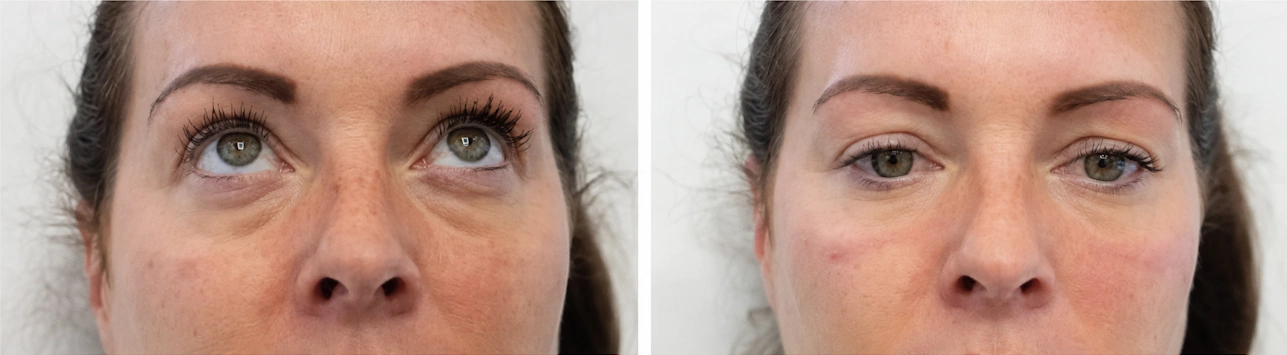
How Long Do Tear Trough Fillers Last?
Tear trough filler commonly remains noticeable for approximately 9–12 months, although the result can persist for longer or diminish sooner depending on the patient and product selected.
The under-eye area has different anatomical characteristics from the lips or lower face. There is less large-scale movement directly beneath the eyes, but the tissue is thin and delicate, so product selection and conservative placement are particularly important.
Longevity should not be the main reason for selecting an under-eye filler. The priority is whether filler is appropriate for the patient’s anatomy and whether the product can be placed in a way that maintains a smooth, natural transition between the lower eyelid and cheek.
Repeated tear trough treatment should also be approached cautiously. If a patient returns because the under-eye area looks different months or years later, the practitioner should reassess the anatomy rather than automatically assuming additional filler is required.
Why Do Dermal Fillers Gradually Break Down?
Hyaluronic acid is a substance naturally present within the body. Injectable hyaluronic acid fillers are modified and cross-linked so that they remain within tissue substantially longer than naturally occurring, unmodified hyaluronic acid. You can read our guide explaining dermal fillers for more information about how the treatment works and what to expect.
Over time, however, the filler undergoes gradual degradation. Naturally occurring enzymes, including hyaluronidase, and oxidative processes contribute to the breakdown of the hyaluronic acid gel.
As this happens, the visible volume or structural effect gradually reduces.
The process should not be thought of as a simple countdown. Different portions of a treated area may change at different rates, and the surrounding face is also continuing to age. Skin quality, fat distribution, bone structure, and facial proportions can all evolve during the same period.
Does Filler Completely Disappear After 6–18 Months?
Not necessarily.
Traditional treatment estimates usually describe how long the visible clinical result is expected to remain noticeable. The point at which a patient feels the effect has reduced will vary according to the treatment area, product used, facial movement, and individual biology.
For this reason, maintenance should not be based solely on how much time has passed since the previous treatment. A practitioner should reassess the area, consider previous filler history, and decide whether further treatment is clinically appropriate.
This is particularly important with repeated treatments, where adding more product without reassessing existing facial volume and proportion may not be necessary.
Clinical Note from Dr Nyla Raja
When someone returns for maintenance, I assess what is present now rather than simply looking at the date of their last treatment. A patient may still have adequate support or volume even if the original treatment was performed some time ago. In those circumstances, adding more filler may not be necessary.
When Should Dermal Filler Maintenance Be Considered?
Maintenance treatment may be considered when the original improvement has gradually reduced and further treatment remains appropriate for the patient’s facial anatomy and goals.
There is no requirement to have dermal filler “topped up” at a fixed interval.
At a review, a medical practitioner may consider:
- How much of the original aesthetic effect remains
- Whether previously treated areas still have adequate volume or support
- Changes in facial anatomy since the previous treatment
- Any previous filler treatments performed elsewhere
- Whether the patient’s goals have changed
- Whether additional filler would improve or compromise facial balance
- Whether another treatment approach would now be more appropriate
In some cases, the appropriate recommendation will be to wait rather than inject additional product. Before further treatment is planned, the practitioner should consider what filler may already be present, how the tissues have changed, and whether additional volume is clinically appropriate. Our guide to dermal filler safety, risks, and treatment planning explains why medical assessment, facial anatomy, product selection, and complication protocols are important when considering injectable treatment.
This is particularly important when a patient has undergone repeated filler treatments over several years. Accurate treatment records and a clear history of the areas and products previously injected can support safer long-term planning.
Should You Have Filler Before It Completely Wears Off?
Not necessarily. Some patients may benefit from a conservative maintenance treatment before the visible result has fully diminished, while others may be better advised to wait.
The decision should be based on clinical assessment rather than trying to keep the face at an unchanging volume indefinitely.
Facial ageing is dynamic. A treatment plan that was appropriate two years ago may not be the most appropriate approach today.
Why Clinics Should Not Guarantee an Exact Duration
A clinic can provide an evidence-informed estimate, but it cannot responsibly guarantee that dermal filler will last an exact number of months.
There are too many variables, including:
- Individual metabolism and biological response
- Facial movement
- Treatment area
- Product formulation
- Placement depth
- Amount of product used
- Previous filler treatments
- Changes in weight, anatomy, and the natural ageing process
There is also no universally agreed point at which a filler treatment has “stopped working”. One patient may consider the result to have faded when a subtle amount of volume has been lost, while another may still be satisfied with the remaining effect.
Giving an exact guarantee can therefore create unrealistic expectations. A more clinically responsible approach is to provide an approximate range, explain what influences it, and reassess the patient before recommending maintenance.
Does More Dermal Filler Last Longer?
Using a larger amount of filler can make a treatment effect more pronounced, but this does not mean that more product should be used simply to make results last longer.
The appropriate volume depends on facial anatomy, existing tissue support, treatment area, and the intended outcome.
Over-treatment can alter proportions and may contribute to heaviness, distortion, or an overfilled appearance. At Dr Nyla Medispa, our approach is based on using the amount clinically appropriate for the patient’s facial structure rather than maximising volume.
Where further treatment is appropriate, it can be planned following review rather than attempting to predict longevity by increasing the initial amount unnecessarily.
Does Lifestyle Affect How Long Dermal Fillers Last?
Lifestyle is sometimes discussed as a factor in filler longevity, but it should not be presented as something that allows an exact duration to be predicted.
Individual metabolism, general health, tissue characteristics, facial movement, and the natural ageing process all interact. Changes in body weight can also change facial volume and proportions independently of what is happening to the filler itself.
Good skin health, sun protection, and appropriate medical-grade skincare may support the quality of the skin surrounding a treated area, but skincare cannot prevent an injected hyaluronic acid filler from gradually degrading.
Similarly, patients should not feel that a result lasting for a shorter or longer period than another person’s result means they have done something incorrectly. Biological variation is expected.
How Do You Know When Dermal Filler Is Wearing Off?
Dermal filler usually changes gradually, so there may not be one clear day when it has “worn off”.
Depending on the treatment area, you may notice:
- Less lip volume or definition
- Gradual return of cheek hollowing or reduced projection
- Reduced jawline definition
- Less chin projection or structural support
- Gradual return of under-eye hollowing or shadowing
These changes may also reflect the natural ageing process rather than filler degradation alone.
If you are unsure whether maintenance is appropriate, a clinical review is more useful than trying to compare your appearance with photographs taken immediately after treatment, when swelling may have temporarily increased volume.

Book in a Free Consultation With Our Expert Team
- Award-winning, doctor-led aesthetic clinics
- Locations in London, Cheshire, and Liverpool
- Over 50 non-surgical treatments available
- Free consultation with a personalised plan
Dermal Filler Longevity FAQs
How long do dermal fillers usually last?
Many hyaluronic acid dermal filler treatments provide a visible result for approximately 6–18 months, although some treatment areas and products can remain clinically noticeable for longer. Longevity varies between patients and should be discussed as a range rather than a guarantee.
Which area of dermal filler lasts the longest?
Structural areas such as the cheeks, chin, and jawline may retain a visible result for longer than highly mobile areas such as the lips. However, the product, injection depth, amount used, anatomy, and individual biology all influence longevity.
Why does lip filler wear off faster?
The lips are highly mobile and move continuously during speech, eating, drinking, and facial expression. This is one reason lip filler can appear to diminish sooner than filler in less mobile facial areas.
How long do cheek fillers last?
Cheek filler commonly remains noticeable for around 12–18 months, although results vary. Deeper structural placement and reduced movement within parts of the mid-face can contribute to longer persistence.
How long does jawline filler last?
Jawline filler may remain noticeable for approximately 12–24 months in some patients, depending on the filler used, amount and placement, facial anatomy, movement, and individual response.
How long does chin filler last?
Chin filler may provide a visible result for approximately 12–24 months in some treatment plans. The expected duration should be discussed individually because product selection, treatment depth, volume, and anatomy vary.
How long does tear trough filler last?
Tear trough filler commonly lasts around 9–12 months, although some patients experience shorter or longer persistence. Conservative assessment is particularly important before repeating treatment in the under-eye area.
Does filler completely dissolve after a year?
Not necessarily. The visible aesthetic effect may reduce within a year, but imaging studies have shown that residual hyaluronic acid can remain detectable substantially longer in some facial areas. This is why previous filler history should be considered before maintenance treatment.
Can dermal filler last for years?
Yes, residual hyaluronic acid has been detected on imaging years after injection in some patients, particularly in the mid-face. This does not mean the original cosmetic result remains unchanged for that entire period, and further research is still needed to understand long-term persistence fully.
How often should I have dermal filler topped up?
There is no universal maintenance schedule. Additional treatment should be considered following assessment of your existing filler, current facial anatomy, treatment goals, and whether more product is genuinely indicated. If you have recently had treatment, our dermal filler aftercare guide explains what to do during the first 24–72 hours, including exercise, alcohol, make-up, skincare, swelling, bruising, and when to contact the clinic.
Will more filler make my results last longer?
More product does not automatically produce a better or proportionately longer-lasting result. The amount used should be determined by anatomy and clinical need, with facial balance taking priority over maximising volume.
Dermal Filler Longevity at Dr Nyla Medispa
Dermal filler longevity is individual. Product selection, treatment area, facial movement, placement depth, amount used, metabolism, and individual biology all influence how a result changes over time.
For this reason, we do not approach maintenance as a fixed timetable. At Dr Nyla Medispa, dermal filler treatment is planned around your existing anatomy and previous treatment history, with the aim of maintaining proportion and avoiding unnecessary product.
If you have an existing filler treatment and would like advice about whether maintenance is appropriate, you can contact Dr Nyla Medispa or call our team on 0800 009 6661.
If you are considering dermal fillers for the first time, you can book a free consultation at our London, Cheshire, or Liverpool clinic. Your consultation allows our medical team to assess your facial anatomy, discuss realistic expectations for longevity, and determine whether treatment is appropriate for your individual concerns.
Need Guidance in Selecting the Most Appropriate Treatment?
Related Treatments

Dermal Fillers

Jawline Fillers

Tear Trough Fillers
8 Point Facelift

Non-Surgical Transformation Facelift

About the Author
Considering treatment? Book a free consultation at our clinics in Mayfair London, Alderley Edge Cheshire, or Crosby Liverpool, or call 0800 009 6661.