
Who Is Suitable for Aqualyx, and When Is It Not the Right Treatment?

Clinical guidance from Dr Nyla Raja MBChB (Hons), MRCGP (Dist), DFFP, DPDermatology - GMC No. 6057913
Aqualyx Suitability: At a Glance
Aqualyx fat-dissolving injections are best suited to selected pockets of localised subcutaneous fat rather than general weight reduction. A suitable patient will usually have a relatively defined area of pinchable fat, realistic expectations about the degree of contour change possible, and no medical reason why treatment should be avoided.
Suitability depends on more than body weight. The practitioner should assess the amount and distribution of fat, the quality of the overlying skin, the anatomy of the treatment area, medical history, current medicines, and whether another treatment would address the concern more appropriately.
Aqualyx is not appropriate during pregnancy or breastfeeding. It may also be unsuitable where certain medical conditions, active disease, infection or inflammation, or other contraindications are identified during consultation. Patients seeking significant overall weight loss are unlikely to be appropriate candidates because Aqualyx is a localised body-contouring treatment rather than a weight-management treatment.
- Usually most suitable for: defined pockets of localised, pinchable subcutaneous fat
- Weight: generally better suited to patients whose weight is relatively stable
- Skin: skin quality and laxity should be assessed before reducing the underlying fat
- Expectations: results are gradual and usually involve contour refinement rather than dramatic weight loss
- Pregnancy and breastfeeding: treatment should be deferred
- Medical history: must be reviewed before treatment
- Alternative treatment: may be more appropriate where the main concern is loose skin, a large volume of fat, or another anatomical factor
A consultation is necessary to determine individual suitability. Being concerned about a particular area of fat does not necessarily mean that Aqualyx is the most appropriate treatment for that area.
Who Is Suitable for Aqualyx?
Aqualyx is generally most appropriate for someone with a small to moderate, clearly defined area of subcutaneous fat that they would like to reduce without surgery.
Common examples can include localised fullness beneath the chin, abdomen, flanks, upper arms, thighs, or around the knees. The important point is not simply where the fat is located, but whether it forms a suitable deposit that can be treated safely and predictably. For more background on the treatment itself, our guide to how Aqualyx works and what it can treat explains the difference between suitable subcutaneous fat, general body fat, and other causes of unwanted fullness.
A good candidate will commonly have:
- A clearly identifiable pocket of subcutaneous fat
- A relatively stable body weight
- Reasonable skin quality over the treatment area
- Realistic expectations about the amount of reduction possible
- No contraindication identified during medical assessment
- An understanding that several sessions may be required
Published research on injectable deoxycholic acid for submental fat also emphasises the importance of careful patient selection and expectation management. That evidence relates to ATX-101 rather than Aqualyx specifically, but it reinforces a broader clinical principle: injectable fat reduction works best when the underlying anatomy and treatment objective are appropriate.
Clinical Note from Dr Nyla Raja
Aqualyx is not a treatment that should be selected simply because a patient can identify an area they dislike. We first need to establish what is creating the contour. Fat, loose skin, underlying bone structure, muscle, and general body composition can all contribute, and reducing fat is only useful when fat is genuinely the problem we are trying to address.

Aqualyx Is for Localised Fat, Not General Weight Loss
The distinction between localised fat reduction and weight loss is central to deciding whether Aqualyx is appropriate.
Aqualyx targets a specific deposit of subcutaneous fat. It does not meaningfully reduce overall body weight, treat obesity, or replace dietary, lifestyle, or medically supervised weight-management strategies.
A person may be at a stable weight and still have an area that remains disproportionately full because of genetics and individual fat distribution. This type of concern may be more suitable for localised contouring.
By contrast, where excess fat is distributed widely across the body, treating one area with injections is unlikely to address the underlying concern effectively.
The NHS guidance on overweight and obesity outlines evidence-based approaches to weight management and access to additional support where weight reduction itself is the goal.
Our page on localised body fat explains how fat distribution, treatment area, skin quality, and body composition can affect the choice of non-surgical contouring treatment.
Why Does Skin Quality Matter for Aqualyx?
Reducing fat changes the volume beneath the skin. The quality of the overlying skin therefore has an important influence on how the final contour may look.
If the skin has reasonable elasticity, it may adapt more favourably as the underlying fat deposit becomes smaller. Where there is significant laxity, however, reducing fat alone may leave loose skin more apparent.
This is particularly relevant in areas such as:
- Under the chin and jawline
- Upper arms
- Abdomen
- Inner thighs
- Areas affected by substantial previous weight loss
Aqualyx should not be presented as a skin-tightening treatment. If laxity is the main concern, reducing the fat may not produce the result the patient expects.
In these circumstances, treatment directed towards sagging or loose skin may be more relevant. Depending on the degree of laxity, consultation may include discussion of non-surgical skin-tightening treatments or, where excess skin is substantial, a surgical opinion.
Why Does the Treatment Area Affect Suitability?
The same treatment is not equally appropriate for every area of unwanted fullness.
For example, a small, pinchable deposit on the abdomen is anatomically different from fullness beneath the chin. Under the chin, the appearance may be influenced by the amount of fat, skin laxity, chin projection, jaw position, neck anatomy, and muscle structure.
Reducing fat will only address the fat component.
The same principle applies elsewhere on the body. Abdominal contour may be influenced by subcutaneous fat, visceral fat deeper within the abdomen, loose skin, muscle separation, or a combination of factors. Aqualyx can only target suitable subcutaneous fat within the treatment area.
This is why physical assessment is more useful than selecting a procedure from photographs or a list of treatment areas online.
What Are Realistic Expectations from Aqualyx?
A suitable patient should understand that Aqualyx is intended to produce gradual contour refinement, not an immediate or surgical-scale change.
Many patients require a course of treatment rather than one appointment. Swelling can initially make the area look fuller, and the eventual result develops over the following weeks.
The amount of change depends on factors including:
- The initial amount of localised fat
- The size of the treatment area
- The number of sessions
- The amount of product that can appropriately be used
- Skin quality
- Individual biological response
Someone expecting a very large reduction from a single injection session may therefore be a poor candidate unless those expectations can be appropriately adjusted during consultation.
Our guide to Aqualyx results explains how many sessions are commonly needed, treatment spacing, swelling, and when visible improvement can reasonably be assessed.

How Does Medical History Affect Aqualyx Suitability?
Aqualyx is an injectable medical aesthetic treatment, so a medical history should be reviewed before treatment is recommended.
The consultation should cover relevant health conditions, previous procedures, allergies or sensitivities, current medicines, and any recent illness or active problem affecting the proposed treatment area.
Professional Aqualyx safety information identifies several circumstances in which treatment may be inappropriate, including certain active acute conditions, significant organ dysfunction, severe autoimmune disease, and immunosuppression. Suitability within these categories requires medical judgement rather than a patient deciding independently that a condition is minor enough to ignore.
An active infection or significant inflammation affecting the proposed injection area would also be a reason to postpone treatment until the cause has been assessed and resolved.
Patients should disclose their complete medical history even where a condition appears unrelated to cosmetic treatment. This includes medicines and supplements, because these may influence bleeding, bruising, healing, or whether treatment is appropriate.
Our guide to Aqualyx safety, side effects, and aftercare covers expected reactions, uncommon complications, recovery, and when patients should contact their treating clinic.
Can You Have Aqualyx During Pregnancy or Breastfeeding?
No. Aqualyx treatment should be deferred during pregnancy and breastfeeding.
Professional Aqualyx safety information lists pregnant and breastfeeding patients among those unsuitable for treatment. This is also consistent with the general principle that elective injectable aesthetic procedures should not be undertaken where adequate safety data for pregnancy or lactation are lacking.
This does not mean that a specific harm has been established in pregnancy. Rather, there is no clinical justification for exposing a pregnant or breastfeeding patient to an elective treatment when safety has not been adequately established.
Treatment can be reconsidered later following an individual consultation.
When Might Aqualyx Not Be the Right Treatment?
Aqualyx may be inappropriate, or simply unlikely to give the best result, where:
- The primary concern is general weight rather than a localised fat deposit
- The amount of fat is too large for practical injectable treatment
- The apparent fullness is not predominantly caused by subcutaneous fat
- Significant loose skin is the main concern
- The patient is pregnant or breastfeeding
- An active skin problem, infection, or acute illness is present
- A relevant medical contraindication is identified
- The expected result is disproportionate to what non-surgical fat reduction can reasonably achieve
- The patient is unable to accommodate the likely swelling or recovery associated with treatment
Declining Aqualyx does not necessarily mean that nothing can be done. It may simply mean that another treatment addresses the underlying concern more accurately.

When Might Another Treatment Be More Appropriate?
When There Is a Larger Area of Pinchable Fat
For some larger treatment areas, CoolSculpting fat freezing may provide a more practical non-invasive approach. CoolSculpting and Aqualyx work differently, and neither is automatically preferable; suitability depends on the anatomy and the treatment objective.
When Loose Skin Is the Main Concern
If the problem is predominantly skin laxity, a treatment designed to improve skin firmness may make more sense than removing further volume. Options can include technologies such as Ultherapy or other skin-tightening treatments following assessment.
When a Large Reduction Is Required
Non-surgical procedures have limitations. Where a patient has a substantial amount of fat to remove or significant excess skin, surgery may provide a degree of change that injectable or device-based treatments cannot reproduce.
When Overall Weight Is the Concern
If the objective is meaningful overall weight reduction rather than contouring one area, weight-management support is more appropriate. Aqualyx should not be used as a substitute for this.
Clinical Note from Dr Nyla Raja
A good consultation sometimes ends with a recommendation not to have the treatment the patient initially asked about. The purpose of assessment is to identify what is creating the concern and then decide which approach, if any, is most likely to address it safely and proportionately.
What Happens at an Aqualyx Suitability Consultation?
The consultation should establish both medical suitability and aesthetic suitability.
Your practitioner will usually consider:
- The area you would like to change
- Whether the fullness is caused by suitable subcutaneous fat
- The amount and distribution of fat
- Skin quality and degree of laxity
- Your general health and relevant medical history
- Medicines, allergies, and previous treatments
- Your expected degree of improvement
- The likely number of treatments and recovery involved
- Whether another treatment would be more appropriate
A consultation should also include a balanced discussion of side effects, limitations, and alternatives rather than focusing only on potential benefits.
The NHS guidance on choosing a cosmetic practitioner recommends checking the practitioner’s qualifications, training, experience, insurance, and arrangements for follow-up care before undergoing a cosmetic procedure.
At Dr Nyla Medispa, Aqualyx is provided within a doctor-led, medically regulated setting, with treatment recommendations based on individual anatomy, suitability, and treatment goals.

Book in a Free Consultation With Our Expert Team
- Award-winning, doctor-led aesthetic clinics
- Locations in London, Cheshire, and Liverpool
- Over 50 non-surgical treatments available
- Free consultation with a personalised plan
Aqualyx Suitability FAQs
Who is the ideal candidate for Aqualyx?
Aqualyx is generally best suited to a healthy adult with a relatively defined pocket of localised subcutaneous fat, stable weight, suitable skin quality, and realistic expectations about gradual contour improvement.
Do you need to be at your ideal weight before Aqualyx?
There is no single number on the scales that determines suitability. However, Aqualyx is generally more appropriate when weight is reasonably stable and the concern is a particular localised fat deposit rather than a need for significant overall weight reduction.
Can overweight patients have Aqualyx?
Aqualyx is not designed to treat obesity or produce meaningful overall weight loss. Whether it is appropriate for an individual depends on their body composition, treatment area, medical history, and objectives, so this should be assessed clinically rather than decided from BMI alone.
Can Aqualyx tighten loose skin?
Aqualyx principally reduces localised fat; it is not primarily a skin-tightening treatment. Where significant laxity is present, a skin-tightening treatment or another approach may be more appropriate.
Can you have Aqualyx while pregnant?
No. Aqualyx should not be performed during pregnancy.
Can you have Aqualyx while breastfeeding?
No. Treatment should be deferred while breastfeeding and reconsidered later following assessment.
What medical conditions can prevent Aqualyx treatment?
Suitability depends on the individual medical history. Professional safety information identifies circumstances including certain active acute conditions, significant organ dysfunction, severe autoimmune disease, and immunosuppression as reasons treatment may be inappropriate. Any medical condition or regular medication should therefore be disclosed during consultation.
Is Aqualyx suitable for a double chin?
It can be suitable where the fullness is caused predominantly by a defined deposit of subcutaneous fat. If loose skin, chin projection, jaw structure, or neck anatomy is contributing significantly, reducing fat alone may not achieve the desired result.
Can Aqualyx be used for stomach fat?
Selected subcutaneous abdominal fat can be treated, but Aqualyx does not address visceral fat deeper inside the abdomen, muscle separation, or substantial loose skin. Assessment is needed to establish what is causing the abdominal contour.
How many Aqualyx sessions will I need?
Many patients have a course of treatment, but the number of sessions depends on the area, amount of localised fat, and individual response. Our Aqualyx results guide explains treatment courses and timelines in more detail.
How much does Aqualyx cost?
Cost varies according to the treatment area, amount of product required, and number of sessions. Our guides to Aqualyx costs in the UK and Aqualyx costs in London provide more detailed pricing information.
Aqualyx Suitability: Choosing the Right Treatment for the Right Concern
Aqualyx can be a useful option for selected pockets of localised subcutaneous fat, but appropriate patient selection is fundamental to achieving a proportionate result.
The best candidate is not defined by a single measurement. Suitability depends on the amount and location of fat, skin quality, body composition, medical history, expectations, and whether reducing fat will genuinely address the concern.
Where the issue is primarily general weight, significant skin laxity, a large amount of fat, or another anatomical factor, a different treatment or medical pathway may be more appropriate. Pregnancy, breastfeeding, and relevant medical contraindications are also reasons to defer or avoid treatment.
If you are considering Aqualyx, you can book a free consultation at Dr Nyla Medispa to have the area assessed and discuss whether injectable fat reduction is appropriate for you.
Need Guidance in Selecting the Most Appropriate Treatment?
Related Treatments
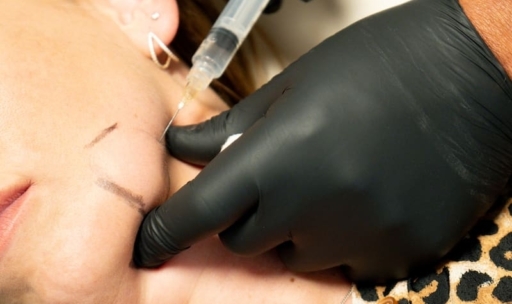
Aqualyx Fat Dissolving Injections

CoolSculpting Fat Freezing
Emerald Laser Fat Loss
LIPOcel Body Contouring

EMSCULPT Body Sculpting

About the Author
Considering treatment? Book a free consultation at our clinics in Mayfair London, Alderley Edge Cheshire, or Crosby Liverpool, or call 0800 009 6661.