
Non-Surgical Rhinoplasty Aftercare: What to Avoid, Swelling Timeline and Urgent Warning Signs
Clinical guidance from Dr Nyla Raja MBChB (Hons), MRCGP (Dist), DFFP, DPDermatology - GMC No. 6057913
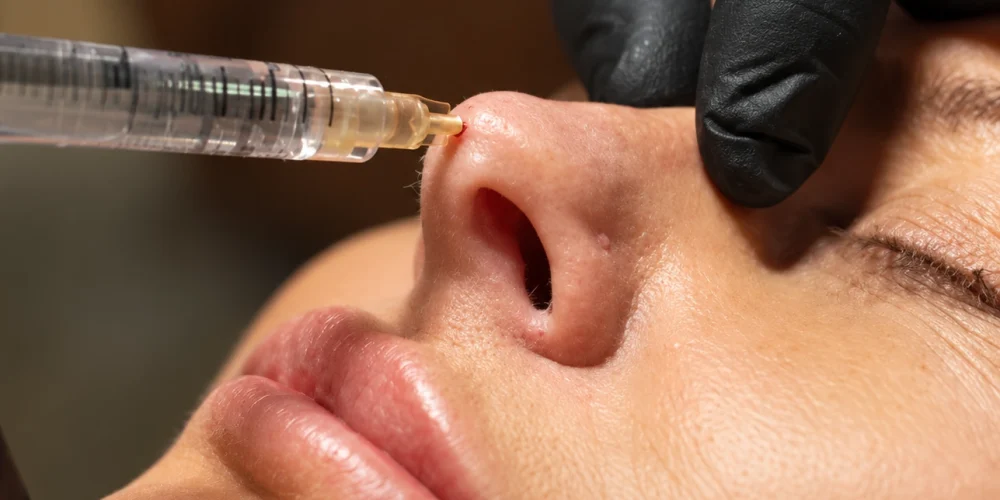
After non-surgical nose reshaping, it is important to avoid touching or putting pressure on the nose for at least six hours. Strenuous exercise should be avoided for the first 24 hours, while alcohol, excessive heat, and extreme cold should be avoided for the period advised by your practitioner. Mild swelling, tenderness, redness, and bruising are common temporary effects, but increasing pain, unusual skin-colour changes, or any visual symptoms require prompt action.
At Dr Nyla Medispa, you will receive personalised aftercare before leaving the clinic. That advice should always take priority over general guidance online, particularly if you have had previous filler, nasal surgery, or an individual treatment plan.
What to avoid after non-surgical rhinoplasty
The nose should be treated gently following filler treatment. Avoid trying to reshape, massage, or assess the contour repeatedly in the mirror: early swelling can make the area look temporarily different from the settled result.
- Do not touch, rub, massage, or apply pressure to the nose for at least the first six hours. Avoid continued rubbing, firm pressure, and sleeping face-down during the early recovery period unless your practitioner has specifically advised otherwise.
- Avoid strenuous exercise for 24 hours. Raising your heart rate and body temperature may make short-term swelling and bruising more noticeable.
- Avoid alcohol, excessive heat, and extreme cold for the timeframe set out in your individual aftercare. This includes saunas, steam rooms, hot yoga, and very cold outdoor exposure.
- Do not arrange facial treatments, facial massage, or dental treatment without checking first. Pressure, manipulation, or inflammation around the area may not be appropriate immediately after an injectable treatment.
- Do not self-treat lumps or unevenness. Temporary firmness can occur after filler. Do not press or massage the area unless your practitioner has told you to do so.
It is also sensible to use make-up sparingly on the day of treatment and to apply it with clean hands and clean products. A clinical consensus on injectable aftercare advises avoiding rubbing the face, strenuous activity during the first 24 hours, and self-massage while the result is settling. Read the published clinical consensus recommendations.
Clinical Note from Dr Nyla Raja
Non-surgical nose reshaping at Dr Nyla Medispa is an individualised injectable treatment. The aftercare provided by the treating clinician should reflect the treatment performed, your previous treatment history, and any concerns identified at review. Patients should contact the medical team, rather than attempting to alter or massage the treated area themselves, if they are concerned about swelling, contour, or discomfort.
Non-surgical rhinoplasty swelling timeline
Results can be visible immediately, but the appearance on the day is not necessarily the final contour. The nose may look slightly fuller, feel tender, or show small injection marks while the tissue settles. Most routine redness, swelling, tenderness, and bruising are mild and improve within a few days, although bruising can remain visible for longer in some people.
| Time after treatment | What may be expected |
|---|---|
| First few hours | Mild redness, tenderness, small injection marks, and early swelling. |
| First 1–3 days | Swelling or bruising may be more noticeable before it begins to settle. The nose can feel temporarily firm. |
| Following days | Routine swelling and tenderness should improve, rather than become more painful, discoloured, or extensive. |
| Settling period | Assess the contour once early swelling has settled, rather than judging the result immediately after treatment. |
Recovery varies with the amount and placement of filler, your natural tendency to bruise or swell, and whether you have had filler in the area before. If you have an important event, allow time for possible bruising or swelling rather than booking treatment immediately beforehand.
When to contact the clinic promptly
Routine swelling should settle progressively. Contact the treating medical team promptly if you notice worsening rather than improving symptoms, including:
- increasing, severe, or disproportionate pain;
- skin that becomes unusually pale, mottled, dusky, blue-grey, or cool;
- an unusual bruise-like pattern that is spreading or worsening;
- new blisters, pustules, increasing warmth, or discharge from the treated area; or
- a persistent lump, marked asymmetry, or concern about the contour once early swelling has begun to settle.
These symptoms do not mean that a serious complication has definitely occurred, but they need clinical assessment. In particular, increasing pain and changes in skin colour may indicate compromised blood supply. Expert guidance on hyaluronic acid filler vascular occlusion emphasises that worsening pain, pallor, dusky skin, and a net-like purple pattern require immediate assessment and treatment. Read the CMAC clinical guideline on recognising vascular occlusion.
When to call 999 after nose filler
Call 999 immediately if you develop sudden blurred, reduced, or double vision, loss of vision, significant eye pain, facial weakness, difficulty speaking, confusion, or other new neurological symptoms. Do not wait for a routine appointment, an online reply, or for symptoms to settle.
Severe vascular complications from filler are rare, but the nose is an area where immediate recognition matters. If you have severe increasing pain or an unusual skin-colour change and cannot reach your treating practitioner, seek urgent medical assessment rather than waiting.
Can you use ice after non-surgical rhinoplasty?
Do not place ice or a cold pack directly on the nose unless your practitioner has specifically advised it. Although cold is sometimes used after injectable treatments for comfort, it can make it harder to recognise a meaningful change in skin colour or temperature. Avoiding extreme cold may also be included in individual aftercare guidance for non-surgical nose reshaping.
The key point
After non-surgical rhinoplasty, protect the nose from pressure, avoid strenuous exercise for 24 hours, and allow early swelling to settle before judging the result. Mild tenderness, redness, swelling, and bruising can be expected, but escalating pain, unusual discolouration, or any visual or neurological symptom is not routine aftercare: contact the treating medical team urgently, or call 999 immediately for eye or neurological symptoms.
Need Guidance in Selecting the Most Appropriate Treatment?
About the Author
Considering treatment? Book a free consultation at our clinics in Mayfair London, Alderley Edge Cheshire, or Crosby Liverpool, or call 0800 009 6661.