
XERF Results: When Do You See Results and How Long Do They Last?

Clinical guidance from Dr Nyla Raja MBChB (Hons), MRCGP (Dist), DFFP, DPDermatology - GMC No. 6057913
XERF Results: At a Glance
XERF is a non-invasive monopolar radiofrequency treatment designed to improve skin firmness and mild to moderate laxity by delivering controlled thermal energy into selected tissue depths. It combines 6.78 MHz and 2 MHz radiofrequency energy, producing an immediate thermal response in existing collagen alongside a slower process of collagen remodelling.
Some patients notice a subtle improvement in firmness or contour shortly after XERF treatment, but this should not be regarded as the final result. More meaningful changes generally develop gradually over the following weeks and months as the treated tissues remodel.
Early XERF-specific clinical research has documented changes immediately after treatment and progressive improvements at one and three months following a single session. However, the published evidence is still relatively limited, so long-term results should not be presented as a guaranteed fixed duration.
- Immediately after treatment: some patients notice subtle firmness or tightening
- First 4–6 weeks: gradual changes may become easier to appreciate
- Around 2–3 months: collagen remodelling can make the result more established
- Number of treatments: some patients may begin with one treatment, while others may be advised to have a second treatment depending on laxity and response
- Longevity: results are temporary and gradually change as normal ageing continues
- Maintenance: should be based on reassessment rather than an automatic fixed schedule
XERF results vary according to baseline skin quality, degree of laxity, age, treatment area, treatment parameters, and individual biological response. Non-surgical radiofrequency treatment cannot reproduce the degree of correction possible with surgery where substantial excess skin or advanced tissue descent is present.
When Do You See Results from XERF?
XERF results do not appear at one single point in time. There is an early thermal response followed by a much slower biological response.
A typical progression is:
- Immediately: the skin may appear or feel slightly firmer
- Several weeks: gradual improvement in firmness and contour may become more apparent
- One to three months: ongoing collagen remodelling can produce a more established result
- Later months: the result should be monitored as the remodelling process settles and normal ageing continues
Published XERF research is consistent with this gradual pattern. A recent retrospective study followed patients after one treatment and assessed them immediately, at one month, and at three months. Objective imaging and patient-reported measures showed progressive changes during follow-up, although the study was small and did not include an untreated control group. Clinical research on XERF results should therefore be interpreted as promising early evidence rather than proof that every patient will experience the same degree or duration of improvement.

Are XERF Results Immediate?
There can be an immediate component, but it is important not to judge the final result immediately after treatment.
Controlled radiofrequency heating can cause existing collagen fibres to contract. This can contribute to an early feeling or appearance of greater firmness.
Temporary post-treatment tissue changes can also influence how the face looks immediately afterwards. For this reason, photographs taken straight after treatment are not the most useful measure of the eventual result.
The clinically more important change develops gradually as the tissue responds over the subsequent weeks.
Why Do XERF Results Continue Developing?
XERF uses radiofrequency energy to generate controlled heat within selected tissues. Thermal stimulation affects existing collagen and initiates a biological repair and remodelling response.
Collagen does not remodel instantaneously. Fibroblast activity, new collagen formation, and changes in collagen organisation develop over time, which explains why skin firmness may continue changing after the treatment appointment itself.
This is consistent with the wider clinical evidence on monopolar radiofrequency and collagen remodelling. Histological research has demonstrated changes in collagen density and organisation months after monopolar radiofrequency treatment.
XERF should therefore be considered a collagen-remodelling treatment rather than a procedure where the complete outcome can be assessed on the day.
When Are XERF Results Most Noticeable?
For many patients, the more meaningful assessment point is approximately two to three months after treatment, rather than during the first few days.
At this stage, there has been sufficient time for some of the slower tissue response to develop, and temporary immediate effects are less likely to influence assessment.
This does not mean every patient reaches a fixed “peak” at exactly three months. Collagen biology varies, and treatment plans can also differ.
A patient undergoing two treatments will naturally have a different timeline from somebody having one session because the second treatment creates another period of tissue response and remodelling.
Clinical Note from Dr Nyla Raja
With collagen-stimulating treatments, we assess progress over time rather than judging the outcome immediately. Early tightening can be encouraging, but photographs taken several weeks or months apart provide a more useful indication of how the tissue has responded.
How Long Do XERF Results Last?
XERF results are not permanent. The treatment does not stop intrinsic ageing, collagen loss, sun-related change, hormonal influences, or changes in facial and body structure over time.
Current XERF-specific published research provides follow-up through approximately three months, so there is not yet a large body of independent long-term evidence establishing one precise duration for everybody.
The manufacturer’s current clinical guidance describes results as commonly lasting in the region of six to nine months, with duration varying according to treatment course and individual response. Longer durations are sometimes quoted in aesthetic practice, but these should not be presented as guaranteed outcomes because robust long-term XERF-specific evidence remains limited.
A more clinically useful way to think about longevity is that improvement develops gradually, remains visible for a period, and then slowly changes as the natural ageing process continues.
How Many XERF Treatments Do You Need?
There is no universal number of XERF treatments required.
Some patients with relatively mild laxity may begin with one treatment and review the response before deciding whether anything further is appropriate.
Others may be advised to undergo two treatments, particularly where greater collagen stimulation is considered appropriate. Manufacturer guidance refers to longer-lasting results based on two treatments approximately six weeks apart, but this should not be converted into a mandatory course for every patient.
The appropriate number of treatments depends on:
- Degree of skin laxity
- Skin thickness and quality
- Age and baseline collagen support
- Treatment area
- Response to the first treatment
- Previous energy-based treatments
- Patient expectations
- Whether the desired improvement is realistically achievable without surgery
A treatment plan should therefore be confirmed after assessment rather than selling every patient the same number of sessions.

Do You Need Maintenance XERF Treatments?
Maintenance may be appropriate because XERF does not prevent further ageing.
However, maintenance should not automatically mean repeating treatment at a predetermined interval regardless of response.
A more appropriate approach is to reassess:
- How much of the original improvement remains
- Whether laxity has progressed
- Whether the patient’s priorities have changed
- Whether XERF remains the most appropriate technology
- Whether another treatment would address the concern more effectively
For some patients, reassessment in the region of six to twelve months may be reasonable. The decision to retreat should follow examination rather than simply the passage of time.
How Does Skin Laxity Affect XERF Results?
The starting degree of laxity is one of the most important determinants of what XERF can realistically achieve.
Mild to moderate skin laxity generally provides a more appropriate indication for non-surgical radiofrequency tightening than substantial excess skin.
Early concerns may include:
- Reduced firmness through the lower face
- Early jawline softening
- Mild neck laxity
- Loss of skin elasticity
- Selected areas of mild body skin laxity
Where there is significant hanging or redundant skin, repeated non-surgical treatment should not be presented as equivalent to surgical removal or repositioning of tissue. This is why assessing who is suitable for XERF is important before estimating the likely degree of improvement.
Our broader page on non-surgical skin tightening explains how different energy-based treatments can be selected according to the type and degree of laxity present.
Does Age Affect XERF Results?
Age can influence results, but chronological age alone does not determine whether somebody will respond well.
Two patients of the same age may have substantially different skin because of differences in:
- Baseline collagen and elasticity
- Sun exposure
- Smoking history
- Weight change
- Genetics
- Skin thickness
- Hormonal and age-related changes
- Previous aesthetic treatments
A younger patient with early laxity may have a different treatment objective from an older patient with established tissue descent. Conversely, an older patient with relatively good skin quality may remain a reasonable candidate for non-surgical tightening.
Suitability therefore needs to be determined by examination rather than age alone.
Why Do XERF Results Differ Between Patients?
No energy-based skin tightening treatment produces an identical response in everybody.
XERF results can vary because of differences in:
- Baseline skin quality: collagen density, elasticity, and tissue thickness vary
- Severity of laxity: mild laxity is different from substantial excess skin
- Facial anatomy: bone structure, fat distribution, and volume loss influence visible contour
- Treatment area: the jawline, neck, face, and body have different anatomical characteristics
- Treatment parameters: energy delivery and treatment planning are individualised
- Ageing: biological ageing continues after treatment
- Lifestyle: smoking, excessive ultraviolet exposure, and major weight fluctuations can affect skin quality over time
- Individual healing response: collagen remodelling is biologically variable
Understanding how XERF radiofrequency technology works also helps explain why treatment depth and energy delivery need to be tailored to the individual.
This is why before-and-after images should be treated as examples of individual outcomes rather than promises of what another patient will achieve.
What XERF Cannot Correct
Realistic expectations depend partly on identifying when the visible concern is not primarily caused by skin laxity.
XERF does not:
- Replace lost facial volume
- Reshape the underlying facial skeleton
- Remove significant excess skin
- Provide surgical-level tissue repositioning
- Act as a weight-loss treatment
- Directly correct all causes of jowling
For example, a softer lower face can result from skin laxity, facial volume loss, localised fat, skeletal anatomy, ligamentous change, or several of these factors together.
Adding more tightening treatment when laxity is not the main problem may provide limited benefit. Clinical assessment should therefore establish which tissues are contributing to the concern before treatment is recommended.
How Should XERF Results Be Assessed?
XERF results are best assessed using comparable baseline and follow-up photographs alongside clinical examination.
Useful comparisons should ideally use:
- The same lighting
- The same camera position
- The same facial expression
- The same head position
- Similar styling and makeup where possible
- An appropriate interval after treatment
Small changes in jaw position, lighting, or expression can make apparent tightening look greater or smaller than it really is.
Assessment should also consider whether the original objective has been achieved rather than focusing only on whether a photograph looks different.
XERF Results at Dr Nyla Medispa
At Dr Nyla Medispa, XERF skin tightening is provided within a doctor-led, medically regulated clinic. Treatment planning is individualised according to skin laxity, facial or body anatomy, skin quality, previous treatments, and the degree of improvement that can realistically be achieved without surgery.
We do not assume that every patient requires the same course. Progress can be reviewed after the initial treatment, with further treatment considered according to the clinical response and original treatment objective.
XERF is available through Dr Nyla Medispa in Mayfair London, Alderley Edge Cheshire, and Crosby Liverpool.

Book in a Free Consultation With Our Expert Team
- Award-winning, doctor-led aesthetic clinics
- Locations in London, Cheshire, and Liverpool
- Over 50 non-surgical treatments available
- Free consultation with a personalised plan
XERF Results FAQs
How quickly do you see XERF results?
Some patients notice subtle firmness immediately after treatment, but the more meaningful result develops gradually. Changes may become increasingly apparent over the following weeks, with two to three months providing a useful point for assessing collagen remodelling.
Do XERF results get better over time?
They can. Radiofrequency heating produces an early collagen response while also initiating longer-term remodelling. This is why the result should not be judged solely on the day of treatment.
When do you see the final results from XERF?
There is no single day on which the result becomes final. XERF-specific clinical data demonstrate progressive changes through approximately three months, and individual remodelling timelines vary.
How long do XERF results last?
Results are temporary. Current manufacturer guidance commonly describes results lasting approximately six to nine months, although individual duration varies and XERF-specific long-term clinical evidence remains limited. Ageing continues after treatment.
Is one XERF treatment enough?
It may be for some patients. Others may benefit from a second treatment depending on their baseline laxity, treatment objective, and response. There should not be an automatic fixed course for everybody.
How long should you wait between XERF treatments?
Where two treatments are recommended, protocols may use an interval of approximately six weeks. The appropriate timing should be confirmed by the treating practitioner according to the individual plan.
Does XERF work better on younger skin?
Not necessarily. Younger patients may have greater baseline collagen support and earlier laxity, but chronological age alone does not predict treatment response. Skin quality and the degree of laxity are more useful clinical considerations.
Does XERF work for severe loose skin?
XERF is more appropriately considered for selected mild to moderate laxity. Significant excess skin or advanced tissue descent may require a surgical consultation if substantial correction is the objective.
Can XERF replace a facelift?
No. XERF is a non-surgical radiofrequency treatment. It can improve selected skin-tightening concerns but cannot remove excess skin or reproduce the degree of tissue repositioning possible with a surgical facelift.
Do you need maintenance after XERF?
Some patients choose further treatment as the effects gradually soften and ageing continues. Maintenance should be based on reassessment of the skin and remaining result rather than automatically repeating treatment on a fixed timetable.
XERF Results Develop Gradually, Not Overnight
XERF can produce an early feeling or appearance of firmness, but its principal value is the gradual tissue response that follows controlled radiofrequency heating. Collagen remodelling takes time, meaning the result may continue developing for several weeks and can be more meaningfully assessed around two to three months after treatment.
How noticeable the result becomes, how many treatments are appropriate, and how long improvement remains visible depend on skin laxity, age, baseline skin quality, anatomy, treatment parameters, and individual collagen response.
Appropriate patient selection is therefore important. XERF can be useful for selected mild to moderate laxity, but it should not be positioned as a replacement for surgery or as a solution for every cause of facial or body ageing.
If you are considering XERF, you can book a free consultation at Dr Nyla Medispa in Mayfair London, Alderley Edge Cheshire, or Crosby Liverpool to discuss suitability, expected results, and an individual treatment plan.
Need Guidance in Selecting the Most Appropriate Treatment?
Related Treatments

XERF Skin Tightening

Sofwave Skin Tightening
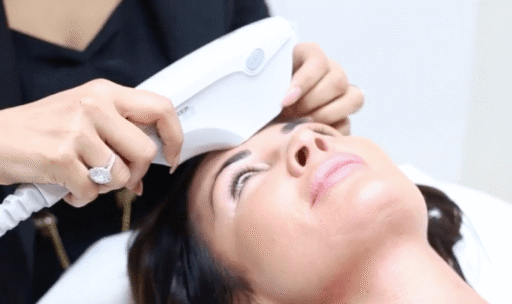
Ultherapy Skin Tightening
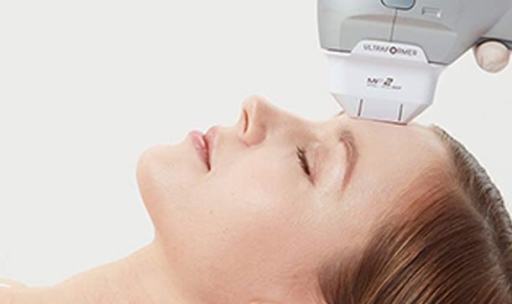
Ultraformer 3 HIFU Skin Tightening
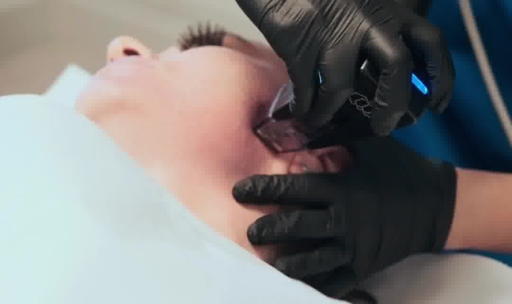
Morpheus8 RF Microneedling

About the Author
Considering treatment? Book a free consultation at our clinics in Mayfair London, Alderley Edge Cheshire, or Crosby Liverpool, or call 0800 009 6661.