
XERF Explained: How Dual-Frequency Radiofrequency Skin Tightening Works

Clinical guidance from Dr Nyla Raja MBChB (Hons), MRCGP (Dist), DFFP, DPDermatology - GMC No. 6057913
XERF Skin Tightening: At a Glance
XERF is a non-invasive monopolar radiofrequency treatment designed to create controlled heating at different tissue depths. Its distinguishing feature is the use of two radiofrequency frequencies, 6.78 MHz and 2 MHz, rather than relying on one frequency alone.
The underlying principle is thermal rather than mechanical. Radiofrequency current passes through tissue and generates heat according to the electrical properties of that tissue. XERF uses this controlled heating across shallow, middle, and deeper treatment patterns with the aim of influencing collagen-rich structures within the dermis and supporting connective tissue.
The important distinction is that XERF is not a laser, not ultrasound, and not RF microneedling. There are no needles entering the skin. Instead, monopolar RF energy is delivered from the treatment surface while cooling and temperature-monitoring systems are used to manage heat at the epidermis.
- Technology: non-invasive monopolar radiofrequency
- Frequencies: 6.78 MHz and 2 MHz
- Energy delivery: adjustable shallow, middle, and deep thermal patterns
- Primary biological effect: controlled tissue heating followed by collagen contraction and remodelling
- Common treatment areas: face, lower face, jawline, submental area, and neck
- Primary concerns: mild to moderate laxity, reduced firmness, early jowling, and selected age-related changes in skin quality
- Not designed to replace: surgical removal of significant excess skin or treatment for substantial facial volume loss
The word “depth” should not be interpreted as one fixed number of millimetres. RF energy distribution is influenced by frequency, electrode design, power, tissue impedance, tissue thickness, treatment technique, and other device parameters.
What Is XERF?
XERF is a clinician-operated, non-invasive radiofrequency platform developed by Cynosure Lutronic. The system uses monopolar RF at 6.78 MHz and 2 MHz and can deliver energy using different thermal patterns according to tissue depth and treatment area.
The manufacturer describes XERF as a multi-frequency monopolar RF system capable of treating shallow, middle, and deeper tissue levels. The important technical difference is not simply that the device produces more heat. It is the ability to alter how RF energy is distributed through tissue rather than relying on a single frequency and one fixed treatment pattern. Cynosure Lutronic’s technical information on XERF describes this multi-depth approach.
XERF should not be confused with a laser. Lasers use light at selected wavelengths and depend on optical absorption by tissue chromophores. Radiofrequency instead uses an alternating electrical current to generate heat within electrically resistant tissue.

What Is Monopolar Radiofrequency?
Radiofrequency refers to alternating electrical energy at frequencies within the radiofrequency range. When RF current passes through biological tissue, electrical resistance converts some of that energy into heat.
In a monopolar RF system, energy is delivered through an active treatment electrode and travels through a larger volume of tissue before returning through a separate return electrode. This differs from bipolar RF, where current passes between two relatively closely positioned electrodes.
Monopolar delivery can therefore produce heating through a comparatively broad volume of tissue rather than confining the electrical pathway to the small space between two treatment electrodes.
This does not mean that monopolar RF is inherently better than bipolar RF. They are different methods of delivering electrical energy and may be used for different purposes.
Why Does XERF Use 6.78 MHz and 2 MHz?
The central technical feature of XERF is its use of two RF frequencies: 6.78 MHz and 2 MHz.
Frequency affects how electrical energy behaves within tissue. In general terms, the higher 6.78 MHz frequency produces a more concentrated thermal pattern, while the lower 2 MHz frequency can produce broader and deeper heating.
Experimental modelling and histological research comparing the two frequencies found that 2 MHz produced broader and deeper thermal effects within subcutaneous tissue, while 6.78 MHz produced more localised heating around fibrous septal structures. Sequential dual-frequency treatment produced a pronounced thermal response around the junction between the dermis and subcutaneous tissue.
This provides the physiological rationale for combining the frequencies: different tissue layers and structural components can be influenced by different thermal distributions during the same treatment strategy.
It is still important not to reduce this to the simplistic statement that “6.78 MHz is shallow and 2 MHz is deep”. The final thermal pattern also depends on electrode geometry, power, tissue thickness, impedance, pulse characteristics, cooling, and treatment technique.
What Does the 6.78 MHz Frequency Do?
6.78 MHz monopolar RF is already established within aesthetic radiofrequency technology. At this frequency, electrical energy can generate controlled heating through the dermis and collagen-rich connective structures.
Experimental work examining XERF-related dual-frequency RF suggests that 6.78 MHz produces relatively concentrated thermal effects along collagen-containing fibrous septa. These connective structures extend between the dermis and deeper tissue and contribute to the mechanical organisation of the skin and subcutaneous layers.
Heating collagen-rich tissue is relevant because controlled thermal exposure can alter existing collagen fibres and initiate subsequent tissue remodelling.
What Does the 2 MHz Frequency Do?
The 2 MHz frequency is lower and creates a different pattern of electrical and thermal distribution.
Preclinical computational and histological work has found that 2 MHz RF can create broader, deeper thermal effects through subcutaneous tissue than 6.78 MHz under comparable experimental conditions.
XERF can sequence the two frequencies within its treatment delivery, allowing the thermal effect to extend across more than one tissue plane.
This does not mean that the purpose of 2 MHz treatment is to destroy fat. In the published experimental study evaluating 6.78 MHz, 2 MHz, and combined treatment, researchers reported tissue remodelling without evidence of adipocyte apoptosis. XERF should therefore not be presented as a fat-dissolving or weight-loss treatment.
Why Do Different Treatment Depths Matter?
Facial tissue is not uniform.
The skin over the cheek, jawline, submental area, and neck varies in thickness, underlying fat distribution, connective tissue structure, and proximity to deeper anatomy. The cause of visible laxity can also differ between regions.
XERF provides treatment configurations described as shallow, middle, and deep. These describe different patterns of thermal energy distribution rather than three universally fixed anatomical depths.
This distinction matters clinically because the deepest setting is not automatically the most appropriate setting.
A practitioner may need to consider:
- Skin thickness
- Degree of laxity
- Subcutaneous tissue thickness
- Facial volume distribution
- Treatment area
- Underlying anatomical structures
- Previous energy-based treatment
- The intended degree of tightening
The ability to alter thermal depth is intended to make treatment more adaptable to the anatomy rather than treating every part of the face with an identical energy pattern.
How Does XERF Heating Affect Collagen?
The biological effect of monopolar RF depends on controlled thermal stimulation.
When collagen-rich tissue is heated within an appropriate therapeutic range, existing collagen fibres can undergo structural contraction and denaturation. This contributes to an early tissue-tightening response.
The heat exposure also initiates a longer biological response involving fibroblast activity, extracellular matrix turnover, and the production and reorganisation of collagen over subsequent weeks and months. Histological research on monopolar RF has demonstrated changes in collagen density and organisation after treatment.
The result is therefore not simply an immediate mechanical “shrinkage” of the skin.
There are two overlapping processes:
- Immediate collagen response: heat alters the structure and organisation of existing collagen fibres.
- Longer-term remodelling: a controlled repair response encourages changes in collagen production and extracellular matrix organisation over time.
This is why the eventual result from RF skin tightening cannot be judged immediately after treatment.
Clinical Note from Dr Nyla Raja
The purpose of radiofrequency treatment is controlled tissue heating, not simply applying the maximum possible energy. Treatment planning has to account for anatomy, tissue thickness, the degree of laxity, and the area being treated. More heat or greater depth is not automatically more appropriate.
What Areas Can XERF Treat?
XERF is principally used for non-surgical treatment of areas where reduced firmness and mild to moderate tissue laxity are contributing to an ageing appearance.
Depending on individual assessment and the treatment protocol, areas may include:
- Cheeks
- Lower face
- Jawline
- Submental area beneath the chin
- Neck
- Selected upper-face or brow areas
The same settings should not automatically be used across all of these regions because tissue thickness and underlying anatomy differ.
A softer jawline, for example, may reflect skin laxity, but it can also be influenced by facial fat, jowling, loss of structural support, skeletal anatomy, or several of these factors together.

What Is XERF Actually Intended to Improve?
XERF is primarily relevant where the treatment objective is non-surgical tissue tightening and improvement in skin firmness.
Potential concerns include:
- Mild to moderate facial skin laxity
- Reduced skin firmness
- Early lower-face laxity
- Early jowling where laxity is a contributing factor
- Reduced jawline definition related partly to soft-tissue laxity
- Neck laxity
- Selected fine lines and age-related skin changes
A recent prospective multicentre study of 39 patients treated with dual-frequency monopolar RF reported short-term improvement in facial laxity assessments following two treatment sessions. A separate retrospective study of 16 women reported changes in facial laxity, eyebrow and eyelid measurements, wrinkles, skin evenness, pore appearance, and oiliness after treatment. Both studies were relatively small, so the findings are encouraging but should not be interpreted as definitive evidence of predictable results for every patient.
What Does XERF Not Treat?
Understanding the limitations of XERF is as important as understanding its mechanism.
XERF is not designed to:
- Remove substantial excess skin
- Reproduce the tissue repositioning achieved by a surgical facelift or neck lift
- Replace lost facial volume
- Change underlying bone structure
- Remove a significant localised fat deposit
- Produce general weight loss
- Correct pigmentation as its primary mechanism
- Treat every cause of jowling or a poorly defined jawline
For example, facial ageing involving significant volume loss may require a different strategy from skin tightening. Similarly, prominent submental fullness caused predominantly by fat should not automatically be treated as skin laxity.
Good patient selection therefore begins with identifying which anatomical change is actually responsible for the concern. Our guide to XERF treatment suitability explores how these anatomical differences influence whether radiofrequency tightening is the right approach.
How Is XERF Different from Other Skin Tightening Treatments?
XERF vs RF Microneedling
RF microneedling uses needles to enter the skin before delivering radiofrequency energy at selected depths. XERF is non-invasive monopolar RF: the treatment electrode remains on the skin surface and no microneedles penetrate the tissue.
XERF vs Ultherapy or HIFU
Ultherapy and other HIFU technologies use ultrasound energy, not radiofrequency current. Focused ultrasound creates comparatively discrete thermal treatment zones at selected depths. Monopolar RF creates a broader pattern of resistive heating through tissue.
XERF vs Laser Skin Tightening
XERF is not a laser. Lasers deliver optical energy at a defined wavelength. RF does not rely on light absorption by melanin, haemoglobin, or water in the same way.
XERF vs Conventional Single-Frequency Monopolar RF
The distinguishing feature of XERF is the ability to use 6.78 MHz and 2 MHz and create different treatment-depth configurations, rather than relying solely on one RF frequency.
That technical difference does not mean one platform is universally superior. Treatment selection should depend on anatomy, clinical objective, evidence, practitioner experience, and suitability.
What Does the Evidence for XERF Show?
There is now genuine scientific literature specifically examining dual-frequency XERF technology, although the evidence base remains relatively early.
A 2024 histological investigation using a porcine model reported immediate changes in collagen bundles and deeper fibrous structures following dual-frequency 6.78 MHz and 2 MHz treatment. A subsequent correction published in 2026 clarified that the authors were employees of Cynosure Lutronic and that the work was an exploratory preclinical investigation. This is relevant when interpreting the strength and independence of the evidence. Published research on dual-frequency monopolar RF skin tightening provides the original experimental findings.
More recent experimental work combining computational modelling with porcine histology found different thermal patterns for 6.78 MHz and 2 MHz RF and more extensive remodelling with sequential dual-frequency treatment. Importantly, that study found no evidence of adipocyte apoptosis.
Human data are also emerging. A 2026 prospective multicentre study involving 39 participants reported improvement in investigator-rated facial appearance and high patient satisfaction after two treatments. A separate retrospective study involving 16 women found improvements in several objective and subjective facial measures after a single treatment.
These studies support the biological rationale and suggest clinical potential, but the current XERF-specific evidence base is still smaller than that for some longer-established aesthetic technologies. Larger controlled studies and longer follow-up will be useful in establishing the magnitude, consistency, and duration of treatment effects.
How Many XERF Treatments Are Needed?
There is not one evidence-based session number that applies to every patient.
Published XERF studies have evaluated different approaches. One recent retrospective study followed patients after a single treatment, while a prospective multicentre study used two sessions spaced approximately four weeks apart.
The appropriate treatment plan may therefore depend on:
- Degree of laxity
- Treatment area
- Tissue thickness
- Selected treatment depth
- Previous treatment
- Clinical response
- Desired outcome
Because collagen remodelling develops progressively, results should usually be assessed over time rather than immediately after the procedure. Our detailed guide to XERF results and how long they last explains the expected progression of improvement and the limitations of current clinical evidence.
XERF Safety and Practitioner Considerations
Energy-based treatment requires appropriate patient selection and device-specific training.
XERF incorporates surface cooling and temperature monitoring intended to help control epidermal heating while RF energy is delivered below the surface. The device’s technical design and dual-frequency output are also documented in US regulatory submissions for the XERF platform. FDA technical information for the XERF device lists both 2 MHz and 6.78 MHz monopolar RF operation.
Temporary warmth, redness, tenderness, or swelling can occur with radiofrequency treatment. Suitability should be assessed before treatment, including relevant medical history, previous procedures, active skin concerns, implanted devices where relevant, and manufacturer-specific precautions or contraindications.
Patients should also understand that the appropriate treatment depth and energy settings are clinical decisions. The fact that XERF can deliver deeper heating does not mean deeper treatment should automatically be selected. Further information on patient screening, possible reactions, and recovery is covered in our XERF safety, side effects, and aftercare guide.
Clinical Note from Dr Nyla Raja
When assessing a patient for XERF, we are not simply deciding how loose the skin appears. We consider facial structure, volume, fat distribution, tissue thickness, and the degree of laxity. The objective is to use the technology where tightening is likely to address the actual anatomical concern.
XERF at Dr Nyla Medispa
At Dr Nyla Medispa, XERF is provided within a doctor-led, medically regulated clinic. Treatment begins with an individual assessment to determine whether radiofrequency skin tightening is appropriate and which areas should be treated.
XERF treatment is available at our Mayfair London clinic, Alderley Edge Cheshire clinic, and Crosby Liverpool clinic.
Where skin laxity is only one component of the concern, assessment may also consider whether another option within our skin treatment portfolio is more appropriate.

Book in a Free Consultation With Our Expert Team
- Award-winning, doctor-led aesthetic clinics
- Locations in London, Cheshire, and Liverpool
- Over 50 non-surgical treatments available
- Free consultation with a personalised plan
XERF FAQs
Is XERF radiofrequency?
Yes. XERF is a monopolar radiofrequency system using 6.78 MHz and 2 MHz energy. It is not a laser or an ultrasound treatment.
Why does XERF use two frequencies?
The frequencies create different thermal distributions. Experimental research suggests that 6.78 MHz produces more localised heating around collagen-rich fibrous structures, while 2 MHz can produce broader and deeper thermal effects. Combining them allows treatment across more than one tissue level.
Does 2 MHz mean XERF melts fat?
No. Although the lower frequency can produce deeper heating within subcutaneous tissue, preclinical research examining dual-frequency XERF-related RF found no evidence of adipocyte apoptosis. XERF should not be considered a fat-dissolving or weight-loss treatment.
Is XERF the same as Morpheus8?
No. Morpheus8 is an RF microneedling treatment in which needles enter the skin and deliver RF energy at selected depths. XERF delivers monopolar RF non-invasively from the skin surface.
Is XERF the same as Ultherapy?
No. Ultherapy uses microfocused ultrasound. XERF uses radiofrequency electrical energy. Both may be considered for selected laxity concerns, but their mechanisms and patterns of tissue heating differ.
Can XERF tighten jowls?
XERF may improve the appearance of mild lower-face laxity where skin and supporting soft-tissue changes contribute to early jowling. It cannot correct every cause of jowls, particularly where substantial volume loss, skeletal anatomy, fat distribution, or significant excess skin is the dominant factor.
Can XERF treat the neck?
Yes, selected neck laxity may be considered for treatment following assessment. Neck ageing can also involve fat, muscle, and significant excess skin, so not every neck concern is primarily a skin-tightening problem.
How quickly does XERF work?
Some tissue response may be apparent relatively early, but collagen remodelling is a gradual biological process. Published XERF studies have evaluated changes over subsequent weeks and months rather than relying solely on the immediate post-treatment appearance.
How many XERF treatments do you need?
There is no universal treatment number. Published human studies have examined both single-treatment and two-treatment protocols. The appropriate plan should be based on anatomy, laxity, treatment area, and clinical response.
Is XERF suitable for severe loose skin?
Non-surgical radiofrequency is generally better suited to selected mild to moderate laxity. Significant excess skin cannot be removed with XERF, and patients seeking substantial correction may require a surgical opinion.
XERF Explained: A Dual-Frequency Approach to Radiofrequency Skin Tightening
XERF differs from conventional single-frequency radiofrequency systems through its use of 6.78 MHz and 2 MHz monopolar RF and its ability to create different shallow, middle, and deeper thermal treatment patterns.
The 6.78 MHz and 2 MHz frequencies do not simply represent two arbitrary power settings. Experimental evidence indicates that they create different distributions of heat through collagen-rich and subcutaneous structures. Used together, they provide a means of influencing tissue across more than one depth while remaining a non-invasive surface treatment.
The intended result is controlled thermal stimulation followed by collagen contraction and progressive remodelling. XERF is therefore most relevant for selected patients with reduced firmness and mild to moderate laxity, rather than those requiring substantial tissue removal, volume replacement, or fat reduction.
If you are considering XERF, you can book a free consultation at Dr Nyla Medispa to assess the cause of the concern, treatment suitability, and whether XERF is the appropriate technology for your anatomy.
Need Guidance in Selecting the Most Appropriate Treatment?
Related Treatments

XERF Skin Tightening

Sofwave Skin Tightening
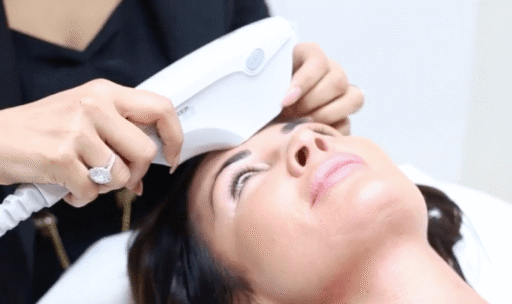
Ultherapy Skin Tightening
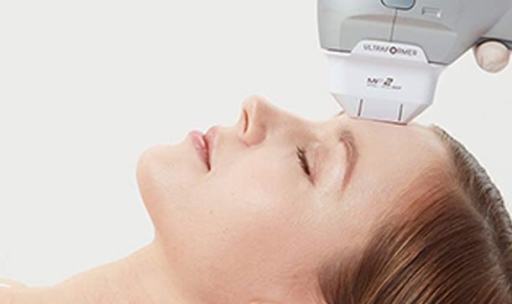
Ultraformer 3 HIFU Skin Tightening
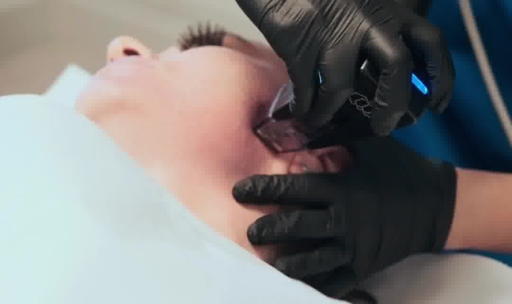
Morpheus8 RF Microneedling

About the Author
Considering treatment? Book a free consultation at our clinics in Mayfair London, Alderley Edge Cheshire, or Crosby Liverpool, or call 0800 009 6661.