
Ultherapy Explained: How Microfocused Ultrasound Skin Tightening Works
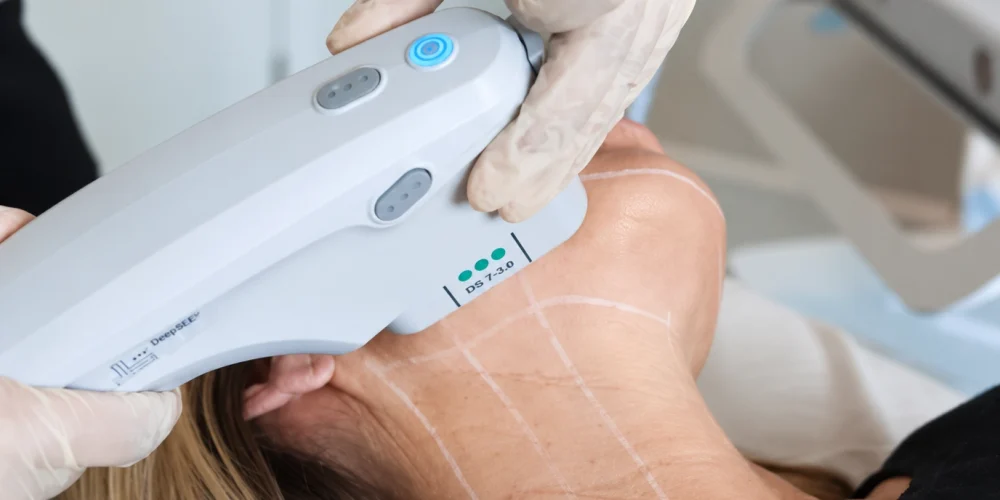
Clinical guidance from Dr Nyla Raja MBChB (Hons), MRCGP (Dist), DFFP, DPDermatology - GMC No. 6057913
Ultherapy Explained: At a Glance
Ultherapy is a non-surgical skin tightening treatment that uses microfocused ultrasound with real-time visualisation to deliver controlled energy at selected depths beneath the skin. Rather than removing or filling tissue, the treatment creates precise points of thermal stimulation that initiate a natural healing and collagen-remodelling response.
This mechanism explains why Ultherapy results are gradual. The treatment itself delivers the ultrasound energy during the appointment, but the visible change develops over the following weeks and months as existing collagen reorganises and new collagen is produced.
Ultherapy is principally used where mild to moderate skin and soft-tissue laxity is contributing to concerns such as early jowling, reduced jawline definition, looseness beneath the chin, loose neck skin, or mild brow descent.
- Technology: microfocused ultrasound with real-time imaging
- Common treatment depths: approximately 1.5 mm, 3.0 mm, and 4.5 mm, selected according to anatomy and treatment area
- Biological response: controlled thermal stimulation followed by collagen remodelling
- Results: gradual rather than immediate
- Common areas: brow, lower face, jawline, beneath the chin, neck, and selected décolletage concerns
- Most appropriate for: selected patients with mild to moderate laxity
- Important limitation: Ultherapy tightens tissue; it does not replace lost facial volume, remove significant excess skin, or act as a general fat-reduction treatment
The depths and treatment pattern used should be selected according to the individual anatomy. More treatment lines or deeper treatment do not automatically produce a better result.
What Is Ultherapy?
Ultherapy is a branded microfocused ultrasound skin tightening treatment. It uses ultrasound energy to create small, controlled points of thermal stimulation beneath the skin while real-time ultrasound imaging allows the practitioner to visualise the tissue being treated.
The treatment is designed to stimulate a biological response rather than mechanically pulling or repositioning the face during the appointment.
This makes Ultherapy fundamentally different from:
- Dermal fillers, which add selected volume or structural support
- Botox, which reduces activity in selected muscles
- Fat-reduction procedures, which target adipose tissue
- Resurfacing procedures, which primarily target surface texture
- Surgical lifting, which can reposition tissue and remove excess skin
Ultherapy therefore sits within the broader category of non-surgical skin tightening, but its mechanism and tissue depths differ from radiofrequency, laser, and RF microneedling treatments.
How Does Ultherapy Work?
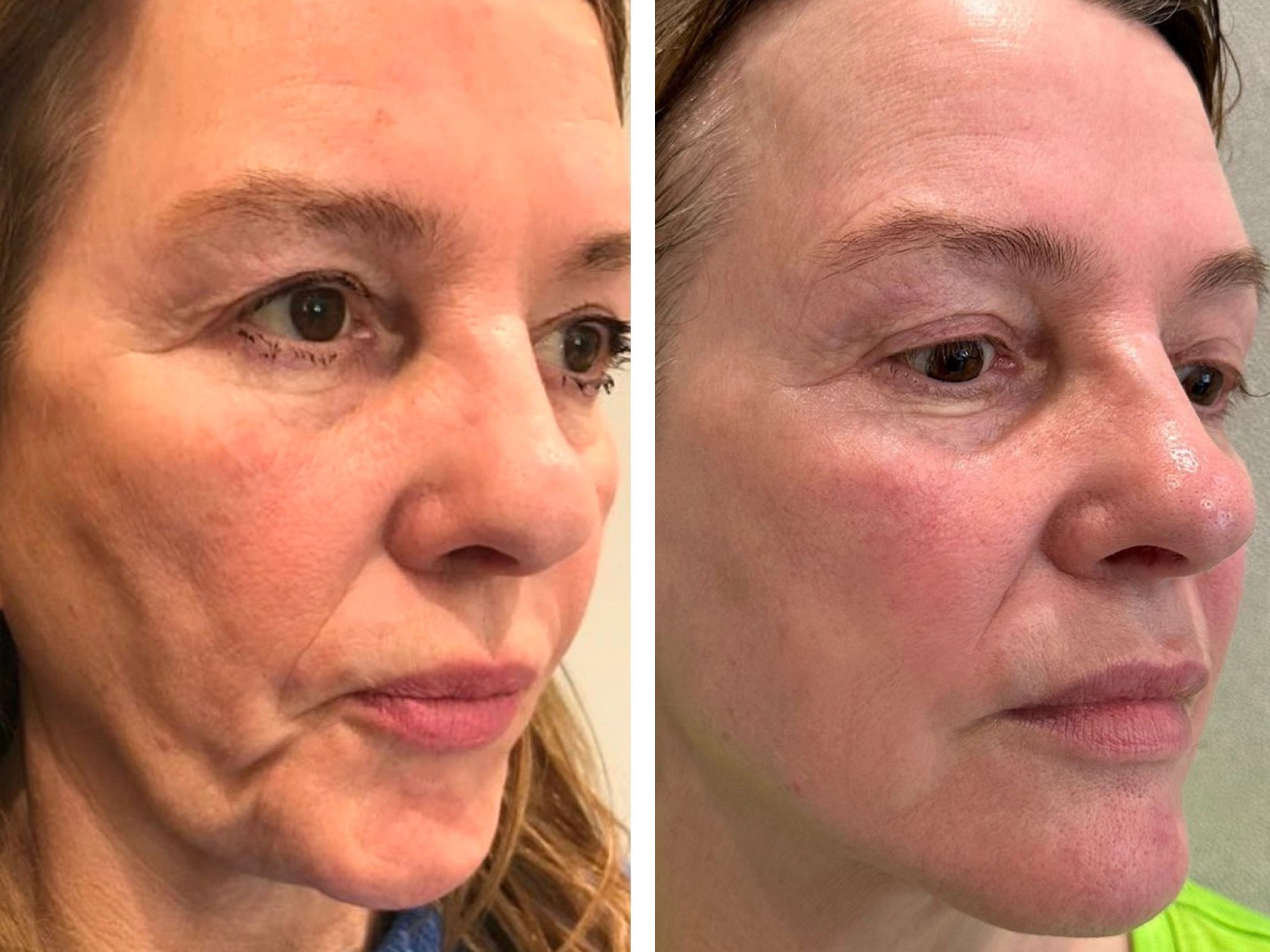
Ultherapy concentrates ultrasound energy at predetermined focal points beneath the skin.
The energy passes through the surface of the skin and converges at the selected depth, where it creates small thermal coagulation points. These controlled zones of heating are separated by untreated surrounding tissue.
This pattern is important. Ultherapy does not heat every layer continuously from the skin surface downwards. Instead, focused ultrasound allows energy to be concentrated at selected tissue depths.
The resulting thermal stimulus initiates a wound-healing response involving collagen contraction, turnover, and longer-term remodelling.
Real-time ultrasound visualisation is a distinguishing feature of the Ultherapy system. It allows the practitioner to see tissue layers during treatment and helps guide the depth and position at which energy is delivered.
Clinical Note from Dr Nyla Raja
Ultherapy is not simply about delivering as much energy as possible. Treatment depth, tissue thickness, anatomical structures, and the distribution of laxity all need to be considered. The treatment plan should follow the patient’s anatomy rather than a standard pattern used for every face.
What Do the Ultherapy Treatment Depths Mean?
One of the reasons Ultherapy can be used for different areas of the face and neck is its ability to deliver energy at different focal depths.
Common treatment depths include approximately 1.5 mm, 3.0 mm, and 4.5 mm.
1.5 mm
This is a relatively superficial treatment depth and may be selected where controlled energy delivery within more superficial tissue is appropriate.
3.0 mm
The 3.0 mm depth allows treatment within deeper dermal and subdermal tissue, depending on the anatomical area.
4.5 mm
The 4.5 mm transducer allows treatment at a deeper tissue level. In appropriate facial regions, this may correspond to deeper fibromuscular support layers associated with facial lifting and tissue firmness.
These numbers should not be interpreted as a hierarchy where 4.5 mm is automatically “stronger” or better than 3.0 mm.
The correct depth depends on:
- The anatomical area
- Tissue thickness
- Underlying structures
- Degree and location of laxity
- The treatment objective
- The practitioner’s clinical assessment
Not every depth is appropriate for every part of the face.
How Does Ultherapy Stimulate Collagen?
Collagen is an important structural protein within the skin and supporting tissues. Ageing is associated with changes in collagen quantity, quality, organisation, and elasticity, contributing to progressive loss of firmness.
The controlled thermal points created by Ultherapy trigger a repair response.
There are several stages to this process:
- Immediate thermal response: existing collagen within the targeted tissue undergoes controlled thermal change.
- Early healing: the treated tissue begins a wound-healing response.
- Collagen production: fibroblast activity contributes to the production and organisation of new collagen.
- Remodelling: collagen continues to mature and reorganise over the following weeks and months.
This process is often described as neocollagenesis and collagen remodelling.
It is also why the visible effect cannot be judged accurately immediately after treatment.
Why Are Ultherapy Results Gradual?
Ultherapy does not physically lift the face into its final position during the appointment.
The procedure initiates biological processes that take time.
Some patients may notice an early change, but the more meaningful improvement generally develops gradually as collagen remodelling progresses over the following months.
The exact response varies according to:
- Age and tissue quality
- Degree of laxity
- Treatment area
- Individual healing response
- Previous treatments
- Treatment plan and energy delivery
- Ongoing ageing
A gradual result is therefore part of the treatment mechanism rather than evidence that the procedure has failed to act immediately.
Our detailed guide to Ultherapy results explains when changes typically become noticeable, how improvement develops, and how long results may last.
What Can Ultherapy Realistically Improve?
Ultherapy is most relevant for patients with mild to moderate skin and soft-tissue laxity.
Appropriately selected patients may notice improvement in:
- Early loss of jawline definition
- Mild jowling
- Loose skin beneath the chin
- Mild to moderate neck laxity
- Early brow descent
- General loss of facial firmness
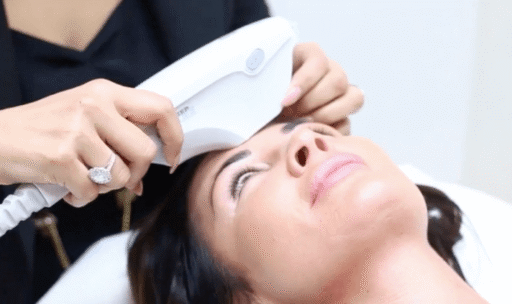
- Selected décolletage concerns
The expected change should usually be described as subtle to moderate tightening and lifting, not surgical repositioning.
The treatment is generally better suited to somebody beginning to notice laxity than to a patient with substantial skin redundancy or advanced tissue descent.
How Does Ultherapy Work for the Jawline and Jowls?
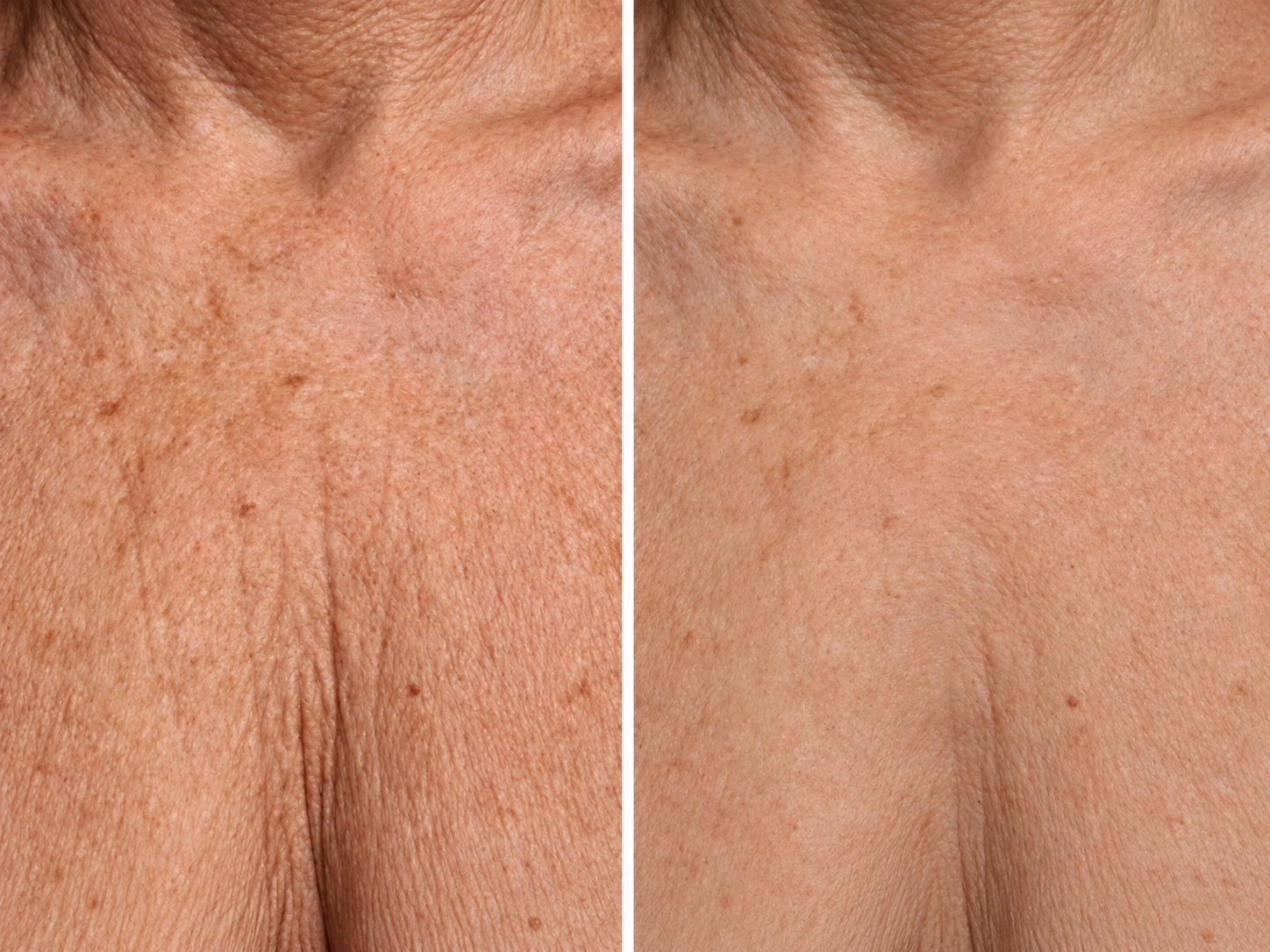
The lower face is one of the areas most commonly associated with interest in Ultherapy.
Where mild tissue laxity is contributing to early jowling or loss of jawline definition, controlled ultrasound treatment may improve tissue firmness and create a more defined lower-face contour.
However, jowls are not caused by skin laxity alone.
Their appearance can also be influenced by:
- Loss of mid-face and lateral facial volume
- Changes in facial fat compartments
- Chin and jaw structure
- Ligamentous and deeper tissue changes
- Localised fat
- Platysmal muscle activity
This means Ultherapy cannot simply “remove jowls” in every patient.
Where facial volume loss is the predominant issue, appropriately selected dermal filler treatment may have a different role. Where significant excess skin is present, surgery may provide a more appropriate degree of correction.
Can Ultherapy Tighten the Neck and Lift the Brow?
Ultherapy for the Neck
Ultherapy may help selected patients with mild to moderate neck laxity, particularly where looseness beneath the chin and along the upper neck is contributing to reduced definition.
Neck ageing is frequently multifactorial, however. Skin laxity may coexist with submental fat, platysmal muscle changes, deeper tissue descent, and structural changes associated with ageing.
Our page on neck skin tightening explains the different factors that can contribute to a loose or ageing neck.
Ultherapy for the Brow
Microfocused ultrasound may also be used in appropriately selected patients seeking a modest improvement in brow position.
An Ultherapy brow treatment should not be presented as equivalent to a surgical brow lift. The achievable change is generally more subtle and depends on tissue characteristics and individual anatomy.
What Does Ultherapy Not Treat?
Understanding the limitations of Ultherapy is as important as understanding how the technology works.
Ultherapy is not primarily designed to correct:
- Significant facial volume loss
- Marked excess or redundant skin
- Prominent pigmentation
- Acne scarring or enlarged pores
- Dynamic expression lines caused predominantly by muscle movement
- Large deposits of facial or submental fat
- Major structural deficiencies of the chin or jaw
It is also not a general facial fat-reduction treatment.
This distinction matters because a patient’s description of “sagging” may represent several different anatomical changes.
For example, a hollow mid-face can make the lower face appear heavier even where skin laxity is relatively limited. Applying additional tightening energy does not replace the missing volume.
Is Ultherapy the Same as HIFU?
Ultherapy is sometimes described alongside HIFU treatments because both use focused ultrasound energy, but the terms should not be treated as interchangeable.
Ultherapy is a specific branded microfocused ultrasound system with real-time ultrasound visualisation. HIFU is a broader term used for a range of focused ultrasound technologies.
Different systems can vary in:
- Energy delivery
- Treatment depths
- Imaging capability
- Transducers
- Clinical protocols
- Device regulation
- Practitioner training
A generic “HIFU facial” should therefore not automatically be assumed to be equivalent to Ultherapy because both involve ultrasound.
How Many Ultherapy Treatments Are Needed?
Many patients begin with one Ultherapy treatment and allow time for the collagen-remodelling response to develop before deciding whether any further treatment is appropriate.
This differs from some radiofrequency or RF microneedling protocols, which may commonly be planned as a course from the outset.
Further Ultherapy treatment may be considered according to:
- The response to the initial procedure
- Degree of remaining laxity
- Ongoing ageing
- Treatment objectives
- Time since previous treatment
- Clinical reassessment
Repeated treatment should not be assumed to be necessary simply because a fixed package is available.
Who Is Suitable for Ultherapy?
A typical candidate has mild to moderate laxity, realistic expectations, and an anatomical concern that is reasonably likely to respond to tissue tightening.
Chronological age alone does not determine suitability.
A patient in their forties with early jawline laxity may be more suitable than an older patient with substantial excess skin. Conversely, a younger patient with no meaningful laxity may have little indication for treatment.
Important assessment factors include:
- Degree of laxity
- Skin thickness and quality
- Facial structure
- Distribution of facial fat
- Existing volume loss
- Previous aesthetic treatment
- Relevant medical history
- Expected degree of improvement
Our separate guide to Ultherapy suitability explains in more detail who may benefit, when another treatment may be more appropriate, and when surgery should be considered.
Is Ultherapy Safe?
Ultherapy is non-surgical, but it remains an energy-based medical aesthetic procedure and requires appropriate patient selection, treatment planning, and anatomical knowledge.
Expected short-term reactions can include tenderness, redness, swelling, tingling, or sensitivity within the treated area. Treatment sensation varies between patients and according to the area and depth being treated.
Less common adverse effects should also be discussed as part of informed consent.
The treatment should be planned carefully around relevant anatomical structures, which is another reason practitioner training and appropriate clinical assessment matter.
Our detailed guide to Ultherapy safety and side effects covers expected reactions, uncommon complications, recovery, and when to seek clinical advice.
The NHS guidance on choosing a cosmetic practitioner recommends checking qualifications, training, experience, insurance, aftercare arrangements, and how complications would be managed before undergoing a cosmetic procedure.
How Much Does Ultherapy Cost?
Ultherapy pricing varies considerably because a small brow or focused treatment is very different from comprehensive treatment of the lower face and neck.
Cost can be affected by:
- Treatment area
- Number of treatment lines
- Extent of facial or neck coverage
- Whether several areas are combined
- Practitioner experience
- Clinic location
- Consultation and follow-up arrangements
Our guide to Ultherapy cost in the UK provides current price ranges by treatment area and explains why headline Ultherapy prices can vary substantially between clinics.
How Does Ultherapy Compare with Other Skin Tightening Treatments?
Ultherapy is one of several technologies used for non-surgical tightening. The appropriate option depends on the tissue being treated and the clinical objective.
Ultherapy vs Sofwave
Sofwave also uses ultrasound, but it is a different technology. Sofwave delivers its proprietary ultrasound energy within the dermis, whereas Ultherapy uses microfocused ultrasound with real-time visualisation and can target selected deeper tissue levels.
Ultherapy vs Morpheus8
Morpheus8 uses radiofrequency microneedling rather than ultrasound. It may be considered where tightening occurs alongside concerns relating to texture, pores, or selected scarring.
Neither treatment is universally better. They act through different technologies and may be appropriate for different patients.
Our comparison of Morpheus8 vs Ultherapy vs Sofwave explains the differences in greater detail.
Clinical Note from Dr Nyla Raja
Technology should be selected after identifying the anatomical cause of the concern. A patient with true tissue laxity has different requirements from somebody whose lower-face change is primarily due to volume loss, fat distribution, or skin texture. The treatment should follow the tissue rather than the popularity of a particular device.

Book in a Free Consultation With Our Expert Team
- Award-winning, doctor-led aesthetic clinics
- Locations in London, Cheshire, and Liverpool
- Over 50 non-surgical treatments available
- Free consultation with a personalised plan
Ultherapy FAQs
Does Ultherapy really tighten skin?
Ultherapy can provide gradual tightening in appropriately selected patients with mild to moderate laxity. The degree of improvement varies, and it should not be expected to reproduce the result of surgical lifting.
How long does Ultherapy take to work?
The biological response begins after treatment, but visible improvement develops gradually as collagen remodels. Changes are commonly assessed over the following months rather than immediately after the appointment.
Is Ultherapy a facelift?
No. Ultherapy is a non-surgical ultrasound treatment. It cannot remove excess skin or reposition tissues to the same extent as a surgical facelift.
Can Ultherapy help jowls?
It may improve early jowling where mild tissue laxity is an important contributor. More advanced jowls can also involve volume loss, fat distribution, skeletal support, and deeper tissue descent.
Can Ultherapy tighten a loose neck?
It may improve mild to moderate neck laxity in suitable patients. Significant loose skin, pronounced platysmal changes, or advanced tissue descent may require another treatment approach or surgical assessment.
Can Ultherapy be used around the eyes?
Ultherapy may be used in selected areas around the brow, but “Ultherapy for the eyes” is too broad a description. Under-eye concerns such as hollowing, pigmentation, prominent fat pads, or thin skin have different causes and require individual assessment.
Does Ultherapy remove a double chin?
Ultherapy may improve laxity beneath the chin, but it should not be regarded as a general fat-removal treatment. Where localised submental fat is the main concern, a different treatment may be required.
Is Ultherapy better than HIFU?
Ultherapy is itself a specific microfocused ultrasound technology and should not be directly equated with every device marketed as HIFU. Device design, imaging, energy delivery, treatment protocols, and practitioner training differ.
Is one Ultherapy treatment enough?
Many patients begin with one treatment and allow several months for the response to develop. Further treatment should be based on clinical reassessment rather than an automatic fixed course.
Is Ultherapy worth it?
Its value depends primarily on appropriate patient selection. Ultherapy is more likely to provide a meaningful result when mild to moderate laxity is genuinely contributing to the concern and the patient expects gradual, non-surgical improvement rather than surgical-level correction.
Ultherapy Works by Stimulating Gradual Tissue Remodelling
Ultherapy uses microfocused ultrasound with real-time visualisation to create controlled thermal points at selected depths beneath the skin. These focal points initiate a healing response that supports collagen production and remodelling over the following weeks and months.
This explains both the strengths and the limitations of the treatment. Ultherapy can provide gradual lifting and tightening where mild to moderate laxity is present, but it cannot replace lost volume, remove substantial fat, correct advanced excess skin, or reproduce a surgical facelift.
The quality of the treatment therefore depends not only on the technology, but on identifying which tissues are actually responsible for the patient’s concern and selecting appropriate treatment depths and areas.
If you are considering Ultherapy, you can book a free consultation at Dr Nyla Medispa in Mayfair London, Alderley Edge Cheshire, or Crosby Liverpool to discuss suitability and whether Ultherapy or another treatment is more appropriate.
Need Guidance in Selecting the Most Appropriate Treatment?
Related Treatments
Ultherapy Skin Tightening

Skin Tightening
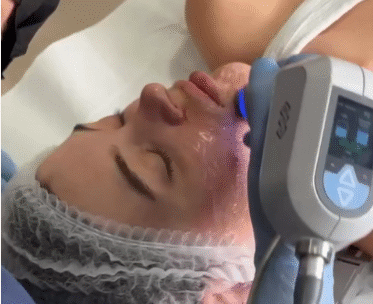
Exilis Elite Skin Tightening

Sofwave Skin Tightening

NuEra Tight Skin Tightening

ULTRAcel Q+ Skin Tightening
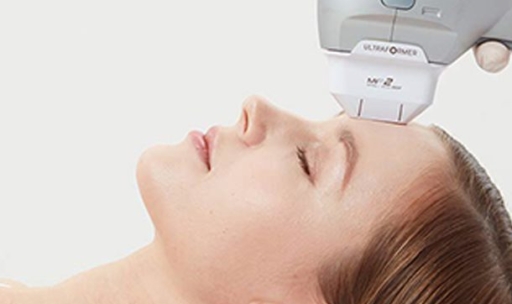
Ultraformer 3 HIFU Skin Tightening

XERF Skin Tightening

About the Author
Dr Nyla Raja | Founder & Medical Director
GMC-registered doctor with over 20 years of clinical experience in aesthetic medicine. Qualifications include MBChB (Hons), MRCGP (Dist), DFFP, and DPDermatology. Member of the British College of Aesthetic Medicine (BCAM).