
Who Is Suitable for Non-Surgical Skin Tightening, and When Might Surgery Be More Appropriate?
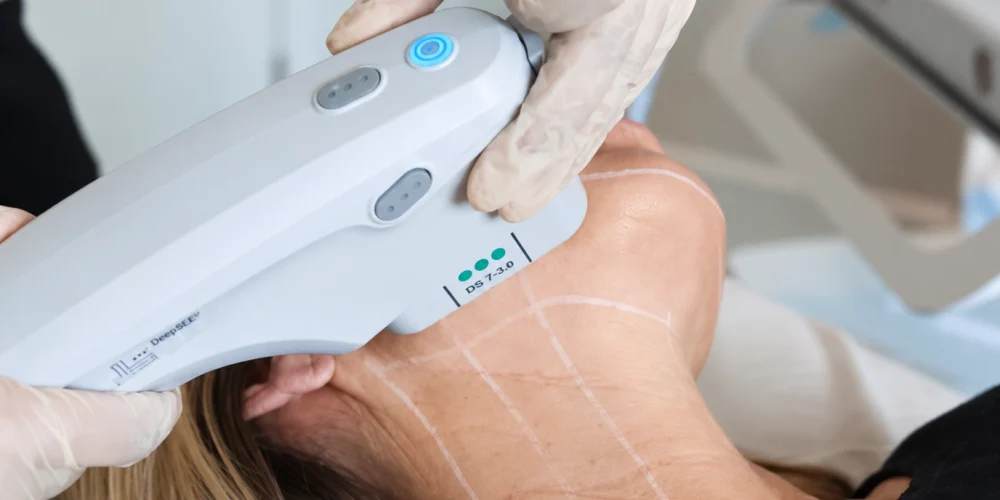
Clinical guidance from Dr Nyla Raja MBChB (Hons), MRCGP (Dist), DFFP, DPDermatology - GMC No. 6057913
Who Is Suitable for Non-Surgical Skin Tightening? At a Glance
Non-surgical skin tightening is generally most appropriate for people with mild to moderate skin laxity who want gradual improvement without surgery. Energy-based treatments can stimulate collagen remodelling and improve selected areas of early laxity, but they cannot remove significant excess skin or reproduce the tissue repositioning possible with surgery.
Suitability depends on more than age. Skin quality, degree of laxity, facial or body anatomy, previous treatments, medical history, and the underlying cause of the concern all matter. A patient in their 60s with relatively good skin quality and modest laxity may be a more appropriate candidate than a younger patient with substantial excess skin following major weight loss.
At Dr Nyla Medispa, suitability for non-surgical skin tightening treatments is assessed within a doctor-led, medically regulated setting. The aim is to establish whether treatment is likely to provide a worthwhile improvement before recommending a particular technology.
- Often suitable: mild to moderate skin laxity with realistic expectations
- Common areas: lower face, jawline, neck, brow, décolletage, abdomen, upper arms, and selected body areas
- Age: relevant, but less important than skin quality and degree of laxity
- Results: generally gradual and more subtle than surgery
- Less suitable: substantial excess skin, marked tissue descent, or expectations of a surgical-level lift
- Surgery may be more appropriate: when excess skin needs to be physically removed or substantially repositioned
The appropriate treatment and contraindications vary between devices. A clinical consultation is required before determining whether ultrasound, radiofrequency, RF microneedling, or another approach is suitable.
Who Is a Good Candidate for Non-Surgical Skin Tightening?
The strongest candidates generally have mild to moderate skin laxity rather than large amounts of loose or redundant skin.
This may include people noticing early changes such as:
- Reduced jawline definition
- Early jowling
- Mild looseness beneath the chin
- Reduced firmness through the neck
- Fine crepiness around the face or décolletage
- Mild laxity of the abdomen following weight change or pregnancy
- Reduced firmness of the upper arms, thighs, or knees
These concerns often develop as collagen and elastin production changes with age, although weight fluctuations, pregnancy, sun exposure, genetics, and other factors can also influence skin quality.
Our page on sagging skin treatments explains the different factors that can contribute to loose skin and the treatment approaches that may be considered following assessment.
A suitable patient should also have realistic expectations. Non-surgical treatment can improve firmness and definition, but the degree of change is generally more subtle than surgical skin removal or tissue repositioning. Our guide to skin tightening results explains when improvement typically develops, how results vary between technologies, and the factors that can influence how long they last.
What Is the Difference Between Mild and Moderate Skin Laxity?
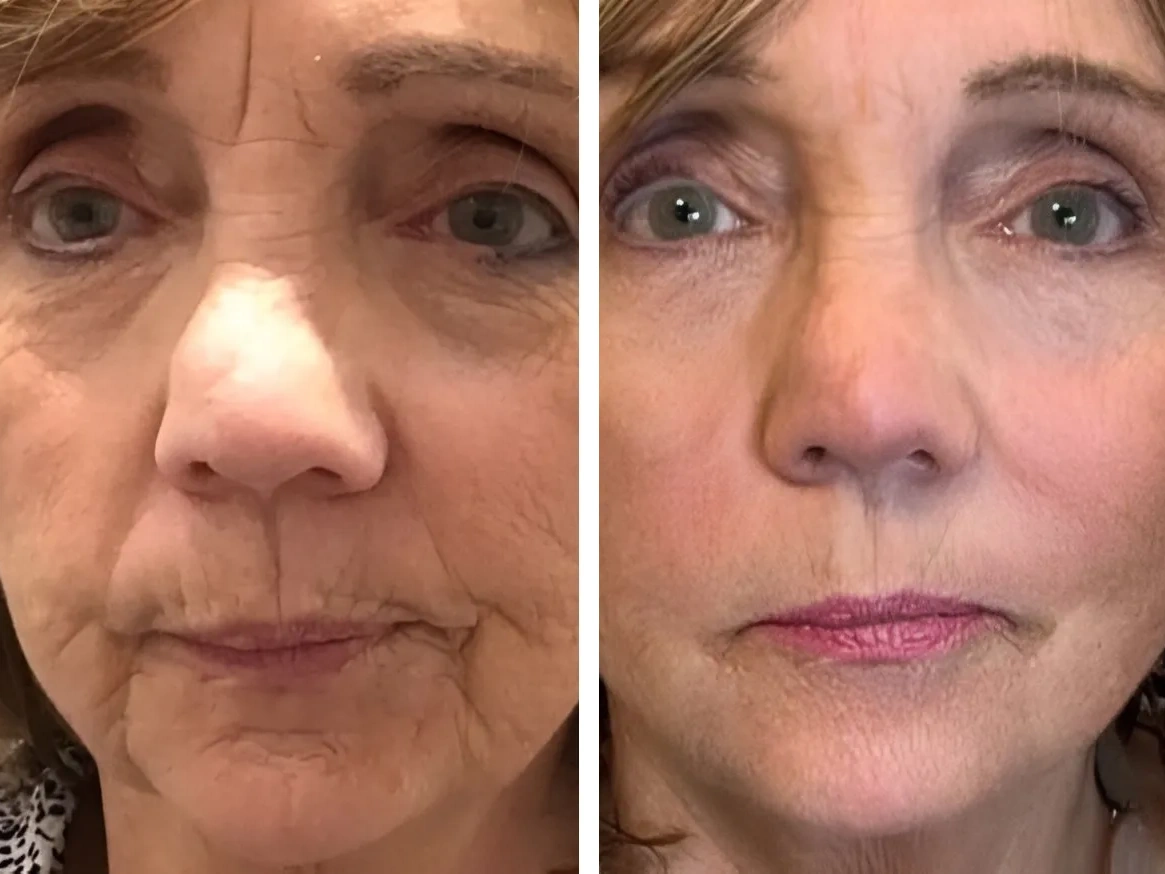
There is no single measurement that categorises every patient as having mild, moderate, or severe laxity. Assessment is based on the amount of loose tissue, skin quality, anatomical area, underlying structural changes, and the degree of improvement being sought.
Mild laxity may appear as early softening of the jawline, slight looseness beneath the chin, fine crepiness, or reduced firmness without substantial tissue descent.
Moderate laxity is more visible and may involve clearer jowling, increased looseness of the neck, or more noticeable skin redundancy on areas of the body.
Patients within these groups may be considered for non-surgical treatment, but the technology and expected degree of improvement will differ.
As laxity becomes more pronounced, the limitations of energy-based treatment become increasingly important.
When Is Skin Laxity Too Significant for Non-Surgical Treatment?
Non-surgical skin tightening cannot physically remove excess skin.
Where there is substantial redundant tissue, pronounced jowling, marked neck laxity, or significant loose skin following major weight loss, energy-based treatments may improve skin quality without producing the degree of lifting or tissue reduction the patient is seeking.
This is particularly relevant following substantial weight loss. Loss of body or facial volume can leave a combination of reduced skin elasticity, tissue deflation, and excess skin. Our page on loose skin after Mounjaro, Ozempic, and significant weight loss explains why treatment needs to distinguish between laxity, volume loss, and excess tissue.
In these circumstances, the consultation should establish whether a non-surgical procedure can provide a worthwhile improvement or whether surgical assessment would be more appropriate.
Does Age Affect Whether You Are Suitable for Skin Tightening?
Age influences collagen production, elasticity, facial volume, and tissue support, but there is no single age at which somebody automatically becomes suitable or unsuitable for non-surgical skin tightening.
A younger patient may have significant laxity after major weight loss, while an older patient may retain relatively good skin quality with only modest looseness.
Assessment therefore considers:
- Degree of skin laxity
- Skin thickness and quality
- Underlying facial or body structure
- Amount of excess tissue
- Volume loss
- Previous treatments
- Medical history
- Treatment goals
The biological age and condition of the tissue are generally more useful than chronological age alone when planning treatment.
Does the Treatment Area Affect Suitability?
Yes. Different anatomical areas have different skin thickness, tissue structure, fat distribution, and underlying support. A treatment that is appropriate for mild lower-face laxity may not be the right approach for loose abdominal skin.
Face and Jawline
Early loss of definition through the lower face may respond to collagen-stimulating treatment where skin laxity is an important component. However, jowls can also be influenced by facial volume changes, fat distribution, ligamentous support, and skeletal anatomy.
A consultation should therefore establish what is causing the change before recommending skin tightening alone.
Neck
The neck is a common treatment area, but concerns can arise from skin laxity, platysmal muscle activity, localised fat, or a combination of factors.
Our neck tightening treatment page explains the approaches that may be considered for loose neck skin, wrinkles, and reduced definition.
Décolletage
Fine crepiness and reduced firmness across the chest may respond differently from deeper facial laxity. Skin quality, sun damage, and pigmentation also need to be considered when planning treatment.
Abdomen and Body
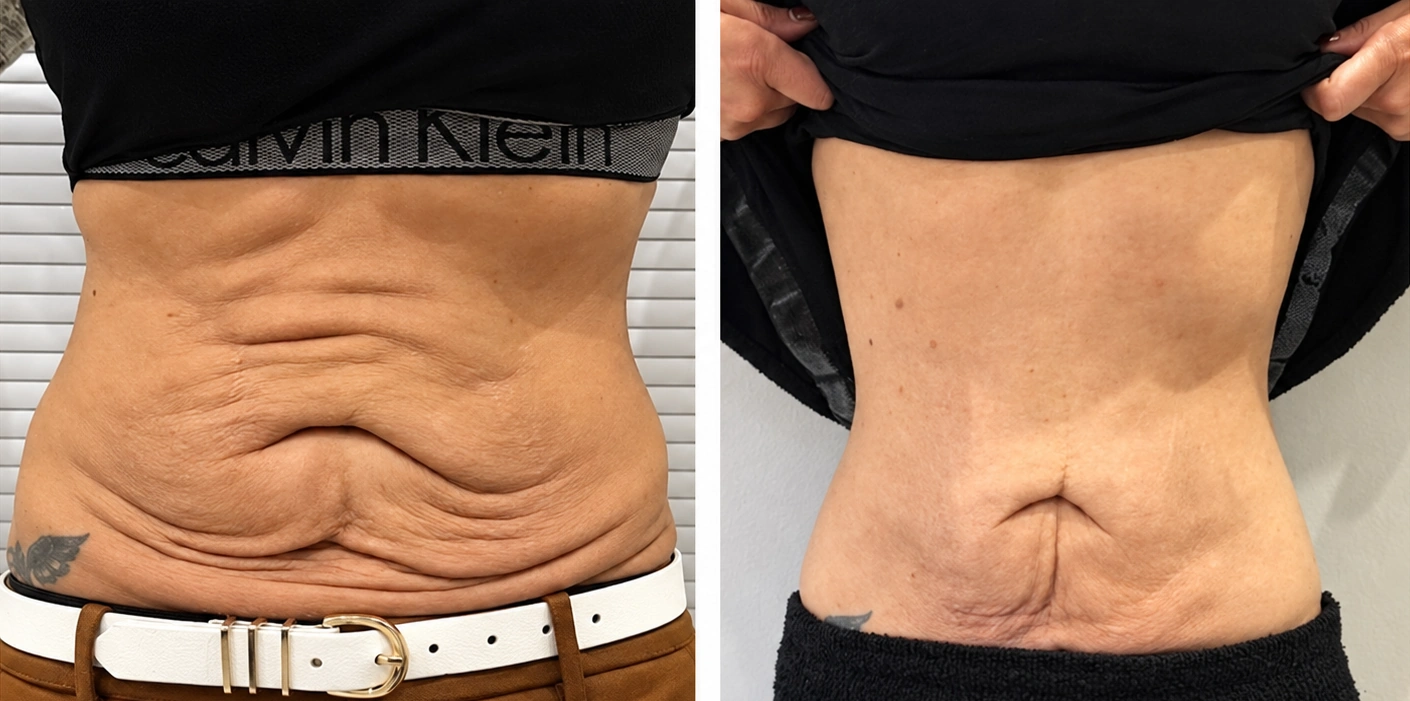
Loose abdominal skin can follow pregnancy, ageing, or weight change. Treatment suitability depends on whether the primary concern is mild laxity, localised fat, significant redundant skin, muscle separation, or a combination of these factors.
The same principle applies to the arms, thighs, legs, and knees: treatment should address the tissue responsible for the concern rather than simply applying a general “skin tightening” protocol.
Which Skin Tightening Technology Is Most Appropriate?
Non-surgical skin tightening is a treatment category rather than a single procedure. Different technologies deliver energy into tissue in different ways and at different depths. Our guide to skin tightening treatments compares ultrasound, radiofrequency, RF microneedling, laser, and plasma-based technologies in more detail.
Ultherapy
Ultherapy uses microfocused ultrasound with visualisation to deliver energy at selected tissue depths. It may be considered for patients seeking gradual lifting and tightening of areas including the brow, lower face, jawline, neck, and décolletage.
A systematic review of microfocused ultrasound for facial skin tightening identified 16 eligible studies and found measurable improvement in areas including the brow and submental region. The authors also noted limitations in the available evidence, including variation between studies.
Sofwave
Sofwave uses controlled ultrasound energy within the dermis. It may be considered where mild to moderate laxity, fine lines, and skin firmness are the principal concerns.
Sofwave and Ultherapy both use ultrasound, but they target tissue differently. They should therefore not be regarded as interchangeable versions of the same procedure.
Morpheus8
Morpheus8 combines microneedling with radiofrequency energy. It may be particularly relevant where skin laxity exists alongside concerns such as uneven texture, selected acne scarring, or fine lines.
Our guide explaining how Morpheus8 works covers RF microneedling, treatment depth, collagen remodelling, and the limitations of the technology in more detail.
RF microneedling requires appropriate clinical selection and treatment settings. In October 2025, the US Food and Drug Administration issued a safety communication on RF microneedling following reports of serious complications with certain uses of RF microneedling devices, including burns, scarring, fat loss, nerve damage, and disfigurement.
This does not mean these complications are expected following treatment. It reinforces the importance of appropriate device use, patient selection, anatomical knowledge, and practitioner training.
Other Radiofrequency and Ultrasound Treatments
Other technologies, including Ultraformer III, ULTRAcel Q+, Exilis Elite, and NuEra Tight, may be considered depending on the anatomical area, treatment objective, and degree of laxity.
There is therefore no single technology that is automatically the most appropriate option for every patient.
For patients comparing commonly discussed facial treatments, our guide to Morpheus8 vs Ultherapy vs Sofwave explains the differences between RF microneedling and ultrasound-based approaches in more detail.
What Results Can Non-Surgical Skin Tightening Realistically Achieve?
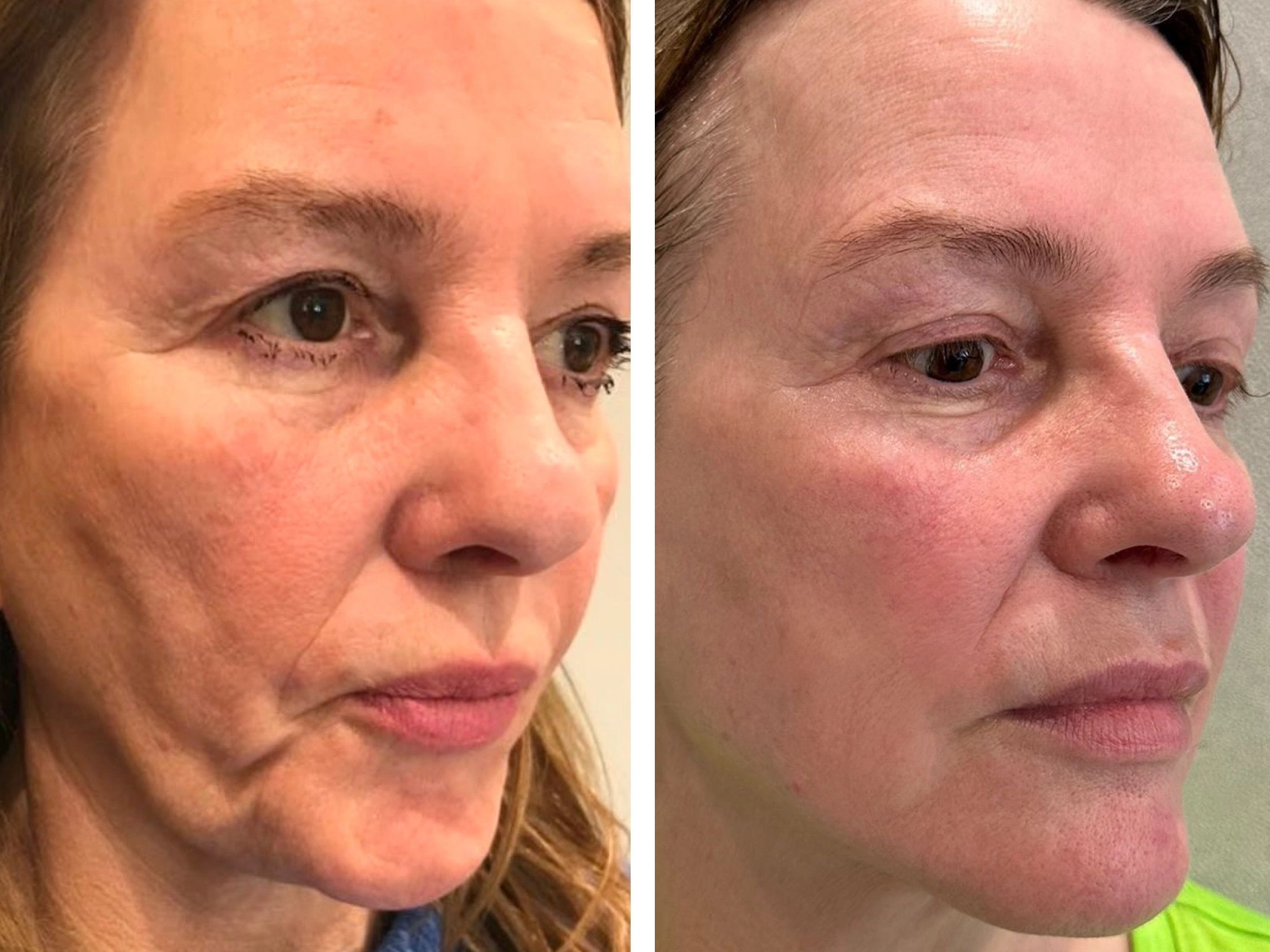
Non-surgical treatments are generally intended to produce gradual improvement in firmness, definition, and skin quality rather than an immediate or surgical-level lift.
The biological response to collagen-stimulating treatment develops over time. Results may therefore continue to evolve during the weeks and months following treatment.
A 2024 systematic review and meta-analysis of microfocused ultrasound with visualisation reported aesthetic improvement across the included studies, while also showing variation in treatment outcomes and study methodology.
The degree of improvement depends on factors including:
- Baseline skin laxity
- Skin quality
- Treatment technology
- Treatment depth and settings
- Anatomical area
- Age and biological response
- Previous procedures
- Number of sessions where a course is recommended
Results should therefore be discussed in relation to the individual patient rather than described as a guaranteed degree of lifting.
Who May Not Be Suitable for Non-Surgical Skin Tightening?
Suitability and contraindications vary according to the technology being considered. A patient who is unsuitable for one device is not necessarily unsuitable for every form of skin tightening.
Treatment may need to be avoided, postponed, or modified in people with factors such as:
- Active infection or significant inflammation in the treatment area
- Certain implanted electrical or medical devices, depending on the technology
- Pregnancy, where treatment is generally deferred
- Relevant medical conditions affecting healing or treatment safety
- Recent procedures that require adequate healing before further treatment
- Significant excess skin unlikely to respond adequately to non-surgical treatment
- Expectations that exceed what the proposed technology can reasonably achieve
This is not an exhaustive contraindication list. Device-specific medical screening should be completed before treatment.
When Might Surgery Be More Appropriate?
Surgical treatment may be more appropriate where the primary concern is substantial excess skin or significant tissue descent that needs to be physically removed or repositioned.
Examples may include:
- Marked facial and neck laxity
- Large amounts of loose abdominal skin
- Significant redundant skin following major weight loss
- Pronounced tissue descent where non-surgical tightening is unlikely to achieve the desired degree of change
This does not mean every patient with visible laxity requires surgery. It means the limitations of non-surgical treatment should be explained clearly before treatment is recommended.
A responsible consultation should include the possibility that no non-surgical procedure is likely to meet the patient’s goals.
Why Is a Clinical Assessment Important Before Skin Tightening?
“Loose skin” is a description rather than a diagnosis. Similar-looking concerns can have different underlying causes.
For example, loss of lower-face definition may reflect skin laxity, facial volume loss, localised fat, skeletal structure, muscle activity, or several of these factors together.
Facial volume loss, for example, may require a different approach from isolated skin laxity. Tightening the skin does not replace structural volume where volume loss is the principal concern.
Medical history, previous procedures, and factors that could affect treatment or recovery also form part of the assessment. Our guide to skin tightening safety, side effects, and aftercare explains the treatment-specific risks, expected side effects, and recovery considerations associated with different technologies.
A clinical assessment should establish:
- What tissue is responsible for the concern
- Whether the degree of laxity is suitable for non-surgical treatment
- Which technology and treatment depth are appropriate
- Whether another treatment would address the concern more directly
- Relevant contraindications and medical history
- Expected benefits and limitations
- Potential risks and recovery
The NHS guidance on choosing a cosmetic practitioner recommends checking a practitioner’s qualifications, training, experience, insurance, and aftercare arrangements before undergoing a cosmetic procedure.
At Dr Nyla Medispa, treatment planning begins with an individual consultation rather than assuming a particular device is appropriate because of age or a general concern about loose skin.
Clinical Note from Dr Nyla Raja
The most important part of skin tightening is establishing what is actually causing the concern. Where laxity is mild to moderate, non-surgical treatment may provide a useful improvement. Where volume loss, excess fat, muscle activity, or substantial redundant skin is the main issue, another approach may be more appropriate.

Book in a Free Consultation With Our Expert Team
- Award-winning, doctor-led aesthetic clinics
- Locations in London, Cheshire, and Liverpool
- Over 50 non-surgical treatments available
- Free consultation with a personalised plan
Non-Surgical Skin Tightening Suitability FAQs
What age is best for non-surgical skin tightening?
There is no single ideal age. Suitability depends more on skin quality, degree of laxity, anatomy, medical history, and treatment goals than chronological age alone.
Am I suitable for skin tightening if I only have mild loose skin?
Mild laxity is often one of the more appropriate indications for non-surgical skin tightening. Treatment may help improve firmness and definition before substantial excess skin develops, although the expected improvement depends on the area and technology selected.
Can non-surgical treatment tighten very loose skin?
Non-surgical technologies may improve skin quality and some degree of laxity, but they cannot remove significant excess skin. Where laxity is substantial, surgical assessment may provide a more realistic indication of what can be achieved.
Can skin tightening help jowls?
It may help where mild to moderate skin laxity contributes to early jowling. Jowls can also involve changes in facial fat, volume, structural support, and anatomy, so treatment should be based on assessment rather than skin tightening alone.
Can skin tightening improve a loose neck?
Yes, selected non-surgical technologies may improve mild to moderate neck laxity. The most appropriate treatment depends on whether the concern is primarily loose skin, wrinkles, localised fat, platysmal muscle activity, or a combination of factors.
Which is better for skin tightening: Morpheus8, Ultherapy, or Sofwave?
None is universally more appropriate. Morpheus8 uses RF microneedling, while Ultherapy and Sofwave use ultrasound technologies at different tissue depths. Selection should be based on skin quality, anatomy, degree of laxity, treatment area, and whether texture or deeper lifting is the principal objective.
Can I have skin tightening after losing weight?
Potentially. Mild to moderate laxity following weight loss may be suitable for non-surgical treatment. Significant redundant skin after substantial weight loss is less likely to respond sufficiently, and surgical assessment may be more appropriate.
Can skin tightening replace a facelift?
No. Non-surgical treatments can stimulate collagen and improve selected areas of mild to moderate laxity, but they cannot remove excess skin or reproduce the tissue repositioning achieved by a surgical facelift.
How do I know which skin tightening treatment is right for me?
A clinical assessment is required to determine the tissue responsible for the concern, degree of laxity, treatment depth required, relevant medical considerations, and the technology most appropriate for your anatomy and goals.
Is Non-Surgical Skin Tightening Suitable for You?
Non-surgical skin tightening is generally most appropriate for patients with mild to moderate laxity who understand that results develop gradually and are more subtle than surgery.
Suitability cannot be determined by age or the presence of loose skin alone. Skin quality, facial or body anatomy, amount of excess tissue, medical history, previous treatments, and the underlying cause of the concern all need to be considered.
The most appropriate technology may also differ between patients. Ultrasound, radiofrequency, and RF microneedling treatments work differently and should be selected according to the treatment objective rather than device popularity.
You can book a free consultation at Dr Nyla Medispa in Mayfair, London, Alderley Edge, Cheshire, or Crosby, Liverpool, to determine whether non-surgical skin tightening is appropriate for you and which treatment may be most suitable.
Need Guidance in Selecting the Most Appropriate Treatment?
Related Treatments

Skin Tightening
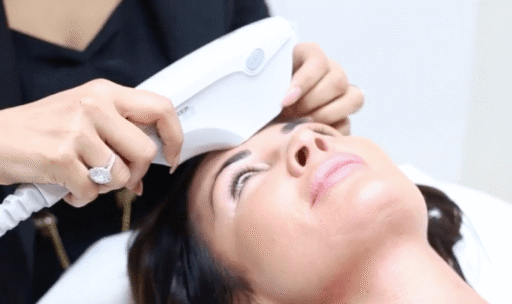
Ultherapy Skin Tightening
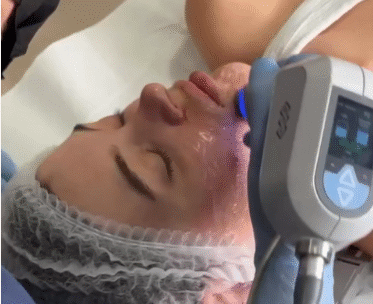
Exilis Elite Skin Tightening

Sofwave Skin Tightening

NuEra Tight Skin Tightening

ULTRAcel Q+ Skin Tightening
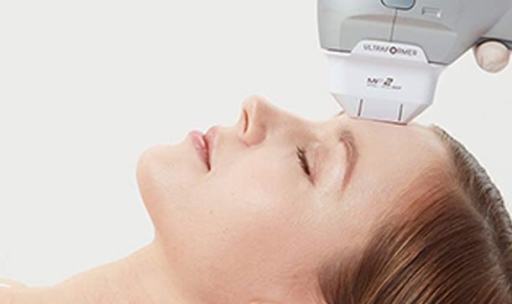
Ultraformer 3 HIFU Skin Tightening

XERF Skin Tightening
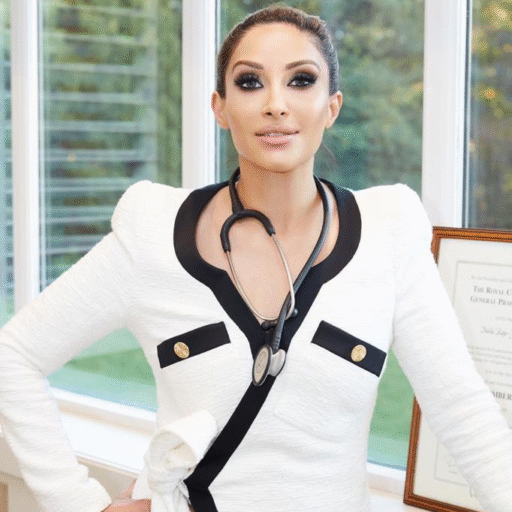
About the Author
Considering treatment? Book a free consultation at our clinics in Mayfair London, Alderley Edge Cheshire, or Crosby Liverpool, or call 0800 009 6661.