
Skin Tightening Results Explained: When Results Appear, How Long They Last, and Why They Vary
Clinical guidance from Dr Nyla Raja MBChB (Hons), MRCGP (Dist), DFFP, DPDermatology - GMC No. 6057913
Skin Tightening Results: At a Glance
Skin tightening results usually develop gradually because many non-surgical treatments work by creating controlled stimulation within the skin and supporting subsequent collagen remodelling. Some patients notice an early change shortly after treatment, but this should be distinguished from the more gradual structural response that develops over the following weeks and months.
There is no single timeline for all skin tightening treatments. Radiofrequency, RF microneedling, Ultherapy, Sofwave, and other energy-based technologies deliver energy differently, at different tissue depths, and according to different treatment protocols. Some are commonly performed as a course, while others may begin with one treatment followed by several months of collagen remodelling.
The eventual result is also influenced by age, baseline skin quality, the degree of laxity, treatment area, previous procedures, lifestyle, and individual biological response. Non-surgical skin tightening can improve selected cases of mild to moderate laxity, but it does not reproduce the tissue removal or repositioning achieved with surgery.
- Immediate effects: some treatments can produce early firmness, although temporary swelling or tissue response may contribute
- Gradual improvement: commonly develops over several weeks as tissue remodelling progresses
- Peak result: often assessed after several months rather than immediately after treatment
- Treatment course: some technologies use one initial treatment, while others commonly involve several sessions
- Maintenance: may be considered as the natural ageing process continues
- Longevity: varies considerably according to technology, skin quality, age, treatment area, and individual response
Results and treatment schedules vary between patients and technologies. A consultation should establish whether skin laxity is the main cause of the concern and which treatment, if any, is appropriate.
How Do Non-Surgical Skin Tightening Treatments Work?
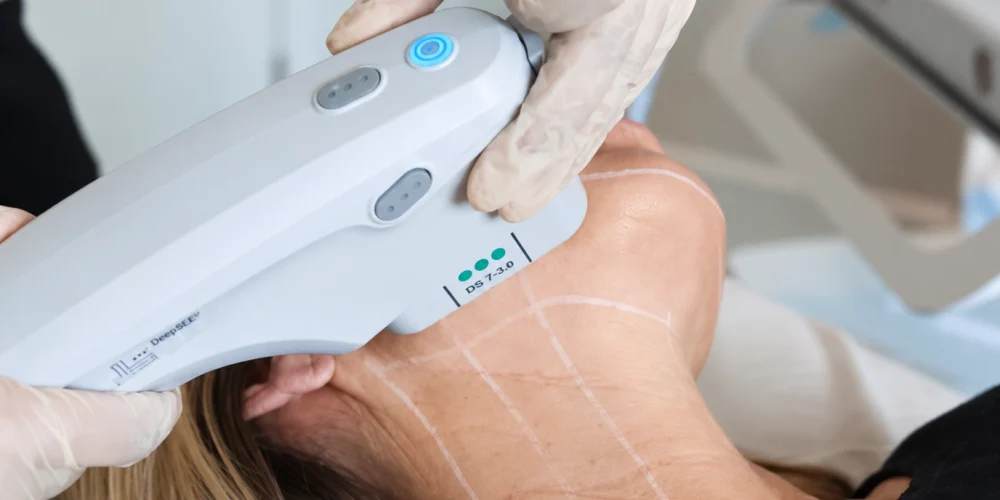
Many non-surgical skin tightening procedures use controlled energy to create a thermal response within selected tissue layers.
Depending on the technology, this may involve:
- Radiofrequency energy
- Radiofrequency delivered through microneedles
- Microfocused ultrasound
- Other forms of controlled ultrasound energy
- Selected laser or plasma technologies
The purpose is not simply to heat the surface of the skin. Treatment parameters are selected to create a controlled response at particular depths, initiating biological processes associated with tissue contraction, repair, and longer-term collagen remodelling.
This is why the eventual result may take considerably longer to develop than the treatment appointment itself.
What Is Collagen Remodelling?
Collagen is an important structural protein within the dermis. Alongside elastin and other components of the extracellular matrix, it contributes to skin strength, support, and elasticity.
With ageing, collagen production, organisation, and quality change. Ultraviolet exposure and other environmental factors can contribute further to these changes.
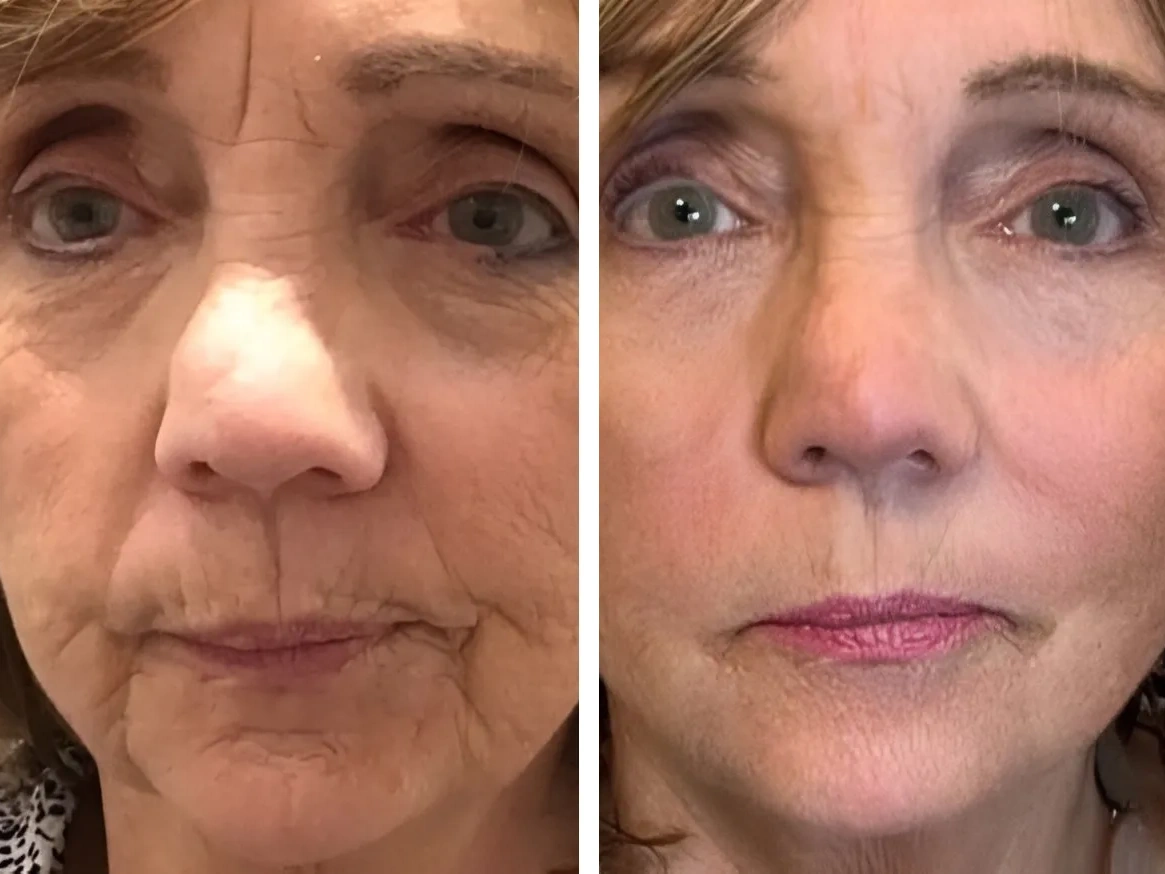
Energy-based skin tightening treatments aim to create controlled tissue stimulation. The subsequent healing response can involve collagen reorganisation and the formation of new collagen over time.
This process is gradual. A 2023 systematic review of microfocused ultrasound for facial skin tightening found measurable improvement across the included studies, particularly in areas including the brow and submental region, while also identifying variation in study design, treatment protocols, and outcomes.
Collagen remodelling helps explain why patients should not judge the final result of a collagen-stimulating treatment immediately after the procedure.
Are Skin Tightening Results Immediate?
Some patients notice an early change after treatment, but this should not automatically be interpreted as the final result.
Several factors may contribute to the appearance of firmer skin shortly after treatment:
- Immediate thermal effects within treated tissue
- Temporary tissue contraction
- Mild swelling
- Changes in hydration
- The inflammatory response associated with treatment
These early effects are not necessarily the same as the longer-term collagen-remodelling result.
For treatments designed primarily around collagen stimulation, a more meaningful assessment is generally made after sufficient time has passed for tissue remodelling to develop.
Clinical Note from Dr Nyla Raja
An immediate change can be encouraging, but it should not be presented as the completed result. With collagen-stimulating treatments, we assess progress over time because tissue remodelling continues after the patient has left the clinic.
When Do Skin Tightening Results Normally Appear?
There is no universal skin tightening timeline, although a broad pattern is common across many energy-based treatments.
| Stage | What May Be Happening | What Patients May Notice |
|---|---|---|
| Immediately after treatment | Early tissue response, with temporary redness or swelling depending on treatment | Possible early firmness, although this should not be considered the final result |
| First few weeks | Recovery and early remodelling | Gradual changes in firmness, texture, or definition may begin to become noticeable |
| Following months | Ongoing collagen remodelling | Progressive improvement may become more apparent |
| Longer term | Remodelled tissue continues to age naturally | Results may remain visible, with maintenance considered where appropriate |
This is a general guide rather than a fixed schedule. The expected timeline should be discussed for the specific technology being recommended.
Why Do Different Skin Tightening Treatments Have Different Results Timelines?
Skin tightening is a broad treatment category. Different technologies deliver energy differently, target different tissue depths, and use different treatment protocols. Our skin tightening treatment comparison explains how ultrasound, radiofrequency, RF microneedling, laser, and plasma-based treatments differ.
Ultherapy Results
Ultherapy uses microfocused ultrasound energy to target selected deeper tissue layers and stimulate a gradual collagen response. Results generally develop over the months following treatment rather than appearing fully on the day of the procedure.
Because the response is progressive, treatment is commonly assessed over several months. The exact degree and timing of improvement vary according to the treatment area, skin condition, anatomy, and individual response.
Sofwave Results
Sofwave uses controlled ultrasound energy within the mid-dermis to stimulate collagen production. Some patients may notice early changes, with further improvement developing during the following weeks and months.
The treatment is often discussed for concerns including mild to moderate skin laxity, fine lines, reduced jawline definition, and loose skin on the neck.
Morpheus8 Results
Morpheus8 combines microneedling with radiofrequency energy and may be particularly relevant where reduced firmness exists alongside texture changes, fine lines, or selected acne scarring.
Our Morpheus8 explained guide looks in more detail at how RF microneedling works, treatment depth, collagen remodelling, and what the technology can realistically achieve.
NuEra Tight Results
NuEra Tight uses radiofrequency energy to deliver controlled heating at different tissue depths. Unlike treatments commonly planned around a single initial session, radiofrequency treatment may be performed as a course, with improvement building progressively.
This difference in treatment protocols is one reason why comparing skin tightening devices purely by asking how many days they take to “work” can be misleading.
Patients comparing commonly discussed technologies can also read our Morpheus8 vs Ultherapy vs Sofwave comparison for a more detailed explanation of how RF microneedling and ultrasound-based treatments differ.
How Does the Number of Treatments Affect Results?
The number of sessions required depends on the technology and the individual treatment plan.
Some ultrasound-based procedures may begin with one treatment followed by a period of collagen remodelling. Other radiofrequency and RF microneedling treatments are commonly performed as a course.
Where several sessions are recommended, the result may develop throughout the course and continue after the final treatment.
This means results should be assessed against the complete treatment plan rather than assuming that every device should produce its final effect after one appointment.
Equally, more treatment is not automatically better. The number of sessions, treatment depth, energy settings, and intervals should be appropriate for the patient’s skin, anatomy, and treatment objective. These factors are also important from a safety perspective, as the potential side effects and risks vary between technologies. Our guide to skin tightening safety, side effects, and aftercare explains these differences in more detail.
How Long Do Skin Tightening Results Last?
There is no single duration that applies to every non-surgical skin tightening treatment.
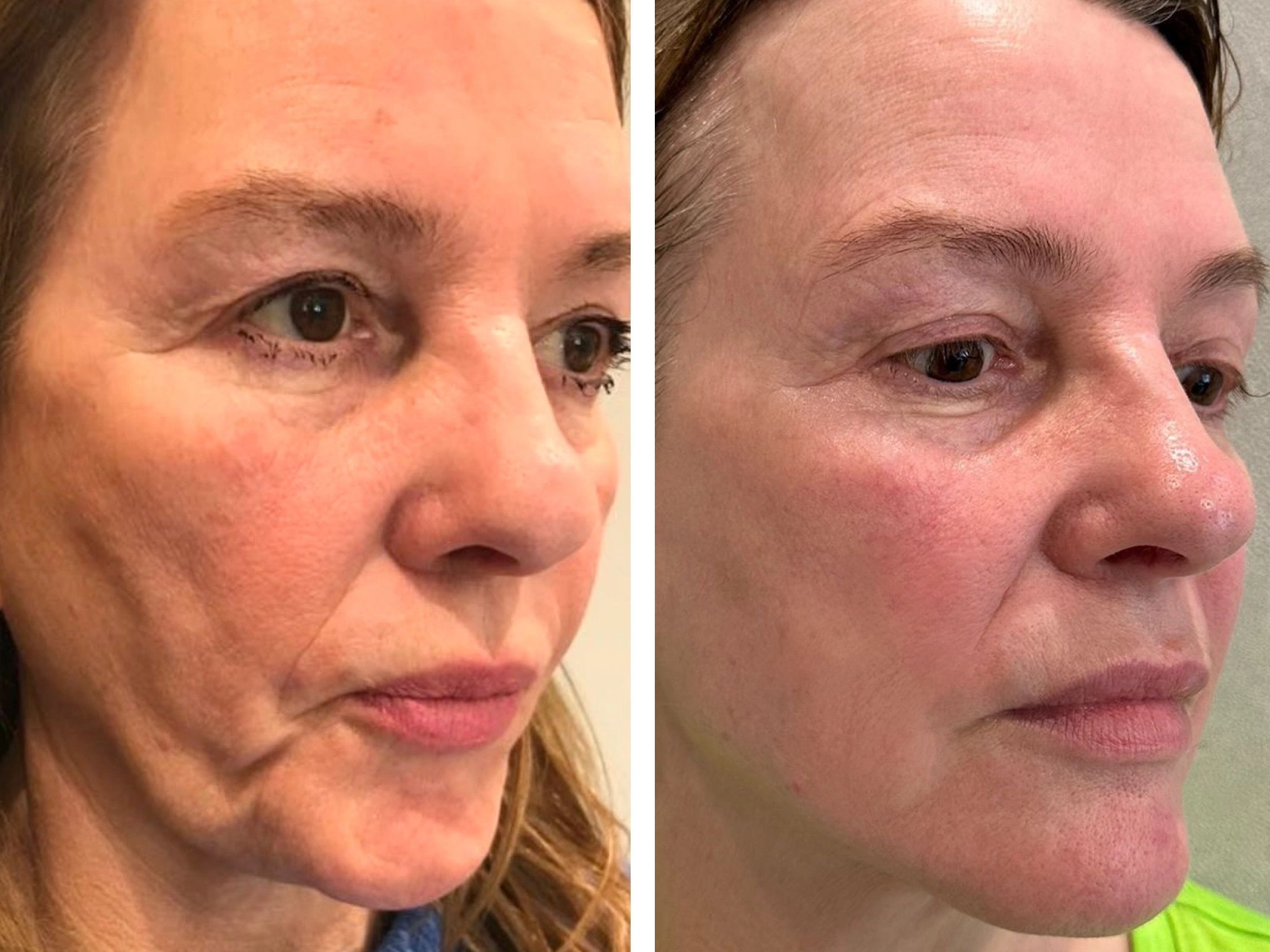
Results may remain visible for many months and, with some technologies, beyond a year. However, longevity varies according to:
- The technology used
- Age
- Baseline collagen and elastin quality
- Degree of skin laxity
- Treatment area
- Number of treatments
- Individual biological response
- Sun exposure
- Smoking
- Weight change
- The continuing ageing process
It is more accurate to describe results as long-lasting rather than permanent. Treatment may remodel existing tissue and stimulate new collagen, but it does not stop subsequent biological ageing.
Will I Need Maintenance Skin Tightening Treatments?
Maintenance may be considered as the natural ageing process continues, but it should not automatically be assumed that every patient needs treatment on a fixed schedule.
The appropriate interval depends on the original treatment, the patient’s response, changes in the skin over time, and whether there remains a clinical reason for further treatment.
For some patients, repeating the same procedure may be appropriate. For others, ageing may create a different concern that is better addressed using another approach.
For example, progressive facial volume loss cannot necessarily be corrected by repeatedly tightening the skin. Similarly, a change in jawline definition may involve skin laxity, volume redistribution, localised fat, or several factors together.
How Does Age Affect Skin Tightening Results?
Age influences collagen production, elastin quality, tissue thickness, facial volume, and the broader ageing process. However, chronological age alone does not determine whether somebody will achieve a worthwhile result.
A younger patient can have significant laxity following substantial weight loss, while an older patient may retain relatively good skin quality with only mild looseness.
The condition of the tissue is therefore more informative than age in isolation.
Patients with mild to moderate sagging skin may be more appropriate candidates for non-surgical tightening than patients with substantial redundant skin, regardless of chronological age.
How Does Skin Condition Affect Results?
Baseline skin quality affects both treatment selection and the result that can reasonably be expected.
Relevant factors include:
- Skin thickness
- Degree of laxity
- Sun damage
- Scarring
- Crepiness
- Hydration and barrier condition
- Previous procedures
- Amount of redundant skin
A patient with mild loss of firmness and relatively good tissue quality may respond differently from somebody with thin, significantly sun-damaged skin and substantial laxity.
This is why before-and-after photographs from another patient cannot predict an individual’s result.
Can Lifestyle Affect How Long Skin Tightening Results Last?
Lifestyle does not determine every aspect of skin ageing, but some factors can influence collagen quality and the appearance of the skin over time.
These include:
- Ultraviolet exposure
- Smoking
- Significant weight fluctuations
- General skin care
- Nutrition and overall health
Consistent sun protection, avoiding smoking, maintaining a stable weight, and following an appropriate skincare routine can help support general skin health. These measures cannot prevent natural ageing or determine how long treatment results will last, but they may help reduce avoidable factors associated with changes in skin quality over time.
Do Skin Tightening Results Differ Between the Face, Neck, and Body?
Yes. Skin thickness, underlying fat, tissue structure, movement, and the degree of laxity differ considerably between anatomical areas.
Face and Jawline
On the face, treatment may be used to improve early laxity and reduced definition. However, changes around the lower face should not automatically be attributed to loose skin.
Sagging jowls, for example, can reflect changes in skin elasticity, facial fat, structural support, and ageing of several tissue layers. Skin tightening may form one part of treatment where laxity is contributing to the concern.
Neck
The neck can develop wrinkles, crepiness, and reduced firmness as collagen and elastin change with age. Neck tightening treatments may be considered where mild to moderate laxity is present, but localised fat and platysmal muscle activity can also affect the appearance of the area.
Body
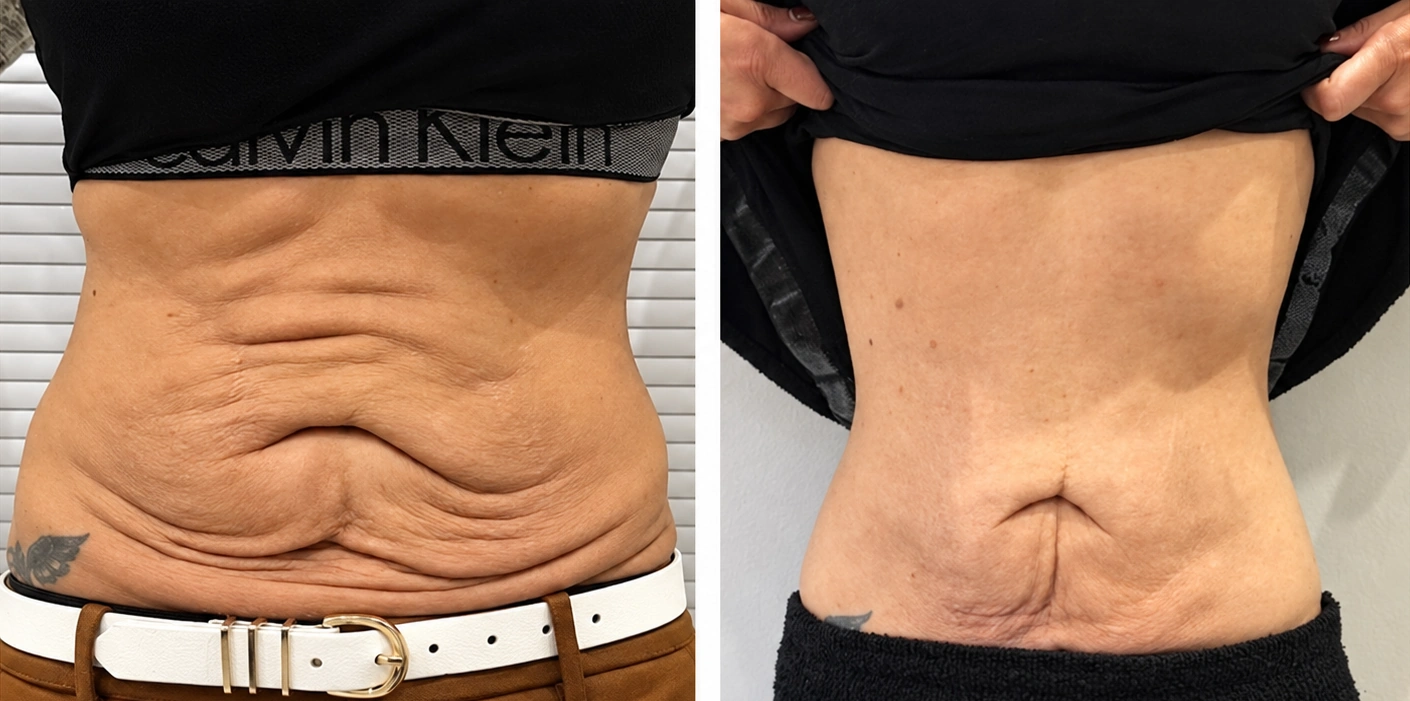
On the body, treatment may be considered for selected areas of reduced firmness, including the abdomen, thighs, upper arms, and knees. The degree of improvement depends particularly on the amount of redundant skin and whether localised fat is also present.
Where body contouring and skin laxity coexist, a broader treatment plan may be required rather than skin tightening alone.
Why Do Skin Tightening Results Vary Between Patients?
Even when two patients undergo the same treatment, their results may not be identical.
Variation can reflect:
- Baseline collagen and elastin quality
- Age
- Genetics
- Degree of laxity
- Treatment area
- Tissue thickness
- Previous aesthetic procedures
- Energy settings and treatment coverage
- Number of sessions
- Individual biological response
- Smoking and sun exposure
- Changes in weight
This variability is an important reason to be cautious with claims that a treatment will provide a fixed percentage improvement or an identical result for every patient.
What Is a Realistic Skin Tightening Result?
For an appropriately selected patient, the aim is generally a progressive, natural-looking improvement in firmness, skin quality, or definition.
Non-surgical skin tightening should not be expected to:
- Remove substantial excess skin
- Produce the same result as a surgical facelift or neck lift
- Replace lost facial volume
- Remove significant deposits of fat
- Correct every cause of jowling
- Stop the natural ageing process
For some patients, a combination approach may be more appropriate because visible ageing rarely involves the skin alone.
Patients considering treatment can also read our guide to skin tightening suitability for more information about how the degree of laxity, skin quality, anatomy, and treatment goals affect whether a non-surgical procedure is appropriate.
Clinical Note from Dr Nyla Raja
Good patient selection is central to skin tightening treatment. The question is not simply whether a device can tighten skin, but whether skin laxity is sufficiently responsible for the patient’s concern for that treatment to produce a meaningful and proportionate improvement.
Skin Tightening at Dr Nyla Medispa
At Dr Nyla Medispa, skin tightening treatments are provided within a doctor-led, medically regulated clinical setting. Treatment planning considers the underlying anatomy and tissue concern rather than selecting the same technology for every patient.
Depending on assessment, available options may include ultrasound-based skin tightening, radiofrequency, RF microneedling, and other treatment approaches.
During consultation, we consider:
- The degree and location of skin laxity
- Skin quality and thickness
- Facial or body anatomy
- Volume and fat distribution
- Previous treatment
- Expected result
- Downtime preferences
- Whether one treatment or a course is appropriate
The treatment timeline, expected period of collagen remodelling, and likely maintenance requirements should be discussed before treatment so that results can be assessed at an appropriate stage.

Book in a Free Consultation With Our Expert Team
- Award-winning, doctor-led aesthetic clinics
- Locations in London, Cheshire, and Liverpool
- Over 50 non-surgical treatments available
- Free consultation with a personalised plan
Skin Tightening Results FAQs
How quickly do skin tightening treatments work?
Some treatments can produce an early visible change, but many results develop progressively over several weeks or months because collagen remodelling takes time. The expected timeline varies according to the technology, treatment area, and individual response.
When do skin tightening results peak?
This depends on the technology. With many collagen-stimulating treatments, a meaningful assessment is made several months after treatment rather than immediately afterwards.
Can skin tightening continue improving after three months?
Yes, with some technologies. Collagen remodelling can continue beyond the early treatment period, although the exact timeline varies according to the procedure and individual response.
How long do skin tightening results last?
Results can remain visible for many months and, with some technologies, beyond a year. Longevity varies according to age, baseline skin quality, treatment type, treatment area, lifestyle, and the continuing ageing process.
Do I need several skin tightening sessions?
It depends on the treatment. Some ultrasound technologies may begin with one session, while radiofrequency and RF microneedling procedures are often performed as a course. Your treatment plan should be based on the technology, anatomy, degree of laxity, and individual response.
Does radiofrequency skin tightening work immediately?
Some early firmness can occur, but the more meaningful result generally develops as collagen remodelling progresses. Where several radiofrequency treatments are recommended, improvement may build during the treatment course.
How long does Ultherapy take to work?
Ultherapy results typically develop gradually over the months following treatment as the collagen response progresses. An early change may be visible in some patients, but the final result should not be judged immediately after treatment.
How quickly does Sofwave work?
Some patients may notice early changes within the first few weeks, with further improvement developing over subsequent months as collagen remodelling continues. Individual results and timelines vary.
Does age affect skin tightening results?
Yes, but age is only one factor. Baseline skin quality, degree of laxity, anatomy, treatment area, and individual collagen response can be equally important.
Can skin tightening replace a facelift?
No. Non-surgical treatments can improve selected cases of mild to moderate laxity, but they cannot remove significant excess skin or reproduce the degree of tissue repositioning possible with surgery.
Skin Tightening Results: Gradual Improvement Requires the Right Treatment and Timeline
Skin tightening results should usually be assessed over weeks and months rather than days. Early firmness may occur, but collagen remodelling is a gradual biological process and often accounts for the more meaningful longer-term change.
The results and timeline depend on the technology, treatment depth, number of sessions, treatment area, age, skin condition, lifestyle, and individual biological response. Ultherapy, Sofwave, radiofrequency, and RF microneedling should therefore not be expected to produce identical results on identical schedules.
A clinically appropriate treatment plan also requires realistic expectations. Non-surgical skin tightening can improve selected mild to moderate laxity, but it does not replace lost volume, remove substantial excess skin, or stop future ageing.
If you are considering treatment, you can book a free consultation at Dr Nyla Medispa in Mayfair, London, Alderley Edge, Cheshire, or Crosby, Liverpool, to discuss your skin concerns, suitability, and expected treatment timeline.
Need Guidance in Selecting the Most Appropriate Treatment?
Related Treatments

Skin Tightening
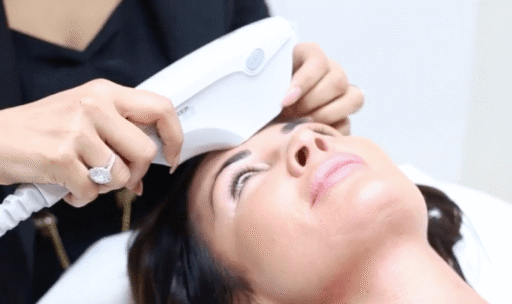
Ultherapy Skin Tightening
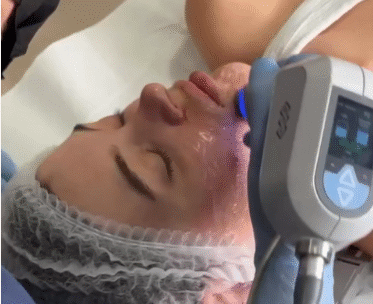
Exilis Elite Skin Tightening

Sofwave Skin Tightening

NuEra Tight Skin Tightening

ULTRAcel Q+ Skin Tightening
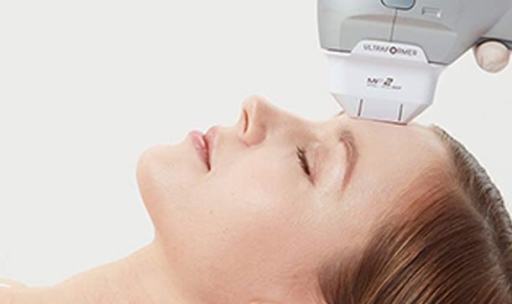
Ultraformer 3 HIFU Skin Tightening

XERF Skin Tightening

About the Author
Considering treatment? Book a free consultation at our clinics in Mayfair London, Alderley Edge Cheshire, or Crosby Liverpool, or call 0800 009 6661.