
How Much Does Skin Tightening Cost in London? 2026 Price Guide
Clinical guidance from Dr Nyla Raja MBChB (Hons), MRCGP (Dist), DFFP, DPDermatology - GMC No. 6057913
Skin Tightening Cost in London: At a Glance
In London, skin tightening costs vary widely because it describes several non-surgical technologies rather than one standard procedure. Typical individual treatment prices range from around £60–£300+ for selected non-invasive radiofrequency sessions, £400–£1,400+ for RF microneedling, £250–£1,500+ for HIFU or focused-ultrasound treatment, £350–£4,000 for Ultherapy, and approximately £600–£3,600+ for Sofwave, depending on the area and treatment plan.
Where a course is clinically appropriate, publicly advertised London course prices commonly range from around £800–£1,800+ for selected non-invasive RF programmes, £2,400–£3,800+ for three RF microneedling sessions, and approximately £1,600–£2,700+ for three Ultraformer treatments. Single-session ultrasound treatments and comprehensive face-and-neck treatments are often priced individually rather than as a routine course.
The final cost depends on what is being treated: a small facial area, such as around the eyes or lower face, is not comparable with full face and neck coverage, abdomen, arms, knees, or thighs. It also depends on the technology selected. Surface radiofrequency, RF microneedling, focused ultrasound, and dual-frequency radiofrequency target tissue differently, use different consumables and treatment settings, and may require different numbers of appointments. Some concerns are principally related to skin texture, while others involve laxity, volume loss, localised fat, muscle activity, or more significant excess skin; these distinctions matter when selecting a clinically appropriate option.
At Dr Nyla Medispa in Mayfair, our skin tightening treatments start from £250. Our approach is tailored to your treatment area, degree of skin laxity, skin quality, anatomy, medical history, and clinical assessment, with final pricing confirmed following your free consultation. We offer a range of non-surgical technologies for the face, neck, and body, and will recommend the approach that best matches the concern being assessed rather than applying one device or one price to every patient.
- Selected non-invasive radiofrequency: approximately £60–£300+ per individual treatment in the wider UK and London market, with larger areas and premium devices costing more.
- RF microneedling: approximately £400–£1,400+ per session; published London three-session prices for face and neck commonly sit around £2,400–£3,800+.
- HIFU and focused ultrasound: approximately £250–£1,500+ per treatment, depending on the device and coverage.
- Ultherapy: approximately £350–£4,000, with cost driven by treatment area, line count, and whether face, neck, and décolletage are included.
- Sofwave: approximately £600–£3,600+ for an individual treatment; full face and neck generally costs more than a brow, eye, or lower-face area.
- Face and neck: should be compared only with other combined face-and-neck quotations, not face-only prices.
- Body treatment: is often quoted by surface area, technology, and the likely number of appointments, so individual quotation is common.
- Course pricing: may be offered for technologies commonly planned as repeated sessions, but a course should not be assumed to be necessary for every device or patient.
- At Dr Nyla Medispa: skin tightening starts from £250, with an individual treatment plan and final quotation following assessment.
- Consultation: our consultation is free and is used to establish suitability, expected limitations, and the most appropriate technology.
These are indicative market prices, not fixed quotations. Treatment protocols, device settings, included reviews, aftercare, and the number of appointments differ between clinics, so an individual clinical assessment is necessary before comparing costs.
In this guide:
- Typical skin tightening costs in London
- Cost by treatment area
- Single treatments versus courses
- How technology affects cost
- London versus wider UK pricing
- How skin tightening pricing works
- Why individual requirements vary
- Practitioner experience and clinic standards
- Safety, suitability, and limitations
- Consultation, follow-up, and aftercare
- What a quotation should include
- How to compare clinics
- Skin tightening pricing at Dr Nyla Medispa
- Skin tightening cost London FAQs
Typical Skin Tightening Costs in London
London has a broad market for energy-based skin tightening, from repeated non-invasive radiofrequency programmes to single-session ultrasound treatments and RF microneedling plans. A meaningful comparison starts by identifying the technology, treatment area, and whether the advertised figure is for one appointment or a defined course.
The broadest price differences are usually seen between small facial zones, full face and neck treatment, and larger body areas. A lower price can reflect a smaller treatment area, a different device, fewer treatment passes, a course model, or a different level of consultation and follow-up. It should not be treated as proof that two quoted treatments are clinically equivalent.
| Treatment / Treatment Area | Typical Individual Treatment Price | Typical Course Price | Main Pricing Considerations |
|---|---|---|---|
| Non-invasive radiofrequency | £60–£300+ | Approximately £800–£1,800+ where a defined course is offered | Device type, body versus facial coverage, treatment duration, number of sessions, and whether the programme includes review appointments. |
| RF microneedling | £400–£1,400+ | Approximately £2,400–£3,800+ for three face-and-neck sessions | Face-only versus face and neck, needle depth, cartridge use, clinician level, skin preparation, and whether treatment targets laxity, scarring, texture, or a combination. |
| HIFU / focused ultrasound | £250–£1,500+ | Varies; selected three-session Ultraformer programmes are approximately £1,600–£2,700+ | Treatment area, device, treatment depth, cartridge configuration, number of lines or shots, and whether full face and neck are included. |
| Ultherapy | £350–£4,000 | Usually individually quoted | Small zones versus comprehensive face, neck, or décolletage coverage, treatment line count, and whether one treatment is appropriate for the clinical objective. |
| Sofwave | £600–£3,600+ | Usually individually quoted; selected providers advertise two-session courses | Brow or eye area versus lower face versus full face and neck, treatment coverage, included analgesia or review, and whether maintenance is planned. |
| Larger body areas | Individual quotation or area-led pricing | Varies | Surface area, whether loose skin is the principal concern, treatment duration, body anatomy, and the technology selected. |
Prices are indicative general market estimates based on publicly available UK and London menus. A course price applies only where the advertised course includes the same treatment area, device, and protocol; it should not be compared with an unrelated single-session quotation.
Cost by Treatment Area
Face, lower face, and jawline
Smaller facial areas may be priced below full-face treatment, but terminology varies. A brow or eye-area treatment is not equivalent to lower-face or jawline treatment, and a lower-face quotation is not necessarily comparable with full face and neck. Focused ultrasound and radiofrequency treatments may be chosen where mild to moderate laxity contributes to reduced definition, while RF microneedling may be considered where texture, fine lines, and skin quality are also relevant.
Full face and neck
Combined face and neck treatment generally costs more than face-only treatment because it requires broader coverage and more treatment time, energy delivery, or consumables. In London, publicly listed focused-ultrasound and RF microneedling pricing shows a substantial difference between smaller facial zones and full face-and-neck configurations. Patients should ask whether the jawline, submental area, neck, and décolletage are included, rather than relying on an abbreviated label such as “full face”.
Eyes, brow, and peri-orbital area
The skin around the eyes is thin and the anatomy is particularly important. Some ultrasound technologies have dedicated protocols for eye and brow areas, while RF microneedling may be selected differently depending on the skin concern. Published London prices for focused ultrasound eye or brow treatment commonly begin in the high hundreds, but this is a distinct treatment configuration and should not be merged with full-face pricing.
Body, abdomen, arms, knees, and thighs
Body skin tightening costs are less uniform than facial pricing. The treatment area is larger, the underlying concern can be more variable, and loose skin may coexist with localised fat, cellulite, stretch marks, or changes following weight loss. A body quotation should specify the exact area, estimated appointment time, technology, anticipated number of treatments, and whether the objective is principally skin firmness, contour support, texture improvement, or a combination.
Single Treatments Versus Treatment Courses
Some skin tightening technologies are commonly planned as a course because the protocol involves repeated, lower-intensity sessions. This is often the case with selected non-invasive radiofrequency treatments and some RF microneedling or focused-ultrasound plans. Other technologies may more commonly be offered as an individual treatment, with reassessment later rather than an automatic series of appointments.
A course is not inherently better value simply because it has a lower per-session figure. It is useful only if each appointment is clinically appropriate and the included treatment configuration is clear. For example, a three-session RF microneedling course for face and neck should state the device, treatment depth, any included consumables, interval between appointments, and review arrangement. It is not comparable with three appointments treating the face alone or with a different RF device.
Maintenance can also be relevant, but the timing varies by technology, treatment area, ageing process, and individual response. We do not recommend assuming that a course or maintenance treatment is necessary before a practitioner has assessed the degree and cause of laxity. Our UK skin tightening cost guide provides further context on how technology and treatment extent affect pricing nationally.
How Technology Affects Skin Tightening Cost
Non-invasive radiofrequency
Non-invasive radiofrequency applies controlled thermal energy through the skin surface. Pricing is often influenced by appointment duration, body surface area, device platform, and whether multiple sessions are planned. These treatments may be used to support firmness and skin quality, but they are not interchangeable with deeper focused-ultrasound treatment or RF microneedling.
RF microneedling
RF microneedling combines microneedles with radiofrequency energy delivered at selected depths. It can be used where collagen remodelling, texture, acne scarring, fine lines, and skin laxity are being assessed together. Costs can be higher because treatment commonly involves single-use components, topical preparation, greater procedural complexity, and more structured aftercare. The US Food and Drug Administration has issued a safety communication on RF microneedling following reports of serious complications with certain uses, reinforcing why treatment depth, energy settings, anatomy, and follow-up matter.
Focused ultrasound, HIFU, Ultherapy, and Sofwave
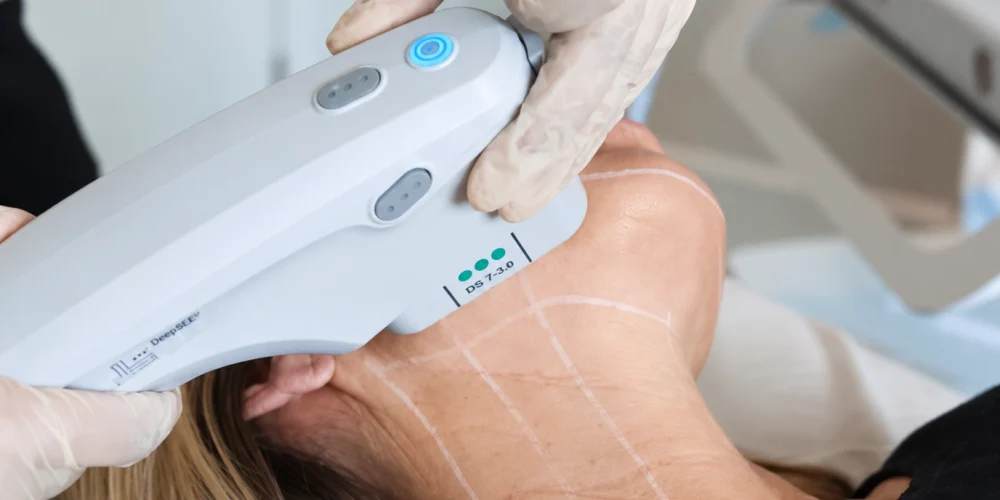
Focused ultrasound technologies use different treatment depths and protocols. Ultherapy, Sofwave, Ultraformer, and ULTRAcel Q+ should not be regarded as identical simply because they are all discussed under the broad term “skin tightening”. Costs may depend on the number of treatment lines, cartridges, or treatment passes required, as well as the size of the zone being treated. A retrospective clinical evaluation of focused radiofrequency and ultrasound technology reported improvements in selected facial concerns, but it does not establish that every device, protocol, or patient will achieve the same outcome; the evidence should be interpreted in line with the specific technology and treatment plan.
Combination treatment plans
Where laxity is accompanied by volume loss, pigmentation, scarring, localised fat, or significant skin redundancy, skin tightening alone may not address the main concern. A combination plan can increase the total cost, but a combination should have a clear clinical rationale rather than being added by default. This is particularly relevant when a patient is seeking a non-surgical alternative to surgery: non-surgical treatments may improve selected areas of mild to moderate laxity, but they cannot remove significant excess skin or reproduce surgical tissue repositioning.
London Versus Wider UK Pricing
London pricing frequently spans a wider range than national averages because the city includes clinics using different technologies, practitioner models, premises, and consultation arrangements. Premium central-London treatment plans, particularly full face-and-neck ultrasound or doctor-led RF microneedling, may sit towards the upper end of the market. However, geography alone does not determine quality or suitability.
Outside London, the same category of treatment may cost less, particularly for repeated radiofrequency sessions or smaller treatment areas. There is still considerable overlap. A carefully planned treatment by an experienced practitioner outside central London may cost more than a lower-priced appointment in the capital, and neither figure on its own confirms how appropriate the recommendation is.
For London patients, the most useful comparison is like-for-like: same technology, same area, same number of sessions, same practitioner level, and the same included follow-up. It is also important to establish whether VAT, topical anaesthetic, consumables, review appointments, or aftercare products are included.
How Skin Tightening Pricing Works
Clinics may charge per area, per session, per applicator or cartridge, per treatment course, or by personalised quotation. The appropriate model depends on the technology. A small ultrasound area may have a set price, whereas a larger body treatment may need an individual estimate after assessment of surface area and treatment goals.
Before accepting a price, establish what the treatment actually includes. A quote may cover the appointment itself but not necessarily consultation time, prescribed or topical products, anaesthetic, single-use RF microneedling components, follow-up appointments, or revision treatment. Equally, a higher inclusive quote may include elements that a lower advertised headline price excludes.
Why Individual Treatment Requirements Vary
Two patients with apparently similar concerns may receive different recommendations because the visible issue may have a different underlying cause. Skin laxity, facial volume loss, localised fat, muscle activity, bone structure, scarring, and skin quality can all change the most appropriate treatment approach.
Important variables include the treatment area, skin thickness, degree of laxity, previous procedures, age-related tissue changes, medical history, skin type, tolerance of downtime, and the outcome sought. For example, a patient with mild lower-face laxity may be suitable for a focused-ultrasound approach, whereas someone with textural change and acne scarring may require a different treatment discussion. Our guide to skin tightening suitability explains why age alone is not enough to determine whether treatment is appropriate.
Practitioner Experience and Clinic Standards
Professional expertise, consultation quality, anatomical knowledge, appropriate device training, infection-control standards, clinical governance, and access to follow-up all influence treatment costs. A higher price does not automatically guarantee a better result, but price should never be the only basis for choosing an energy-based treatment.
The NHS advises patients considering cosmetic procedures to check the practitioner’s qualifications, training, experience, insurance, and aftercare arrangements. You can read its guidance on choosing a cosmetic practitioner before booking. Patients should also ask which device will be used, whether it is suitable for the intended indication, who will carry out the treatment, and what arrangements apply if they have concerns afterwards.
Safety, Suitability, and Limitations
Energy-based skin tightening treatments can be appropriate for selected patients, but no procedure is risk-free and the risk profile differs between technologies. Temporary redness, warmth, swelling, tenderness, and altered sensation can occur. Treatments that penetrate or resurface the skin, including RF microneedling, may involve additional recovery considerations such as pinpoint bleeding, dryness, roughness, or peeling.
Suitability should take account of medical history, implanted electronic devices or metalwork where relevant, current skin infection or inflammation, pregnancy or breastfeeding where a device protocol advises against treatment, medication, previous procedures, skin type, and the treatment area. Relevant contraindications are device-specific, so patients should be assessed against the manufacturer guidance for the technology being considered.
Medical devices placed on the Great Britain market are regulated through the UK medical-device framework, and manufacturers have registration and market-access requirements. The GOV.UK guidance on regulating medical devices in the UK explains the current framework. Regulatory status does not mean a treatment is appropriate for every concern or guarantees an outcome; sound assessment and careful treatment selection remain essential.
For a fuller discussion of expected side effects, treatment-specific risks, and aftercare, see our skin tightening safety and aftercare guide.
Consultation, Follow-Up, and Aftercare
A good consultation should identify the principal concern, assess whether non-surgical treatment is likely to provide a realistic improvement, explain available technologies, discuss recovery, and outline expected limitations. It should also clarify whether the plan is an individual treatment, a course, or a staged approach with review before further treatment is considered.
Follow-up arrangements differ by procedure. Some treatments have little visible downtime but still benefit from a planned review, particularly where outcomes develop gradually. Treatments involving RF microneedling or resurfacing may require more detailed aftercare and guidance about skincare, heat exposure, exercise, sun protection, makeup, and timing of other procedures.
What Should a Skin Tightening Quotation Include?
Before accepting an individual-treatment or course quotation, ask for clarity on the following:
- The exact treatment area or areas included.
- The technology and device proposed.
- Whether the price is for one appointment, a defined course, or a staged plan.
- The number of sessions included, where a course is recommended.
- Whether face, jawline, neck, under-chin area, or body zones are included or priced separately.
- Whether topical anaesthetic, single-use consumables, or treatment cartridges are included.
- Who will carry out the treatment and what relevant training they have.
- What side effects, downtime, and aftercare are expected for that technology.
- Whether a review appointment is included and how concerns are managed after treatment.
- Whether maintenance may be considered later, without presenting it as a guarantee.
How to Compare Skin Tightening Clinics
When comparing London clinics, start with treatment equivalence rather than headline price. Ask whether each quotation relates to the same area, device, session count, and clinical objective. A course of non-invasive RF cannot be compared directly with a single focused-ultrasound procedure, and face-only RF microneedling is not equivalent to face-and-neck treatment.
Then consider practitioner qualifications, consultation arrangements, experience with the selected device, legitimacy and maintenance of the technology, clinical governance, expected downtime, aftercare, and access to follow-up. The lowest price may omit elements that matter, while the highest price may not be necessary for your particular concern. The objective is an appropriate, clearly explained treatment plan.
Skin Tightening Pricing at Dr Nyla Medispa
At Dr Nyla Medispa, our skin tightening treatments start from £250. We do not apply one standard device, protocol, or treatment extent to every patient because skin laxity can affect the face, neck, and body differently, and may coexist with other concerns that require a different approach.
At our Mayfair clinic, we assess the treatment area, degree of laxity, skin quality, anatomy, previous procedures, medical history, and treatment goals before recommending the most appropriate technology. We will explain the anticipated treatment approach, expected downtime, relevant limitations, and final quotation following your free consultation.

Book in a Free Consultation With Our Expert Team
- Award-winning, doctor-led aesthetic clinics
- Locations in London, Cheshire, and Liverpool
- Over 50 non-surgical treatments available
- Free consultation with a personalised plan
Skin Tightening Cost London FAQs
How much does skin tightening cost in London?
London prices range from around £60–£300+ for selected non-invasive radiofrequency sessions to £3,600+ for comprehensive premium ultrasound treatment. RF microneedling commonly costs approximately £400–£1,400+ per session, while Ultherapy and Sofwave vary substantially according to the area treated and treatment coverage.
What is the cheapest type of skin tightening?
Selected non-invasive radiofrequency treatments are often at the lower end of the market on a per-session basis. However, lower per-session cost does not mean that treatment is comparable with RF microneedling, HIFU, Ultherapy, or Sofwave. The likely number of appointments, treatment objective, and technology all need to be considered.
How much does face and neck skin tightening cost?
Face and neck costs depend heavily on technology. Public London menus show that combined face-and-neck treatment can range from hundreds of pounds for selected radiofrequency approaches to several thousand pounds for premium ultrasound or advanced RF microneedling plans. It should always be compared with another combined face-and-neck quotation, not face-only pricing.
How much does RF microneedling cost in London?
RF microneedling commonly costs approximately £400–£1,400+ per individual session. Published three-session face-and-neck course prices in London commonly sit around £2,400–£3,800+, but the treatment area, device, depth, consumables, and practitioner level must be comparable before judging value.
Do I need a course of skin tightening treatments?
Not necessarily. Some technologies are commonly planned as repeated sessions, while others may be used as an individual treatment with review later. The recommended number of appointments should be based on the technology, area, degree of laxity, and treatment objective rather than assumed from a package menu.
Are treatment courses better value than individual appointments?
A course can offer better value where multiple sessions are clinically appropriate and the inclusions are clear. It is not automatically better value if the number of sessions is unnecessary or the course combines different areas, technologies, or appointment lengths without explanation.
Why do skin tightening prices vary so much?
Skin tightening includes several different procedures. Costs vary according to device technology, treatment depth, area size, single-use consumables, treatment time, number of sessions, clinician experience, consultation arrangements, and follow-up. Full face and neck treatment is also materially different from a small facial zone or a body area.
Does Ultherapy cost more than HIFU?
Ultherapy is often positioned at the premium end of focused-ultrasound pricing, but cost depends on the treatment extent and device protocol. HIFU is a broad term covering different devices and approaches, so the two should not be compared by name alone. Ask what area is included, how treatment coverage is determined, and what follow-up is provided.
What should be included in a London skin tightening quote?
The quotation should specify the treatment area, technology, number of sessions, any included consumables or anaesthetic, aftercare, review arrangements, and any costs that may apply separately. It should also explain the expected recovery and whether further treatment may be considered after reassessment.
Are skin tightening treatments safe?
When appropriately selected and performed by a properly trained practitioner, energy-based treatments can be used safely, but they have treatment-specific risks. Temporary redness, swelling, tenderness, and altered sensation are possible, while more significant complications are less common. Assessment, correct settings, appropriate technique, and access to follow-up are important.
Where can I have skin tightening treatment with Dr Nyla Medispa?
We welcome patients for skin tightening assessment at our Mayfair, London clinic, subject to the technology and treatment approach considered appropriate following consultation. Our team will discuss clinic availability, suitability, and the most appropriate route for your individual concern.
Book a Free Skin Tightening Consultation
Choosing skin tightening treatment should begin with an assessment of the area, underlying concern, likely benefit, limitations, and technology most appropriate for you. At Dr Nyla Medispa in Mayfair, we take a personalised, clinically led approach to non-surgical skin tightening and will provide a clear individual quotation after assessment. Book a free consultation.
Need Guidance in Selecting the Most Appropriate Treatment?

About the Author
Considering treatment? Book a free consultation at our clinics in Mayfair London, Alderley Edge Cheshire, or Crosby Liverpool, or call 0800 009 6661.