
Profhilo Results Explained: When Results Appear, How Long They Last, and Why They Vary

Clinical guidance from Dr Nyla Raja MBChB (Hons), MRCGP (Dist), DFFP, DPDermatology - GMC No. 6057913
Profhilo Results: At a Glance
Profhilo is an injectable hyaluronic acid skin-remodelling treatment designed to improve hydration, elasticity, firmness, and overall skin quality. Unlike traditional dermal fillers, it is not intended to create facial volume, reshape features, or provide structural contouring.
Profhilo results develop gradually. Some patients begin to notice improved hydration and skin texture within the first few weeks, while changes in firmness and overall skin quality can become more apparent after the second treatment and over the following weeks.
A typical initial course consists of two treatments approximately four weeks apart. Results are often assessed around eight weeks after starting the course and may last for several months. Maintenance treatment may be considered approximately every six months, although the appropriate interval depends on age, skin condition, treatment area, lifestyle, and individual response.
- Early changes: hydration and skin texture may begin to improve within the first few weeks
- Initial course: commonly two treatments approximately four weeks apart
- More developed result: often assessed around eight weeks after starting treatment
- Longevity: results may last up to approximately six months in some patients
- Maintenance: often considered around every six months, depending on individual response
- Primary purpose: improving skin quality rather than creating volume or changing facial structure
Profhilo results vary. Age, baseline skin quality, degree of laxity, treatment area, lifestyle, medical history, and individual biological response can all influence both the degree and duration of improvement.
What Results Can You Expect from Profhilo?
Profhilo is primarily intended to improve skin quality. The changes are therefore usually subtler than those produced by treatments designed to add volume, alter facial proportions, or reposition tissue.
Depending on the individual, treatment may improve:
- Skin hydration
- Elasticity
- Firmness
- Fine surface lines
- Crepey skin texture
- Overall smoothness and skin quality
The aim is generally for the skin to appear healthier, smoother, and more resilient rather than visibly “filled”.
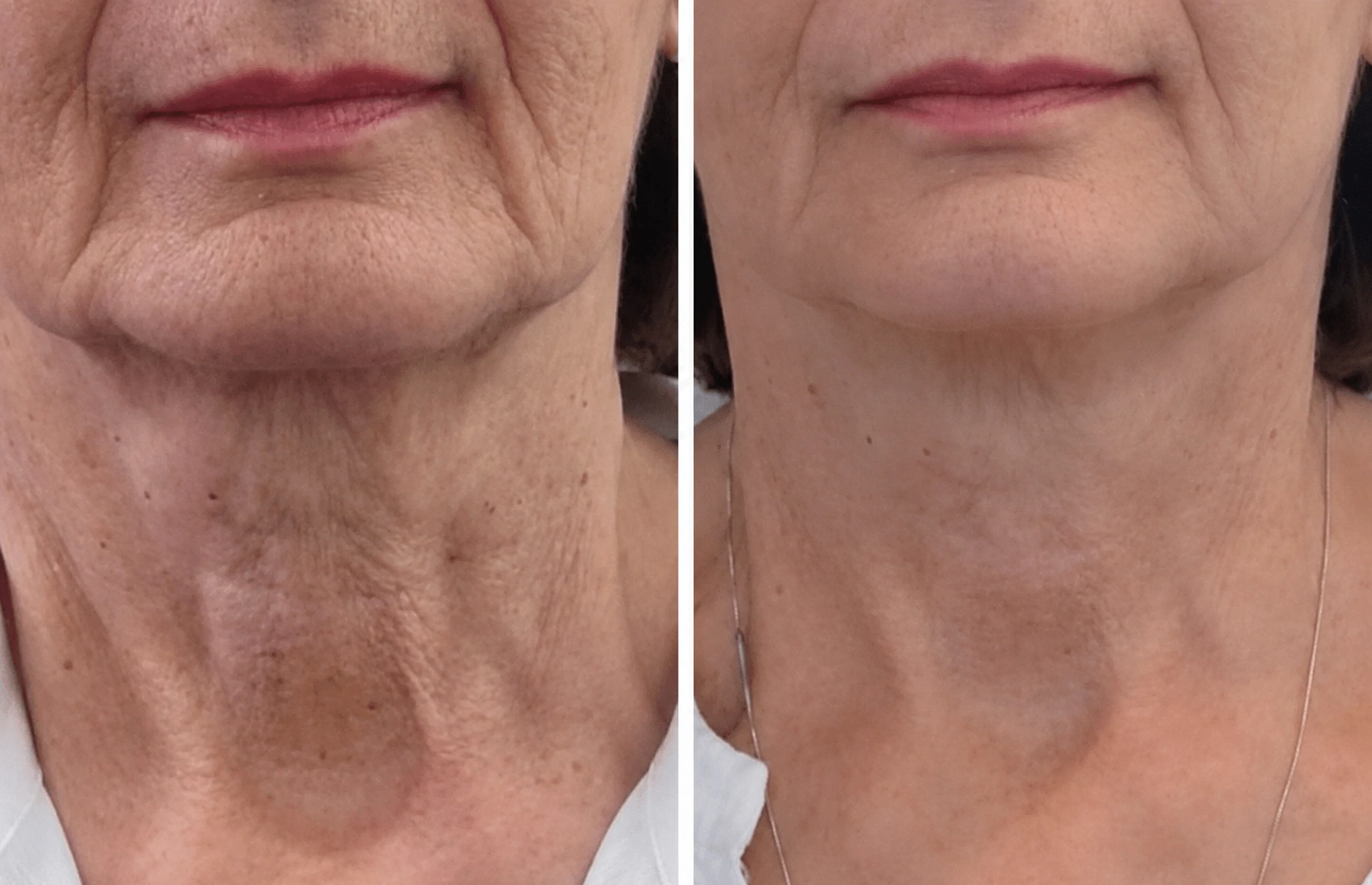
This distinction is important when assessing before-and-after photographs. Profhilo should not be expected to create a markedly larger cheek, more projected chin, sharper jawline, or substantial lifting of loose tissue.

When Do Profhilo Results Appear?
Profhilo results are gradual rather than immediate.
Some patients notice an improvement in hydration, smoothness, or radiance within the first few weeks after treatment. Changes associated with tissue remodelling and skin firmness generally require more time to develop.
A typical timeline can be considered as follows:
First Few Days
Small raised areas may be visible at the injection sites immediately after treatment. These are not the final result and normally settle as the product disperses. Our guide to Profhilo side effects and aftercare explains these temporary effects in more detail, along with aftercare and when to contact the clinic.
Weeks 1–4
Changes in hydration and skin texture may begin to become noticeable. The result at this stage should not usually be regarded as complete.
Around Week 4
The second treatment is commonly performed at approximately four weeks as part of the standard initial protocol.
Weeks 4–8 and Beyond
Skin smoothness, elasticity, hydration, and firmness may become more apparent as the treatment course takes effect. At Dr Nyla Medispa, many patients are advised that the result is more meaningfully assessed at approximately eight weeks after starting treatment rather than immediately after the first session.
Clinical research has also observed gradual improvement rather than an immediate volumising effect. In one clinical study of hybrid cooperative hyaluronic acid complexes, patients underwent two treatments four weeks apart, with improvements measured over subsequent follow-up assessments.
Why Is Profhilo Usually Given as Two Treatments?
The commonly used initial Profhilo protocol consists of two treatment sessions approximately four weeks apart.
The first treatment begins the skin-remodelling process, while the second forms part of the initial treatment course rather than acting simply as an optional “top-up”.
This is why judging Profhilo after one appointment can be premature. A patient may see early changes after the first session, but the intended initial result is generally evaluated after completion of the recommended course and sufficient time for the skin response to develop.
Treatment schedules are not necessarily identical for every patient. Clinical assessment may influence the recommended plan, particularly where different anatomical areas or more established changes in skin quality are being treated.
Clinical Note from Dr Nyla Raja
Profhilo should be assessed as a treatment course rather than judged immediately after the first injections. We look at baseline skin quality, hydration, laxity, and the treatment area before deciding whether the standard protocol is appropriate and when maintenance should be considered.
How Long Do Profhilo Results Last?
Profhilo results can last for several months, with treatment guidance commonly describing benefits lasting up to approximately six months following the initial course.
This should not be interpreted as a guaranteed six-month result for every patient.
Longevity can be influenced by:
- Age
- Baseline skin quality
- Degree of skin ageing
- Treatment area
- Individual biological response
- Sun exposure
- Smoking
- General lifestyle
- Subsequent skincare and aesthetic treatments
The skin also continues to age normally after treatment. Profhilo does not permanently stop collagen loss, changes in elasticity, or other age-related processes.
How Often Is Profhilo Maintenance Needed?
After the initial course, maintenance treatment may be considered at approximately six-month intervals, although there is no single schedule that is appropriate for everybody.
Some patients may maintain a satisfactory result for longer, while others with more established skin ageing may discuss maintenance sooner.
The decision should be based on how the skin has responded rather than automatically repeating treatment because a fixed period has elapsed.
Patients considering the financial implications of an initial course and ongoing maintenance can also read our guide to Profhilo costs in the UK.
Why Do Profhilo Results Vary Between Patients?
No injectable skin treatment produces an identical response in every patient.
The degree of improvement from Profhilo can vary according to the starting condition of the skin and what the patient is hoping treatment will change.
Important variables include:
- Skin hydration before treatment
- Elasticity and collagen quality
- Degree of laxity
- Skin thickness
- Age-related structural changes
- Sun damage
- Smoking and lifestyle factors
- Treatment area
- Previous aesthetic procedures
- Individual biological response
Expectations also matter. A patient seeking smoother, better-hydrated skin may be well aligned with Profhilo’s intended purpose, while our guide to who is suitable for Profhilo explains when the treatment may be appropriate and when another approach may be more suitable. A patient seeking substantial lifting or replacement of lost facial volume is asking the treatment to achieve something different.
Do Age and Skin Quality Affect Profhilo Results?
Yes. Chronological age is only one factor, but the condition of the skin at baseline has a significant influence on what can reasonably be expected.
Earlier Signs of Skin Ageing
Patients with relatively good underlying structure but early dehydration, reduced elasticity, or fine crepey texture may notice improvement predominantly in hydration, smoothness, and overall skin quality.
More Established Skin Ageing
Where collagen loss, laxity, volume loss, and structural changes are more advanced, Profhilo may still improve skin quality, but the overall facial change may appear more modest because not every component of ageing is being treated.
For example, improving skin hydration does not replace lost cheek volume, and improving elasticity does not remove significant excess skin.
This is why treatment plans should respond to anatomy rather than age alone.
Does the Treatment Area Affect Profhilo Results?
Profhilo is commonly used on areas where skin quality and laxity are concerns, including the:
- Face
- Neck
- Décolletage
- Hands
Results can look different across these areas because skin thickness, movement, underlying structures, and the degree of ageing vary.
The neck, for example, may show crepiness and reduced elasticity but can also be affected by muscle activity, fat distribution, and significant tissue laxity. Profhilo may improve skin quality without correcting all of these components.
Similarly, hand treatment may improve hydration and skin texture without restoring the deeper volume loss that can make tendons and veins appear more visible.
Is Profhilo a Dermal Filler?
Profhilo contains hyaluronic acid, but it is not used in the same way as a conventional dermal filler.
Dermal fillers are generally placed strategically to restore selected volume, provide structural support, or refine facial contours. Different filler formulations can be chosen for areas such as the cheeks, chin, lips, or jawline.
Profhilo is intended to disperse through the tissue and support skin remodelling rather than remain as a defined structural deposit.
It should therefore not be expected to:
- Create cheek projection
- Increase lip volume
- Build chin projection
- Sharpen the jawline in the way structural filler can
- Replace significant facial volume loss
Describing Profhilo simply as a “natural filler” can create the wrong expectation of what the treatment is designed to achieve.
Can Profhilo Lift the Face?
Profhilo is sometimes discussed using terms such as “injectable facelift”, but this description can be misleading.
Profhilo is not a facelift. It does not surgically reposition facial tissues, remove excess skin, or create the degree of lifting achievable with surgery.
Improved hydration, elasticity, and skin firmness can make the skin appear healthier and somewhat firmer, but this should not be confused with substantial tissue lifting.
Where the primary concern is loose skin or loss of facial definition, other skin tightening treatments may be more appropriate, depending on the anatomy and degree of laxity.
Where there is significant excess skin, non-surgical treatment may have limited ability to produce the change a patient is seeking, and a surgical opinion may be more appropriate.

What Does the Clinical Evidence Say About Profhilo Results?
The published evidence around Profhilo has developed over recent years, although it remains more limited than the evidence base available for some longer-established medical treatments.
A 2026 systematic review of Profhilo and Profhilo Body clinical studies reviewed nine studies involving 278 participants. Across the included research, improvements or trends towards improvement were reported in measures including skin hydration, elasticity, density, laxity, and wrinkle severity.
A separate clinical study assessing facial Profhilo treatment used treatments at weeks 0 and 4 and reported significant improvement in measures of superficial skin hydration and transepidermal water loss at later follow-up.
These findings support Profhilo’s role as a skin-quality treatment rather than evidence that it acts as a substitute for volumising filler or surgical lifting.
It is also appropriate to interpret the research with some caution. Several studies are relatively small, some are open-label rather than randomised controlled trials, and some published research includes authors affiliated with the product manufacturer. Results seen in individual patients may therefore differ from study averages.
How Does Profhilo Compare with Other Skin Treatments?
The correct comparison depends on the concern being treated.
Profhilo vs Dermal Fillers
Profhilo is predominantly used to improve skin quality. Dermal fillers are used where targeted volume restoration or structural contouring is required.
Profhilo vs Skin Tightening
Energy-based skin tightening treatments use technologies such as ultrasound or radiofrequency to deliver controlled energy into selected tissue layers. These may be more relevant where laxity and tissue tightening are the dominant concerns.
Profhilo vs Polynucleotides
Both are used within regenerative and skin-quality treatment plans, but they contain different products and are not interchangeable. Our guide to polynucleotides vs Profhilo explains their different roles in more detail.
In some patients, more than one treatment category may be appropriate at different stages. This should be based on clinical assessment rather than combining procedures simply to intensify treatment.

Book in a Free Consultation With Our Expert Team
- Award-winning, doctor-led aesthetic clinics
- Locations in London, Cheshire, and Liverpool
- Over 50 non-surgical treatments available
- Free consultation with a personalised plan
Profhilo Results FAQs
How quickly do you see results from Profhilo?
Some patients begin to notice improved hydration or texture within the first few weeks. Firmer, smoother skin may become more apparent after the second treatment and over the following weeks.
When are Profhilo results usually at their best?
The result is often more meaningfully assessed around eight weeks after beginning a standard two-treatment course. This allows time for both treatments and the subsequent skin response.
Do you see results after one Profhilo treatment?
Early improvements can occur after one treatment, but Profhilo is commonly planned as an initial course of two sessions approximately four weeks apart. The first session should not necessarily be regarded as the completed result.
How long does Profhilo last?
Results can last for several months and may persist for up to approximately six months in some patients. Longevity varies according to skin quality, age, lifestyle, treatment area, and individual response.
How often should Profhilo be repeated?
Maintenance is often considered at around six months, but treatment should be repeated according to the condition of the skin and clinical assessment rather than automatically following a fixed timetable.
Does Profhilo make your face look fuller?
Profhilo is not intended to create structural facial volume in the way dermal fillers can. Improved hydration may make the skin appear healthier or smoother, but treatment should not substantially enlarge facial features.
Does Profhilo tighten sagging skin?
Profhilo may improve skin firmness and mild laxity, but it is not designed to correct significant sagging or excess skin. More established laxity may require another non-surgical treatment or, in some cases, surgical assessment.
Can Profhilo replace a facelift?
No. Profhilo improves aspects of skin quality but does not surgically reposition tissues or remove excess skin.
Why has my Profhilo result been subtle?
Profhilo is intended to produce gradual skin-quality improvement rather than a dramatic change in facial structure. Results may also be more subtle where significant volume loss, skin laxity, or other anatomical changes are contributing to the concern.
Can older patients have Profhilo?
Age alone does not determine suitability. Older patients may benefit from improved hydration and skin quality, but where ageing involves substantial volume loss or laxity, Profhilo alone may not address every component.
Profhilo Results: Gradual Skin Improvement Rather Than Facial Transformation
Profhilo results typically develop over several weeks rather than appearing immediately. A standard initial course commonly consists of two treatments approximately four weeks apart, with the result becoming more apparent as hydration, elasticity, and skin quality improve.
Results may last for several months, with maintenance often considered around six months. However, both the degree and longevity of improvement vary according to age, skin quality, treatment area, lifestyle, and individual response.
The most important expectation is that Profhilo is a skin-remodelling treatment, not a volumising dermal filler or a non-surgical substitute for a facelift. Appropriate patient selection depends on identifying whether skin quality is genuinely the main concern.
If you are considering treatment, you can book a free consultation at Dr Nyla Medispa in Mayfair London, Alderley Edge Cheshire, or Crosby Liverpool to discuss whether Profhilo is appropriate for your skin and what results can reasonably be expected.
Need Guidance in Selecting the Most Appropriate Treatment?
Related Treatments
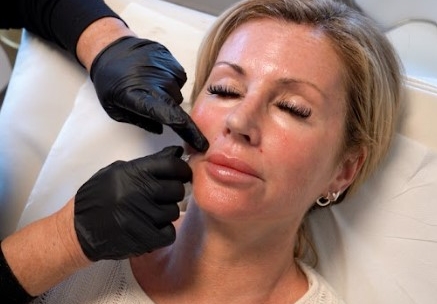
Profhilo Skin Remodelling

Dermal Fillers
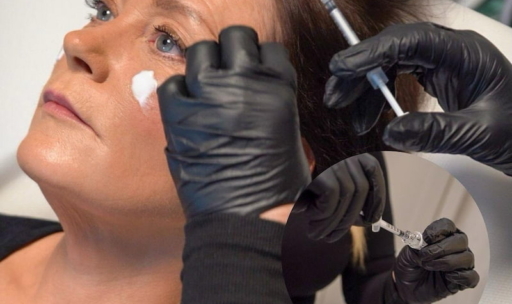
Polynucleotide Treatment
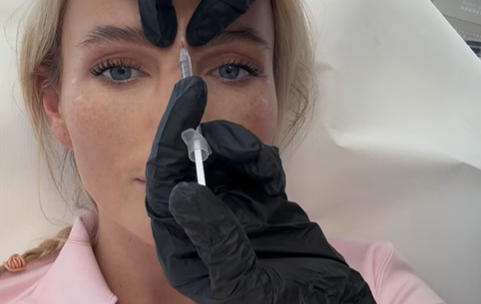
Exosome Skin Treatment

About the Author
Dr Nyla Raja | Founder & Medical Director
GMC-registered doctor with over 20 years of clinical experience in aesthetic medicine. Qualifications include MBChB (Hons), MRCGP (Dist), DFFP, and DPDermatology. Member of the British College of Aesthetic Medicine (BCAM).