
Polynucleotide Results: When Skin Changes May Become Visible and What Affects Outcomes

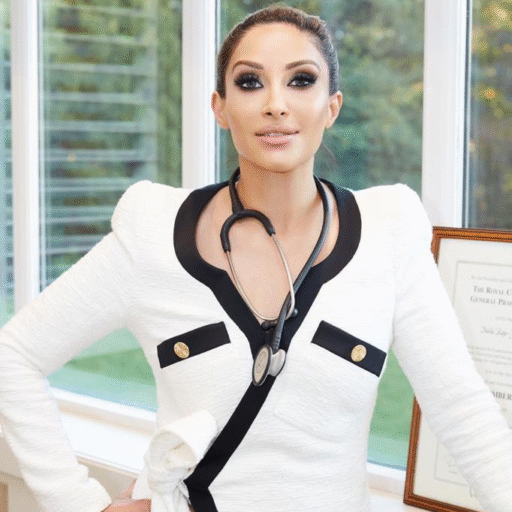
Clinical guidance from Dr Nyla Raja MBChB (Hons), MRCGP (Dist), DFFP, DPDermatology - GMC No. 6057913
Dr Nyla Medispa offers polynucleotide treatment as a gradual, regenerative approach to improving skin quality. Early changes in hydration, texture, and radiance may become noticeable within the first few weeks, but more meaningful improvement in firmness, elasticity, and overall skin condition may develop over the following two to three months.
This is not a treatment designed to create immediate volume or reshape the face. Results are typically subtle and progressive, which is why an initial course of treatment may be considered rather than judging the outcome from a single appointment.
When do polynucleotide results become visible?
There is no single timetable that applies to every patient. The treatment area, starting skin quality, product used, treatment plan, and individual response all matter. However, the general pattern is one of steady change rather than a sudden transformation.
| Stage | What you may notice |
|---|---|
| Immediately after treatment | Small raised injection-site marks, redness, tenderness, or swelling may be visible. These are treatment effects, not the final result. |
| First few weeks | Some patients begin to notice improved hydration, softness, texture, and radiance. |
| Following two to three months | Gradual improvement in skin quality, firmness, and elasticity may become more apparent as the regenerative response develops. |
| After an initial course | A review of the response can help determine whether the planned improvement has been achieved and whether maintenance may be appropriate. |
Temporary swelling, particularly around the eyes, can initially make the area look different from the eventual outcome. It is sensible to allow early injection-related effects to settle before assessing a result. Our guide to polynucleotide side effects and aftercare explains what is usually expected during recovery.
What results can polynucleotides realistically achieve?
Polynucleotides are used to support healthier-looking skin rather than to add projection or replace lost facial volume. Patients may seek treatment for fine lines, crepey texture, dehydration, reduced elasticity, dullness, and fragile-looking skin, including in delicate areas such as the under-eye region.
The intended result is usually skin that appears smoother, better hydrated, more resilient, and more refreshed, while remaining recognisably your own. Improvements tend to be most meaningful when the primary concern is skin quality.
They are not a direct substitute for dermal fillers where hollowing, structural volume loss, or facial contour are the main concerns. Polynucleotides do not create lift in the way a surgical procedure can, nor should they be expected to erase deep static folds or significantly alter facial shape.
Clinical Note from Dr Nyla Raja
Polynucleotide treatment at Dr Nyla Medispa is positioned as a gradual approach to improving skin quality rather than a volumising treatment. Careful assessment of the treatment area, skin quality, facial anatomy, medical history, and the change a patient hopes to achieve helps establish whether this approach is appropriate and what degree of improvement may be realistic.
Why a course of treatment may be advised
Polynucleotides work progressively, so one session may be only the beginning of the treatment plan. Initial protocols commonly involve two or three appointments, spaced several weeks apart, although the appropriate schedule depends on the product, area treated, skin condition, and individual response.
A course allows the skin response to be reviewed over time rather than assuming that every concern needs the same number of sessions. It also means that treatment can remain proportionate to the patient’s goals. The total plan should be agreed after a face-to-face assessment, rather than chosen from an advertised course alone.
Maintenance may be considered once the initial result has developed. The timing varies between individuals and can be influenced by age, lifestyle, skin condition, treatment area, and individual biology.
What affects polynucleotide outcomes?
Your starting concern
Polynucleotides are generally better aligned with concerns relating to hydration, texture, fine lines, and skin resilience than with pronounced laxity or substantial volume loss. A treatment that is well suited to the concern is more likely to give a satisfying, natural-looking result.
The area being treated
Thin under-eye skin, the face, neck, and other areas do not respond in exactly the same way. Anatomy, skin thickness, movement, and the degree of existing damage influence treatment planning and the visibility of improvement.
Skin health and lifestyle
Sun exposure, smoking, sleep, stress, nutrition, skincare, and ongoing skin conditions can all affect how skin looks and behaves over time. Treatment can support skin quality, but it cannot fully offset factors that continue to place stress on the skin.
Product choice and treatment plan
Polynucleotide products differ in formulation, concentration, volume, and intended treatment area. This is one reason why results and appointment schedules should not be directly compared between clinics or assumed from social-media images.
Individual response
Even with an appropriate treatment plan, the degree and pace of visible change varies. Before-and-after photographs can be helpful for understanding the type of improvement possible, but they cannot predict an identical result for another person.
What does the evidence say?
The research base for polynucleotides in aesthetic medicine is promising, but still developing. A systematic review of clinical studies reported improvements in wrinkles, texture, and elasticity, while also noting limitations in the available evidence, including small studies and variation in products, injection techniques, and treatment protocols.
This supports a measured expectation: polynucleotides may improve skin quality, but there is no universally proven protocol or guaranteed outcome. The most appropriate plan is based on clinical assessment, clear goals, and review of how your own skin responds.
For cosmetic procedures, the General Medical Council’s guidance on cosmetic interventions emphasises informed decision-making, including discussion of benefits, limitations, risks, and realistic expectations before treatment.
Questions to ask before starting treatment
- Is my main concern skin quality, volume loss, pigmentation, laxity, or a combination of these?
- What improvement is realistic in the area I would like treated?
- How many sessions are proposed, and when should the result be reviewed?
- What temporary swelling or marks might be visible after treatment?
- Would another treatment, or a staged approach, be more appropriate for my goals?
The key point
Polynucleotide results should be judged over weeks and months, not days. Early improvements in hydration and radiance can appear within the first few weeks, while the fuller skin-quality result may become clearer over two to three months and can continue to evolve after a treatment course. The most realistic outcome is a gradual, natural-looking improvement in skin quality, tailored to the concern being treated.
Need Guidance in Selecting the Most Appropriate Treatment?
About the Author
Considering treatment? Book a free consultation at our clinics in Mayfair London, Alderley Edge Cheshire, or Crosby Liverpool, or call 0800 009 6661.