
How Risky Is Non-Surgical Rhinoplasty? Nose Filler Safety and Urgent Warning Signs
Clinical guidance from Dr Nyla Raja MBChB (Hons), MRCGP (Dist), DFFP, DPDermatology - GMC No. 6057913
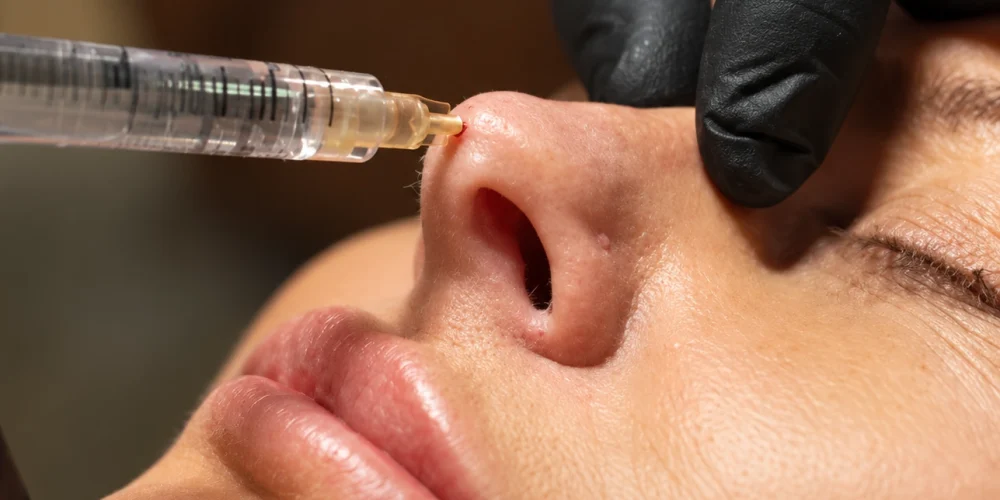
Non-surgical rhinoplasty, also known as nose filler or liquid rhinoplasty, can refine the profile of the nose without surgery. It is generally considered safe for suitable patients when performed by experienced medical professionals, although, like any injectable treatment, it is not completely risk-free. Most side effects are mild and temporary, such as swelling, tenderness, redness, and bruising. However, the nose is a higher-risk area for the rare but serious complication of vascular occlusion, where blood flow is compromised.
At Dr Nyla Medispa, non-surgical nose reshaping is a doctor-led treatment that requires an individual assessment. Nasal filler requires detailed anatomical knowledge, conservative planning, and the ability to recognise and respond quickly should an unusual complication occur.
Why is nose filler considered higher risk than filler in some other areas?
The nose contains blood vessels with connections to vessels supplying the eye. If filler is inadvertently injected into, or compromises, an artery, it can reduce blood supply to the skin and, in exceptionally rare cases, affect the eye. Published expert consensus identifies the nasal dorsum, forehead, and glabella as areas where particular caution is required because of this vascular anatomy.
This does not mean that vision problems are a common outcome of nasal filler. They are very rare, but their potential severity is why appropriate patient selection, precise technique, and immediate recognition of complications are essential. A multidisciplinary consensus on filler-associated visual loss and a clinical guideline on hyaluronic acid filler vascular occlusion both emphasise prevention and prompt action when concerning symptoms arise.
It is also important to be realistic about what the treatment can achieve. Nose filler adds carefully placed volume to improve the appearance of contour, symmetry, or a dorsal hump. It does not make the nose smaller, correct significant structural problems, or improve breathing difficulties. In these circumstances, a surgical opinion may be more appropriate.
Clinical Note from Dr Nyla Raja
Non-surgical nose reshaping is intended to create balanced, natural-looking refinement through carefully placed volume, rather than to reduce nasal size. Suitability depends on the anatomy, previous treatment history, and the change sought. Where a person wishes to reduce the size of the nose, or has significant structural or functional concerns, filler may not be the appropriate option.
What are the usual side effects of non-surgical rhinoplasty?
Mild swelling, redness, tenderness, bruising, and temporary firmness around injection points can occur after treatment. These effects should settle rather than become progressively more painful or discoloured. The appearance immediately after treatment can also be affected by swelling, so it is sensible to allow the area to settle before judging the result.
Less common issues include infection, asymmetry, contour irregularity, delayed inflammatory swelling, or persistent lumps. A full history of previous filler matters, including filler placed elsewhere or years earlier, because it can influence safe treatment planning. Elective treatment may also be deferred if there is an active infection or inflammation in or around the intended treatment area.
Which symptoms after nose filler need urgent action?
It is important not to dismiss severe, unusual, or worsening symptoms as normal swelling. Vascular compromise is rare, but early assessment is important because prolonged interruption to blood supply can injure tissue.
| What you notice | What it may mean | What to do |
|---|---|---|
| Mild swelling, bruising, redness, tenderness, or temporary firmness | Common short-term treatment effects | Follow your personalised aftercare and monitor for improvement. |
| Severe, increasing, or disproportionate pain; very pale, mottled, dusky, blue-grey, or unusually cool skin; progressive colour change | Possible compromised blood supply | Contact your treating practitioner immediately. If they are unavailable, seek urgent medical assessment. Do not wait to see if it settles. |
| Sudden blurred, reduced, or double vision; loss of vision; significant eye symptoms; facial weakness; difficulty speaking; confusion | Medical emergency | Call 999 immediately. Do not wait for a routine clinic appointment or online response. |
These warning signs are not intended to alarm patients who have routine post-treatment swelling or bruising. They provide a clear safety threshold: symptoms that are escalating, affecting skin colour or temperature, or involving the eyes or neurological function need immediate action.
How can the risks of nose filler be reduced?
No injectable treatment can remove risk entirely. However, several decisions can affect safety:
- Choose a suitably qualified medical practitioner. Nasal filler should not be treated as a simple beauty service. The practitioner should be able to assess anatomy, explain realistic limitations, obtain informed consent, and recognise a complication promptly.
- Allow time for a proper consultation. This should include your medical history, any previous filler, relevant treatments or surgery, your concerns, and whether filler is genuinely the most appropriate route.
- Understand the product and plan. Ask which filler is proposed, why it is suitable for the area, and what the expected limitations are.
- Be open about previous treatment. Bring any information you have about earlier filler, including the product, area treated, and approximate date. This is particularly important if you have had previous nasal filler or are considering correction.
- Know the emergency pathway before treatment. Ask how to contact the practitioner after treatment and what to do if you experience concerning symptoms.
Further guidance on routine effects, longer-term complications, and choosing a qualified practitioner is available in our dermal filler safety guide.
When might non-surgical rhinoplasty not be suitable?
Nose filler may not be the right choice for people seeking to reduce the size of their nose, address a marked deviation, correct breathing problems, or make a substantial structural change. It may also be inappropriate to proceed when there is active skin infection or inflammation, an unclear previous filler history, or expectations that cannot be met safely with added volume.
A doctor-led consultation should include the option not to treat. A careful assessment is not a barrier to treatment; it is how a treatment plan is matched to the individual rather than to a trend or a single photograph.
The key point on non-surgical rhinoplasty risk
Non-surgical rhinoplasty is usually associated with temporary, manageable side effects, but it carries a distinctive and rare vascular risk because of the nose’s anatomy. The safest approach is not to assume that filler is routine: choose an experienced medical practitioner, ensure the treatment is suitable for your goals, and act immediately if severe pain, unusual skin discolouration, visual symptoms, or neurological symptoms occur after treatment.
Need Guidance in Selecting the Most Appropriate Treatment?

About the Author
Considering treatment? Book a free consultation at our clinics in Mayfair London, Alderley Edge Cheshire, or Crosby Liverpool, or call 0800 009 6661.