
Can a Non-Surgical Nose Job Make a Wide Nose Look Narrower?
Clinical guidance from Dr Nyla Raja MBChB (Hons), MRCGP (Dist), DFFP, DPDermatology - GMC No. 6057913
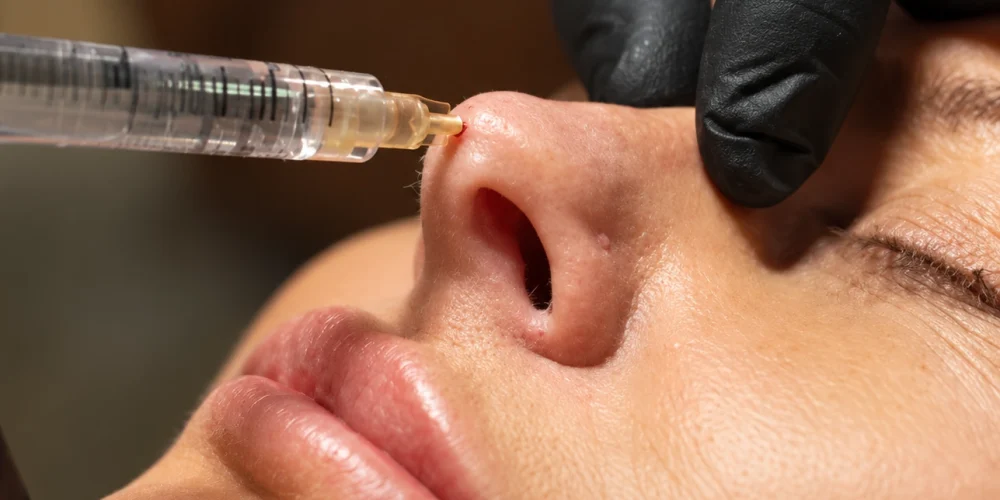
Sometimes, but only as a visual effect. A non-surgical nose job uses dermal filler to add carefully placed volume; it cannot physically narrow a wide nasal bridge, tip, or nostrils. In selected cases, creating straighter, more defined lines can make the nose appear more balanced and, from certain angles, less wide. In others, adding volume may make width more noticeable.
At Dr Nyla Medispa, suitability for nose filler is assessed individually. The key question is not simply whether a nose is wide, but why it appears wide, how it relates to the rest of the face, and whether adding volume could improve proportion without making the nose look larger.
What nose filler can change on a wide-looking nose
Nose filler is best understood as a contour treatment, rather than a reduction treatment. Small, precise amounts of dermal filler can sometimes improve the visual balance of the nose by:
- creating a smoother line along the bridge where a dip or dorsal hump interrupts the profile;
- adding definition to a low or flat bridge, which may make the central nasal line appear more refined;
- improving minor asymmetry that draws attention to one side of the nose; or
- providing subtle support to the tip where this is clinically appropriate.
For example, a nose that looks broad from the front because the bridge lacks height may appear more streamlined when the bridge is defined. This is an optical change in proportion, not a reduction in the width of the underlying bone, cartilage, or soft tissue.
What a non-surgical nose job cannot do
Filler cannot remove tissue, narrow the nasal bones, reduce a bulbous tip, reduce nostril width, or correct a genuinely broad nasal base. It also cannot address breathing difficulties, a marked deviation, or other significant structural concerns.
Where the aim is a smaller nose in a literal sense, surgical rhinoplasty is the treatment that can alter nasal structure. It is important not to pursue filler as a substitute for surgery when the desired result depends on reduction. Adding volume in this situation may work against the goal.
| Concern | Can filler help? | What it may achieve |
|---|---|---|
| Low or flat bridge | Sometimes | More bridge definition and a straighter central line |
| Minor asymmetry | Sometimes | Improved visual balance, where suitable |
| Dorsal hump with a broad-looking profile | Sometimes | A smoother profile, not a smaller nose |
| Broad nasal bones or broad base | No | Filler cannot structurally narrow the nose |
| Bulbous tip or flared nostrils | Usually not for narrowing | Filler may add bulk rather than reduce width |
| Breathing or major structural concerns | No | A surgical or ENT assessment may be more appropriate |
Why the angle matters
A nose can look very different from the front, in profile, and at three-quarter view. A treatment that improves the profile may not improve the frontal view, and could be unsuitable if the main concern is width seen head-on.
Assessment should therefore consider the bridge, tip, nasal base, skin thickness, symmetry, facial proportions, and any previous nasal treatment or surgery. A single filtered selfie is not enough to plan a treatment safely or predict a result. Photography can also exaggerate apparent width when taken close to the face with a phone camera.
Clinical Note from Dr Nyla Raja
At Dr Nyla Medispa, non-surgical nose reshaping is considered in relation to the existing nasal contour, facial proportions, and the specific change sought. Its purpose is balanced, natural-looking refinement through carefully placed volume, rather than reducing nasal size. Where added volume is unlikely to improve a wide appearance, or where structural reduction is the goal, filler may not be appropriate.
When filler may make a wide nose look wider
Because filler adds volume, there are situations in which it is unlikely to be helpful. This may include a nose that is already broad through the bridge, a prominent or rounded tip, substantial tip asymmetry, or a broad base and nostrils. Trying to create a narrower-looking nose by placing too much product along the bridge can leave the nose looking heavier rather than more refined.
Previous filler also matters. Filler may remain present after its visible effect has softened, so repeat treatment should never be treated as an automatic top-up. A full treatment history, including the approximate product, area, and date of any previous injections, helps inform whether further filler is appropriate.
Safety considerations for nose filler
The nose is an anatomically complex, higher-risk injectable area. Temporary swelling, redness, tenderness, bruising, and firmness can occur after treatment and usually settle over the following days. However, blood vessels in the nose have connections to the eye, so nasal filler requires careful anatomical assessment, conservative planning, and prompt management if complications are suspected.
A 2024 systematic review of non-surgical rhinoplasty found that most reported complications were mild and temporary, while also confirming that serious vascular complications can occur uncommonly.
After any nasal filler treatment, severe or escalating pain, unusual blanching or mottled skin colour, a cold area of skin, or visual or neurological symptoms require urgent medical assessment. For a fuller explanation, read our guide to non-surgical rhinoplasty risks and urgent warning signs.
Questions worth asking at a consultation
- Is my concern caused by bridge shape, tip shape, asymmetry, or true nasal width?
- Could added volume create a more balanced appearance from the front as well as the profile?
- Is filler likely to make any part of my nose look broader?
- What are the realistic limits of treatment in my anatomy?
- Do I have previous filler or surgery that changes the safety assessment?
- What is the aftercare and urgent-contact plan if I have concerns?
The key point
It is possible for a non-surgical nose job to make a selected wide-looking nose appear more refined by improving contour and balance. It cannot physically narrow the nose, and it is not the right treatment for every broad bridge, bulbous tip, or wide nasal base. The safest and most natural-looking result comes from an honest assessment of whether carefully placed filler can genuinely improve proportion, or whether it would add volume without meeting the intended goal.
Need Guidance in Selecting the Most Appropriate Treatment?

About the Author
Considering treatment? Book a free consultation at our clinics in Mayfair London, Alderley Edge Cheshire, or Crosby Liverpool, or call 0800 009 6661.