
Is Microneedling the Same as Mesotherapy? Differences for Skin Hydration, Texture and Glow
Clinical guidance from Dr Nyla Raja MBChB (Hons), MRCGP (Dist), DFFP, DPDermatology - GMC No. 6057913
No. Mesotherapy and microneedling are not the same treatment, even though both involve needles. Mesotherapy uses a series of small injections to place a tailored formulation into the skin, usually with the aim of supporting hydration, radiance, and overall skin quality. Conventional microneedling uses fine needles to create controlled micro-injuries in the skin, encouraging its natural repair response and collagen remodelling. The more suitable option depends on whether the main concern is dehydration and dullness, or a more structural change in texture, pores, or scarring.
At Dr Nyla Medispa, treatment selection starts with the concern being treated rather than the fact that both procedures use needles. Mesotherapy may be considered for skin that looks dehydrated, dull, or tired, while microneedling is more often selected where collagen support and textural improvement are priorities. Our microneedling treatments use radiofrequency technology, which adds controlled energy to the needling process and is therefore distinct from conventional microneedling alone.
Mesotherapy vs microneedling at a glance
| Consideration | Mesotherapy | Conventional microneedling |
|---|---|---|
| Core approach | Microinjections deliver a tailored injectable formulation into the skin. | Fine needles create controlled microchannels in the skin. |
| Main focus | Hydration, radiance, and refreshed-looking skin quality. | Collagen stimulation and gradual textural remodelling. |
| May suit | Dullness, dehydration, fine lines, and uneven-looking tone. | Uneven texture, visible pores, photoageing, and selected depressed scars. |
| What is placed in the skin? | A formulation may include hyaluronic acid, vitamins, amino acids, and other ingredients selected for the treatment plan. | No injectable formulation is the defining feature of treatment. |
| How results develop | Often focused on a fresher, more hydrated appearance, with a course commonly used where appropriate. | Gradual, as skin repair and collagen remodelling take place over time. |
| Typical short-term effects | Small injection marks, redness, swelling, or bruising can occur. | Redness and temporary sensitivity are common; dryness or light flaking may also occur. |
How mesotherapy works
Mesotherapy is an injectable skin rejuvenation treatment. A series of superficial microinjections delivers small amounts of a formulation selected for the patient’s skin concern. At Dr Nyla Medispa, mesotherapy formulations may include hyaluronic acid, vitamins, amino acids, and other active ingredients intended to support hydration, skin renewal, and radiance.
For a patient whose skin feels dry, looks lacklustre, or has lost some surface luminosity, mesotherapy may be more aligned with the goal than a collagen-focused procedure. It is not designed to replace lost facial volume, reshape features, or correct established deep acne scarring.
The term mesotherapy describes a delivery technique rather than one standardised product. This matters because the ingredients, injection technique, number of sessions, and expected outcome can vary. A consultation should therefore establish exactly what is being used, why it is appropriate for the area, and what degree of improvement is realistic.
How microneedling works
Conventional microneedling creates controlled micro-injuries with sterile fine needles. This stimulates the skin’s repair response, including collagen and elastin production, which can support gradual improvement in uneven texture, visible pores, fine lines, and selected atrophic acne scars. A systematic review of randomised trials found microneedling to be a well-tolerated option for atrophic scars, although outcomes depend on scar type, treatment technique, and the individual patient.
Unlike mesotherapy, the main purpose is not to inject a hydrating cocktail into the skin. The treatment effect comes principally from controlled needling and the subsequent repair process. This is why microneedling is usually considered when the concern is structural texture rather than simple dehydration or a temporary loss of glow.
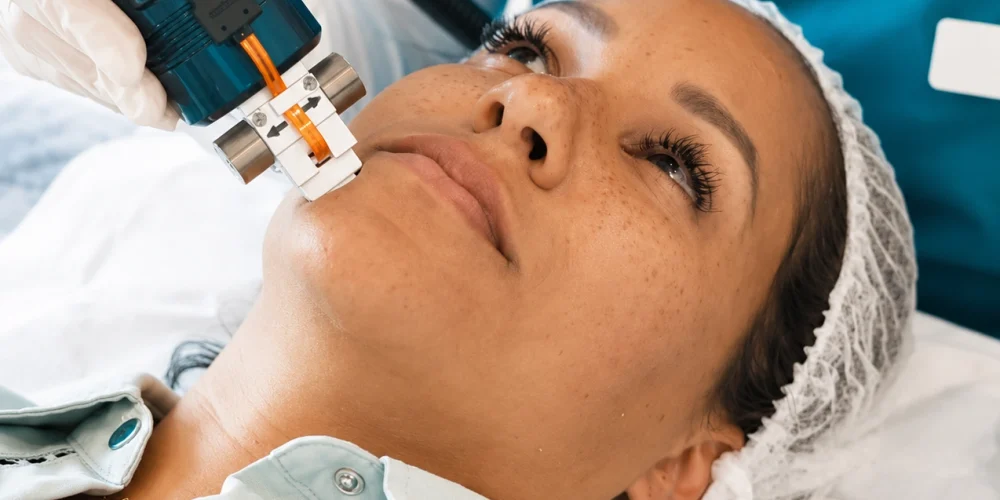
At Dr Nyla Medispa, INTRAcel and Morpheus8 combine microneedling with radiofrequency energy. This energy is delivered beneath the skin’s surface to support deeper collagen remodelling. Radiofrequency microneedling may therefore be considered for concerns such as enlarged pores, acne scarring, uneven texture, mild laxity, and skin firmness, following assessment.
Clinical Note from Dr Nyla Raja
Dr Nyla Medispa offers both mesotherapy and radiofrequency microneedling, including INTRAcel and Morpheus8. Although both approaches involve needles, their intended roles differ: mesotherapy is used to support hydration and skin quality, whereas radiofrequency microneedling is designed to support collagen remodelling and address textural concerns. Suitability depends on the treatment area, the specific concern, skin condition, and individual medical history.
Which treatment may be more suitable for your concern?
For dehydrated, dull, or tired-looking skin
Mesotherapy may be the more relevant starting point when the priority is skin hydration, surface radiance, and a fresher overall appearance. It can support skin quality, but it should not be expected to create the same degree of change in scars or pores as a collagen-remodelling treatment.
For enlarged pores and uneven texture
Microneedling is usually the more direct option where pore visibility and textural irregularity are the central concerns. Results are not immediate in the way that a hydrated appearance may be; improvement develops gradually as the skin remodels.
For depressed acne scarring
Microneedling, particularly radiofrequency microneedling where clinically appropriate, is generally more relevant than mesotherapy for selected depressed scars. Scar morphology is important: some scars respond better to other procedures, and active acne should be assessed and managed before scar-focused treatment begins.
For fine lines and early loss of firmness
Either treatment may form part of a wider skin-quality plan, but they address different aspects of the concern. Mesotherapy may support hydration and radiance, while microneedling is more focused on collagen stimulation and texture. Where laxity is more significant, another skin-tightening treatment may be more appropriate.
Downtime, comfort, and safety considerations
Both treatments involve needles, so some temporary redness and sensitivity should be expected. Mesotherapy can leave small injection marks, local swelling, or bruising. After microneedling, the skin may look red and feel warm or sensitive for a short period, with light dryness or flaking possible during recovery.
Microneedling is generally regarded as minimally invasive, but it is not risk-free. A systematic review of microneedling safety found that most reported effects were temporary, including redness, swelling, discomfort, and dryness. It also highlights the importance of careful assessment where there is active infection, inflammation, a history of pigmentation change, metal allergy, or products that are not intended for intradermal use.
For mesotherapy, appropriate treatment depends not only on injection technique, but also on product selection, sterile practice, medical history, and a clear understanding of the ingredients being placed in the skin. Treatment may need to be postponed or an alternative considered if there is active irritation, infection, or another factor that could affect healing.
The key point
Microneedling is not the same as mesotherapy. Mesotherapy is primarily an injectable approach to hydration, radiance, and skin quality, while microneedling is a collagen-stimulation treatment for concerns such as uneven texture, enlarged pores, and selected acne scars. The shared use of needles does not make the treatments interchangeable.
If the concern is mainly dehydrated or dull-looking skin, mesotherapy may be more aligned with the desired outcome. If texture, pores, scarring, or gradual collagen remodelling are the priority, microneedling may be more appropriate. A face-to-face assessment helps ensure that the treatment plan reflects the skin concern, treatment area, medical history, and realistic recovery and outcome expectations.
Need Guidance in Selecting the Most Appropriate Treatment?

About the Author
Considering treatment? Book a free consultation at our clinics in Mayfair London, Alderley Edge Cheshire, or Crosby Liverpool, or call 0800 009 6661.