
Does Botox Age You Quicker? What Happens When Treatment Wears Off

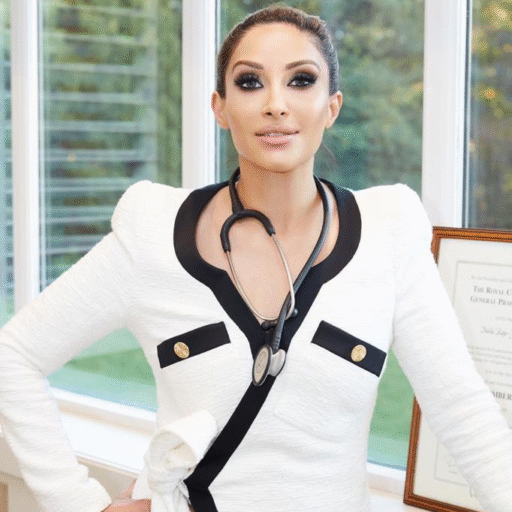
Clinical guidance from Dr Nyla Raja MBChB (Hons), MRCGP (Dist), DFFP, DPDermatology - GMC No. 6057913
No. Current clinical evidence does not show that Botox makes your face age quicker. When its effect wears off, the treated muscles gradually return towards their usual activity, and expression lines become visible again. This can feel like a sudden change if you have become used to smoother skin, but it does not mean that Botox has accelerated your natural ageing process.
At Dr Nyla Medispa, Botox is used to temporarily relax selected facial muscles responsible for dynamic lines, such as frown lines, forehead lines, and crow’s feet. It does not stop the wider processes that influence how the face changes over time, including changes in skin quality, collagen and elastin, facial volume, and tissue laxity.
Why Botox can seem to make you look older when it wears off
For many people, Botox softens lines that appear with facial expression. After several months, movement gradually returns and those lines may become noticeable again when you frown, raise your eyebrows, or smile.
The contrast is often the reason Botox is blamed for ageing. You are comparing your face after treatment with your face once the temporary effect has faded, rather than comparing it with how your face may have looked without treatment over the same period.
Botox does not create a “rebound” effect in which lines become worse simply because you stopped. A review of longer-term cosmetic botulinum toxin research found that the available evidence remains limited, particularly for understanding changes over extended periods. That uncertainty is different from evidence that Botox causes accelerated facial ageing. Read the review of long-term cosmetic botulinum toxin outcomes.
What actually happens when Botox wears off?
Botox temporarily affects the communication between a nerve and the specific muscle being treated. As that effect diminishes, muscle activity returns progressively rather than all at once. For many aesthetic treatments, the visible result lasts around three to four months, although this varies between individuals and treatment areas.
You may notice that:
- your forehead or brow begins to move more freely;
- frown lines reappear during expression;
- crow’s feet become more visible when smiling; or
- your face returns closer to its pre-treatment pattern of movement.
If a line is visible even when your face is relaxed, it is known as a static line. Botox may soften static lines, particularly where muscle movement has contributed to their development, but it cannot fully address every established crease. Static lines are also affected by the skin’s structure and quality, not muscle movement alone.
Clinical Note from Dr Nyla Raja
At Dr Nyla Medispa, Botox is offered as a non-surgical treatment for movement-related lines. It is not designed to replace lost facial volume or tighten lax skin. Facial concerns can have more than one contributing factor, so it is important to distinguish lines caused mainly by movement from those that are visible at rest or relate primarily to skin quality, volume change, or laxity.
Botox addresses movement, not every feature of facial ageing
Facial ageing is not caused by wrinkles alone. It is a gradual combination of changes in the skin, soft tissues, and deeper facial structures. Research on facial ageing describes the contribution of reduced skin elasticity, changes in facial volume and fat distribution, and structural changes over time. Read more about volume loss and three-dimensional facial ageing.
This is why a treatment that suited you several years ago may need to be reviewed rather than simply repeated in exactly the same way. For example:
| Primary concern | What may be contributing | Why Botox may or may not help |
|---|---|---|
| Lines during expression | Repeated muscle movement | Botox may soften the movement responsible for dynamic lines. |
| Lines at rest | Established creasing, skin quality, and reduced elasticity | Botox may help where movement contributes, but may not remove the line completely. |
| Hollowing or flattening | Age-related volume loss or fat redistribution | Botox does not replace lost volume; dermal fillers may be considered in selected cases. |
| Loose or crepey-looking skin | Skin laxity and changes in collagen and elastin | Botox is not a skin-tightening treatment; other approaches may be more appropriate. |
Not every concern requires another injectable treatment. Sometimes the most appropriate plan is to treat less, change the treatment approach, focus on skin health, or do nothing at all.
Can regular Botox change the muscles over time?
Repeated botulinum toxin treatment can alter the activity of a treated muscle while treatment continues. There is also evidence that repeated use may be associated with changes in muscle size or composition in some circumstances. However, the significance of these findings for routine cosmetic treatment, and the way they affect long-term facial appearance, is not fully established.
What this does not show is that Botox causes the skin, fat, or facial structures to age faster. It does reinforce why dose, injection pattern, treatment interval, and an understanding of facial balance matter. More Botox, or more frequent Botox, is not necessarily a better treatment plan.
If you stop Botox, will you look worse than before?
Stopping Botox does not usually leave you worse off than if you had never had it. The treatment effect fades, your normal pattern of movement returns, and natural ageing continues at its own pace.
It is possible that you may notice lines more because you have spent time seeing them softened. You may also have aged naturally during the months or years you were having treatment. Neither situation means that stopping Botox has damaged your skin or caused rapid ageing.
If you are deciding whether to pause treatment, it is reasonable to wait and review how your face looks and feels once movement has returned. There is no requirement to continue Botox once you have started it.
How to approach Botox safely over time
Botox is a prescription-only medicine, so suitability should follow an individual medical assessment. A careful consultation should consider your medical history, current medicines, previous treatments, facial anatomy, muscle strength, and the changes you would like to achieve.
For natural-looking results, it is important to discuss how much movement you would like to retain, rather than focusing only on making every line disappear. The UK’s MHRA safety guidance on botulinum toxin type A also highlights the importance of appropriate prescribing, authorised products, and awareness of potential side effects.
The key point
Botox does not age you quicker. When it wears off, facial movement and movement-related lines gradually return, while normal ageing continues independently. The most useful question is not whether Botox is making you age, but whether the concern you see now is caused by muscle movement, skin quality, volume loss, or laxity. A personalised assessment can help identify the most appropriate approach for your face at that point in time.
Need Guidance in Selecting the Most Appropriate Treatment?
About the Author
Considering treatment? Book a free consultation at our clinics in Mayfair London, Alderley Edge Cheshire, or Crosby Liverpool, or call 0800 009 6661.