
Can I Do Microneedling at Home? Benefits, Limitations and Safety Risks
Clinical guidance from Dr Nyla Raja MBChB (Hons), MRCGP (Dist), DFFP, DPDermatology - GMC No. 6057913
You can buy dermarollers and consumer microneedling devices for use at home, but they are not a like-for-like alternative to professional microneedling. At-home devices may provide a superficial cosmetic effect for some people, but they are unlikely to produce the controlled collagen remodelling sought for concerns such as established acne scars, enlarged pores, or significant textural change.
The more a device penetrates the skin, the more important sterile technique, appropriate treatment depth, skin assessment, and aftercare become. For that reason, home microneedling is not an appropriate route for treating scars, active skin concerns, or pigmentation-prone skin without professional advice.
What is the difference between home microneedling and clinical treatment?
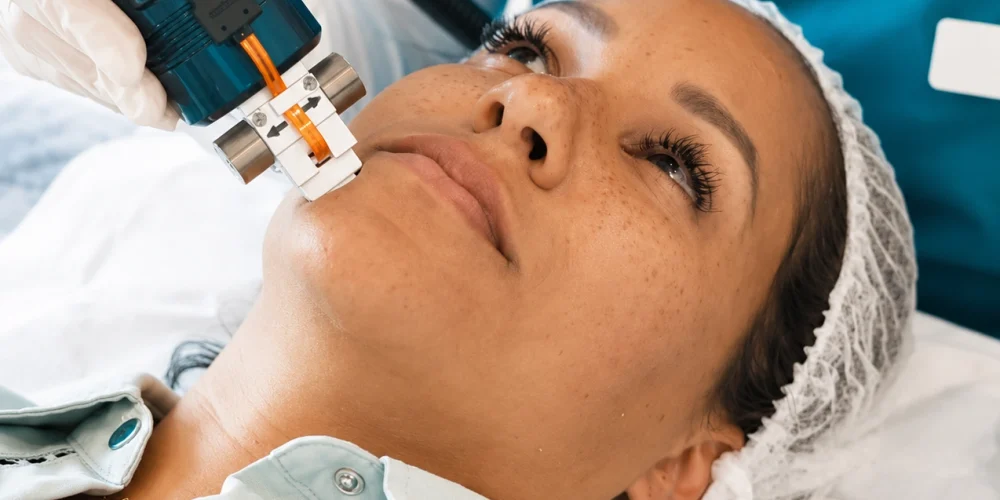
Dr Nyla Medispa offers microneedling treatments planned around the skin concern being treated, the area of the face or body, skin sensitivity, and relevant medical history. Clinical microneedling uses a controlled device and treatment depth selected for the individual, rather than a one-size-fits-all roller or pen.
A professional treatment is also more than the device itself. It involves assessing whether microneedling is suitable in the first place, preparing the skin appropriately, using single-use sterile components where relevant, and giving tailored aftercare. This matters because the same concern can require very different treatment approaches: a shallow textural irregularity, for example, is not managed in the same way as tethered acne scarring or ongoing inflammatory acne.
| At-home device | Clinical microneedling |
|---|---|
| Usually designed for superficial cosmetic use | Device and depth selected for the treatment area and concern |
| Self-assessment of skin suitability | Assessment of skin, history, goals, and treatment options |
| Variable technique and product quality | Controlled technique, hygiene measures, and treatment planning |
| Limited evidence for meaningful scar improvement | May be used as part of a plan for suitable acne scars and texture concerns |
| Higher risk of overuse or treating irritated skin | Aftercare and treatment intervals tailored to recovery |
Can a dermaroller improve acne scars or enlarged pores?
Home rolling should not be relied on to treat acne scars. Acne scarring varies considerably, and some scars need a different approach, such as targeted scar release, resurfacing, or radiofrequency microneedling. Attempting to treat deeper scars repeatedly at home can irritate the skin without addressing the structures that create the indentation.
Professional microneedling can improve selected atrophic acne scars and uneven texture, although results vary with scar type, severity, treatment method, and the individual healing response. Research on clinical microneedling for atrophic scars is encouraging, but the quality and consistency of studies are variable, so it is important to have realistic expectations rather than expect complete scar removal. A systematic review of microneedling safety found the procedure to be relatively safe when appropriately performed, while recognising that adverse effects can occur.
For enlarged pores, treatments aim to improve the appearance of surrounding skin texture and collagen support; they do not permanently close pores. A professional assessment can establish whether microneedling is likely to be useful, or whether another treatment would better suit the skin concern.
Why home microneedling carries avoidable risks
Microneedling works by creating controlled micro-injuries in the skin. When that process is uncontrolled, performed too frequently, or carried out on unsuitable skin, it can create more inflammation than benefit.
Common short-term effects after needling include redness, sensitivity, dryness, mild swelling, and temporary roughness. These should settle as the skin recovers. More important concerns with home devices include irritation from excessive pressure or repeated passes, infection where skin is punctured, acne or rosacea flares, cold sore reactivation in susceptible people, and post-inflammatory pigmentation or scarring.
The American Academy of Dermatology notes that products sold for home use are intended to be gentler than medical treatment, and that incorrect or excessive use can lead to infection, scarring, or lasting colour change. A review of home-based dermatology devices also reported limited evidence for home microneedling devices and described infectious complications.
Do not use a home roller or pen to push serums, acids, retinoids, vitamin solutions, or other skincare into the skin. Products formulated for application to intact skin are not necessarily suitable for use through a disrupted skin barrier and can increase the risk of irritation or an unexpected reaction.
When should you avoid home microneedling?
Do not needle skin with active inflammatory acne, an active cold sore, a bacterial, viral, or fungal skin infection, open skin, sunburn, or an unexplained rash. It is also sensible to pause if your skin is irritated from strong skincare, recent exfoliation, or another aesthetic treatment.
Professional advice is particularly important if you have eczema, psoriasis, dermatitis, rosacea, melasma, a tendency to post-inflammatory hyperpigmentation, keloid scarring, or a history of poor wound healing. These conditions do not always rule out treatment, but they can change how safely the skin can be treated.
If you are taking isotretinoin, blood-thinning medication, or medication that affects healing or immunity, do not make a decision based on a generic online waiting period. Discuss your circumstances with the clinician managing your medication. As explained in our guide to who should avoid microneedling, active acne should be brought under control before scar-focused microneedling is considered.
Clinical Note from Dr Nyla Raja
Dr Nyla Medispa’s published information describes microneedling as a doctor-led treatment tailored to the individual. Assessment of the current skin condition, medical history, treatment area, and desired outcome helps determine whether microneedling is suitable. For acne scarring, identifying the scar type and whether acne remains active is an important part of selecting an appropriate treatment approach.
What to consider if you have already used a home device
Stop using the device and allow the skin to settle if you develop persistent redness, increasing pain, swelling, crusting, blistering, discharge, or a spreading rash. Seek medical advice promptly if you are concerned about infection or a significant skin reaction.
If your skin is simply mildly red or dry after superficial use, keep aftercare uncomplicated: use a gentle cleanser, a bland moisturiser, and broad-spectrum SPF. Avoid exfoliants, retinoids, fragranced products, and further needling until the skin barrier has recovered.
Buying a consumer device also does not remove the need to consider product quality. In Great Britain, medical devices are subject to regulatory requirements, but a marking alone is not a personal suitability assessment or a guarantee that a device will be used correctly. GOV.UK guidance on medical devices explains the regulatory framework; a healthcare professional can help you weigh the potential benefits and risks for your circumstances.
The key point
You can use a consumer microneedling device at home, but it is not a substitute for professional assessment when addressing acne scars, enlarged pores, or significant texture concerns. Home devices may be superficial, while deeper self-treatment introduces avoidable risks without the assessment, precision, and aftercare that support a considered clinical result. If your aim is meaningful skin remodelling, a professional consultation is an appropriate starting point.
Need Guidance in Selecting the Most Appropriate Treatment?

About the Author
Considering treatment? Book a free consultation at our clinics in Mayfair London, Alderley Edge Cheshire, or Crosby Liverpool, or call 0800 009 6661.