
What Is the 4-Hour Rule for Botox?

Clinical guidance from Dr Nyla Raja MBChB (Hons), MRCGP (Dist), DFFP, DPDermatology - GMC No. 6057913
The Botox 4-Hour Rule: At a Glance
The 4-hour rule for Botox usually refers to advice to remain upright and avoid lying flat for approximately four hours after treatment. Patients are also commonly advised not to rub, massage, or place prolonged pressure on the injected areas during this early period.
The intention is to minimise unnecessary pressure or manipulation while the botulinum toxin is beginning to act at the intended injection sites. However, the four-hour restriction should be understood as a conservative aftercare precaution rather than a precisely proven biological cut-off.
Current evidence does not show that accidentally lying down briefly automatically causes Botox to move to another muscle or ruins the result. Patients should follow the instructions given by their own practitioner, but there is usually no reason to panic if the four-hour rule is broken unintentionally.
- Remain upright: commonly advised for around four hours
- Avoid: rubbing, massaging, or sustained pressure over treated areas
- Do not panic: briefly lying down does not mean the treatment has failed
- Follow your clinic’s advice: aftercare protocols can vary according to the treatment area and individual patient
What Is the 4-Hour Rule for Botox?
After Botox treatment, many practitioners advise patients to remain upright for approximately four hours.
In practical terms, this usually means avoiding going to bed, lying flat on a sofa, having a facial treatment, or placing prolonged pressure on the injected areas immediately after the appointment.
Normal gentle daily activity is generally different from deliberately lying face-down or repeatedly manipulating the treatment area.

Why Are Patients Told to Stay Upright for Four Hours?
The traditional concern is that unnecessary pressure or manipulation shortly after injection could theoretically influence the distribution of botulinum toxin beyond the intended treatment area.
This matters because Botox works by reducing acetylcholine release at selected nerve endings and therefore reducing activity in the targeted muscles. Accurate placement is important, particularly around areas such as the forehead, brow, and eyes, where neighbouring muscles have different functions.
For that reason, conservative aftercare has historically included remaining upright and avoiding rubbing or massaging the injected areas.
Clinical Note from Dr Nyla Raja
The four-hour rule is best viewed as a sensible precaution rather than something patients need to become anxious about. Good Botox results depend much more fundamentally on appropriate assessment, dose, injection placement, facial anatomy, and practitioner technique.
Is the Botox 4-Hour Rule Actually Evidence-Based?
The evidence is less definitive than many patients assume.
A clinical review published by the American Academy of Family Physicians notes that avoiding lying down for four hours has traditionally been recommended to reduce possible toxin spread, but also states that these aftercare restrictions have not been supported by randomised controlled trials.
The current UK BOTOX Summary of Product Characteristics provides detailed information on administration, dosing, adverse effects, and the potential for toxin spread, but does not specify a universal four-hour requirement to remain upright following cosmetic treatment.
More recent research modelling botulinum toxin distribution after injection found only small predicted changes associated with behaviours such as bending, light exercise, superficial rubbing, and mild heat exposure. This was a computational modelling study rather than a clinical trial, so it does not prove that all post-treatment restrictions are unnecessary.
The balanced position is therefore that the four-hour rule remains a reasonable, low-burden precaution, but it should not be presented as though four hours represents a proven point at which Botox suddenly becomes incapable of spreading.
What Happens If You Accidentally Lie Down After Botox?
Briefly lying down before four hours have passed does not automatically mean that the treatment has migrated, failed, or will cause a complication.
If this happens, simply return to an upright position and continue following the aftercare instructions provided by your practitioner.
There is generally no benefit in repeatedly checking the area, pressing the injection sites, or attempting to “correct” the treatment yourself.
If you have a specific concern about what happened after your appointment, contact the treating clinic for advice.
Can You Sleep After Botox?
Yes. The practical issue is timing.
If your practitioner has advised you to remain upright for four hours, it is sensible to arrange the appointment so that this period has passed before going to bed.
Once the recommended early aftercare period has passed, normal sleep is generally appropriate. Patients do not usually need to remain upright overnight or sleep in a particular position unless their own practitioner has advised otherwise for a specific reason.

What Else Should You Avoid After Botox?
The four-hour rule is only one part of Botox aftercare.
Patients are also commonly advised to avoid rubbing or massaging the treated areas during the early period after injection. Depending on the practitioner’s protocol, strenuous exercise, significant heat exposure, alcohol, and certain facial treatments may also be temporarily restricted.
Aftercare recommendations are not identical across every clinic, and not every commonly repeated restriction has equally strong evidence behind it. The most useful approach is to follow the specific guidance provided after your own treatment.
Our detailed Botox aftercare guide covers exercise, sleeping, skincare, heat, alcohol, touching the treatment area, and what to expect during the first few days.
When Should You Contact the Clinic?
Most Botox treatments have a straightforward recovery, with temporary injection-site redness, tenderness, swelling, or bruising being possible.
Contact your treating clinic if you experience a reaction that concerns you or symptoms that are more significant than you were advised to expect. Our guide to Botox side effects explains common reactions and less common complications in more detail.
Patients treated at Dr Nyla Medispa who have a concern about an existing treatment can contact the clinic or call 0800 009 6661.
What Is the 4-Hour Rule for Botox? The Key Point
The Botox four-hour rule is the commonly given advice to remain upright and avoid lying flat or placing unnecessary pressure on treated areas for around four hours after injection.
It is a conservative aftercare measure rather than a precisely established medical threshold. Accidentally lying down briefly does not mean that Botox has automatically moved or that the result has been compromised.
Appropriate patient assessment, accurate injection placement, dose, practitioner experience, and clear aftercare remain more important to treatment quality than treating the four-hour mark as an absolute rule.
If you are considering treatment, you can book a free consultation at Dr Nyla Medispa in Mayfair London, Alderley Edge Cheshire, or Crosby Liverpool to discuss your suitability, treatment plan, and aftercare.
Need Guidance in Selecting the Most Appropriate Treatment?
Related Treatments

Anti-Wrinkle Injections

Dermal Fillers
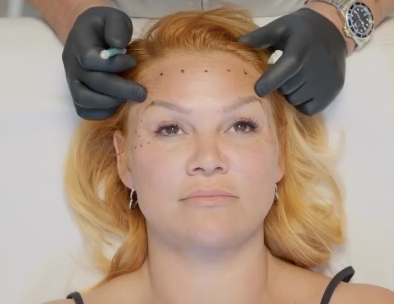
8 Point Facelift
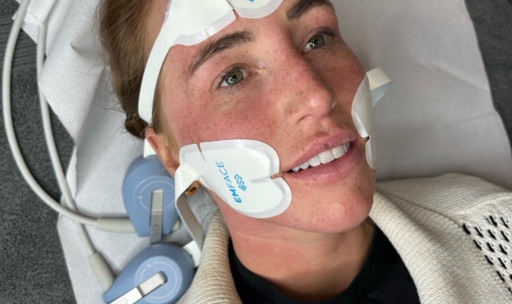
EMFACE Facial Lifting

About the Author
Considering treatment? Book a free consultation at our clinics in Mayfair London, Alderley Edge Cheshire, or Crosby Liverpool, or call 0800 009 6661.